Xeneta for Electronics & Semiconductors
The AI boom is driving up demand. Make sure it's not driving up your rates unfairly.
It's not just AI-driven finished goods. Components and aftermarket parts — routinely moved by ocean for inbound supply chains — are exposed to the same pressure.
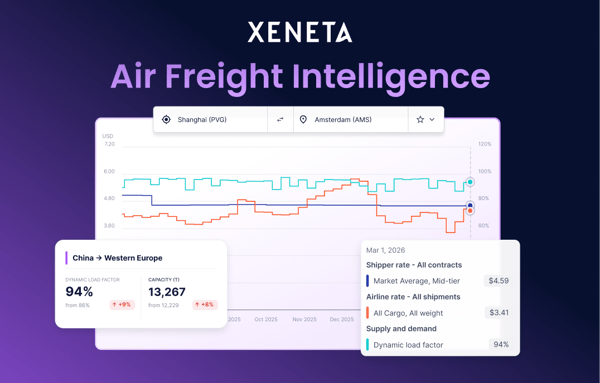
Procure with leverage, not urgency. See what capacity is actually being offered and track real-time supply and demand; including load factors.

Trusted by the world's leading electronics companies
The Challenge
YOY air chargeable weight was up in double digits from Taiwan, South Korea, Thailand & Singapore to the US
That surge in demand comes at a cost. Electronics shippers are racing to meet launch deadlines, and that urgency makes them vulnerable to overpaying — booking at whatever rate is available rather than what the market actually supports. Competitive pressure only compounds it: nobody wants to be the one that missed the launch window because they were still negotiating price.
The AI boom means shippers are putting servers, chips and cooling components on air freight at extreme cost — because the alternative is missing the build-out schedule. Launches and shortages force that decision in hours, and the only number in the room is the forwarder's quote, with no independent benchmark to check it against.
Air premiums keep running after the shortage that justified them has eased. Without air and ocean priced side by side, there's nothing to show the switch point has passed — and the excess cost repeats on every lane, every cycle.
Base-load ocean is tendered once, but the real buying happens year-round: mini-tenders, spot buys, mode shifts, peak-season capacity into the launch quarter. Each decision needs a market position; most are made without one.
The gap electronics buyers name most: no independent way to tell whether a premium air rate is fair, and no market view to say when a lane should shift back. Xeneta closes both — air and ocean, benchmarked side by side, live.
Why Xeneta
Both modes, one dataset
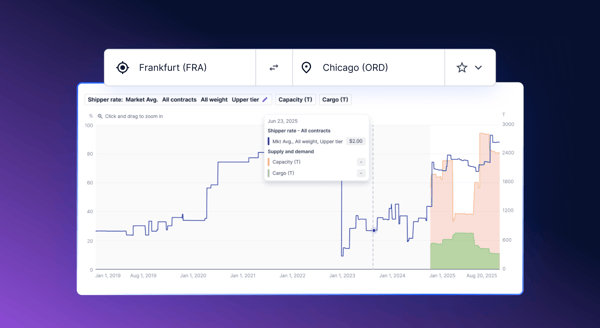
Xeneta benchmarks air and ocean from the same contract data, at lane level: premium air on chips, wafers and launch tranches; base-load ocean on finished goods. Surcharges itemised on both modes, carrier schedule performance through peak — one view for the mode decisions general market data can't price.
800m+
170k+
70k+
Use cases
What electronics and semi-conductor shippers can do with Xeneta
Optimize your supply chain strategy with real-time market data that helps you secure reliable ocean and air freight capacity, avoid risking delays, and keep products moving on time.
Find out more about our solutions
The launch tranche flies. The follow-up volume sails. One dataset prices both.
Air
Ocean
Frequently asked questions
How does Xeneta support the ocean-versus-air decision?
By pricing both sides of it from the same contract data. When a shortage hits, you see where the air quote sits against the market on that lane before booking. When conditions ease, the same view shows when the ocean rate and transit time make the switch back viable. The decision still happens at the speed the situation demands — it just happens against a number instead of an instinct and last quarter's invoice.
Can a benchmark really reflect launch-tranche or expedited air reality?
Honest answer: partly. Xeneta benchmarks the underlying air and ocean rates and maps launch and expedited moves to the nearest comparable lane — the full launch-surge premium is approximated, and we're upfront about that. The base rate is robust, and we validate it against your own historical rates before you act, so you see exactly where your lanes have drifted against the market before any number goes into a negotiation.
We buy components EXW, so freight isn't a headline line for us. What's there to benchmark?
Under EXW you control and pay the entire main leg from the seller's dock — that freight is entirely yours to benchmark. The market view on those inbound lanes shows where your controlled rates sit against what comparable shippers pay, so the volume discounts you negotiated can be verified rather than assumed.
We get rate data from our forwarder. Why pay for a benchmark?
Because the forwarder's number comes from the party selling you the freight. It may be perfectly accurate — but there is no independent way to know, and in a negotiation, data supplied by the other side is a starting position, not a reference point.
This gap is wider in electronics than almost anywhere else. The spend that matters most — premium air on chips, wafers and launch volumes — is booked fast, often from a single quote. One electronics procurement lead described their entire benchmarking process as comparing one air rate against one other provider: no market view, just a sense that the team should probably push harder on price.
Xeneta is built differently: real contracted rates from thousands of shippers and forwarders, carrier-independent, at lane level across both air and ocean. That means you can see where a forwarder's quote sits against what comparable shippers actually pay on that lane — before booking when time allows, or straight after when it doesn't. Where the quote is in line with the market, you know it, and the relationship isn't strained over a fight that wasn't worth having. Where it isn't, you have the evidence to say so.
Your forwarder stays essential for execution. What changes is that both sides of the negotiation now see the same market — and your rates stop depending on one provider's version of it.
Find out more about Xeneta's air freight benchmarks.
How does Xeneta help manage carrier risk into the launch quarter?
The September launch peak drives an air and ocean capacity crunch into the holiday quarter — rates spike, capacity tightens, and carriers that performed reliably through spring start showing cracks exactly when a launch window can't move.
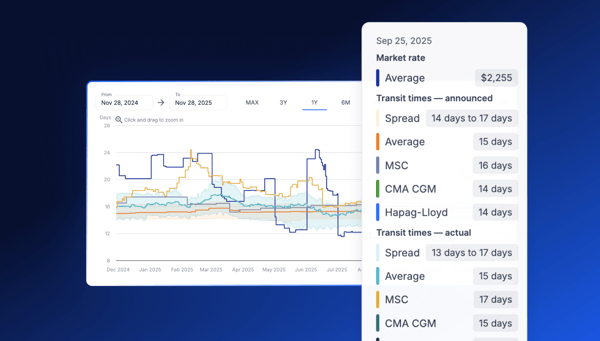
Xeneta's Carrier Scorecard gives procurement and logistics teams continuous visibility into carrier reliability by trade lane, including schedule adherence, blank sailing frequency, and actual versus announced transit times. Monitoring this data into and through the peak means deteriorating performance is visible before it becomes a missed launch, giving teams time to reallocate volume, engage backup carriers, or escalate early.
Market monitoring adds another layer: when spot rates spike sharply on a key lane heading into the launch quarter, it's frequently a leading indicator of tightening capacity. Having that signal in advance lets teams act on it strategically rather than absorb the consequences operationally.
How does electronics procurement demonstrate freight performance to finance leadership?
Finance sees a freight line that swings with every launch and shortage, and no easy way to tell whether that volatility was managed well or just absorbed. Air spend in particular looks like noise from the P&L side — spikes that arrive with a launch and a justification, but no market context.
Xeneta turns that into an answerable question: how did contracted rates compare to market, where did the team outperform, which premiums were in line with the market and which weren't. Presenting the freight story with independent third-party benchmarks — including the mode-shift calls, checked and documented — converts a qualitative defense into a quantified performance record. Learn more about forecasting and budget planning with Xeneta.