Xeneta for Construction
Build a More Resilient Construction Supply Chain
Get the real-time ocean and air freight intelligence you need to secure capacity, manage long lead times, and keep critical building materials moving on schedule.
Trusted by supply chain leaders in construction
The CHallenge
Freight volatility threatens construction timelines and project budgets
Use real-time market intelligence to secure dependable carriers, stabilize timelines, and keep critical materials flowing to every site.
Project timelines leave zero room for delay
Specialized cargo narrows carrier options and complicates planning
Market volatility makes budgeting and tendering difficult
Get the visibility to compare service levels, assess carrier reliability, and secure the capacity you need long before delays or disruptions impact project timelines and material availability.
Why Xeneta
Built to bring clarity and control to construction freight
Xeneta delivers freight rate benchmarks and reliability insights to help you pick the right partners, plan ahead, and keep critical materials moving on time.
700m+
170k+
60k+
Use cases
What construction shippers can do with Xeneta
Secure reliable capacity and stay ahead of delays with real-time freight intelligence.
Every delay costs time and money. Xeneta gives you the visibility to keep every project moving.
"Xeneta is more advanced than any other benchmarking software we have used. At the same time, its sophisticated design offers a user-friendly system. It would have been impossible to benchmark and manage our ocean freight spend and finally understand market directions without the Xeneta platform."
International Category Manager of Logistics, Rockwool
Customer Story
Discover how Rockwool optimized their freight procurement with Xeneta.
Find out more about our solutions
One platform, two modes. Discover all you need to know about our Ocean and Air offering.
Ocean
Air
Frequently asked questions
How does Xeneta help construction procurement teams validate freight quotes for project shipments?
Construction logistics involves project-driven shipments of equipment, materials, and prefabricated components that don't follow a standard annual tender cycle. When a carrier or forwarder quotes for a specific project shipment, procurement teams typically have nothing to compare it against except competing quotes, which may all reflect the same above-market pricing.
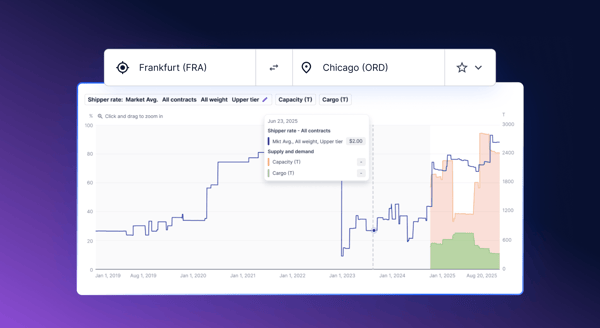
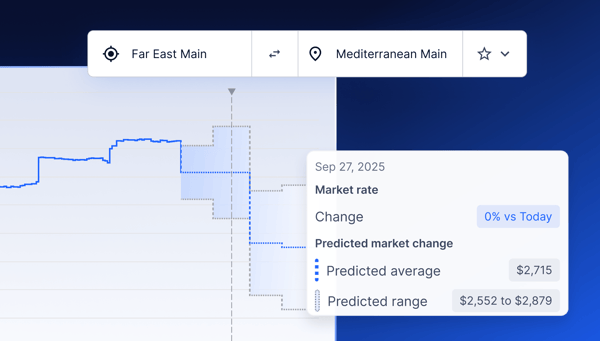
Xeneta provides lane-level market benchmarks built from contracted rates actually paid by thousands of shippers, giving construction buyers an independent reference point for every quote they receive. Rather than accepting the most competitive bid from a limited set of carriers, teams can see immediately where quotes sit relative to the market and negotiate from a position of knowledge rather than information asymmetry. Find out more about Xeneta's ocean freight benchmarks.
How does Xeneta help manage carrier reliability risk?
Construction project timelines are often contractually bound. A delayed equipment or materials shipment can halt progress on site, trigger penalty clauses, and generate costs that far exceed any freight rate saving. In this environment, carrier schedule reliability is not a secondary consideration after rate, it is a primary procurement criterion.
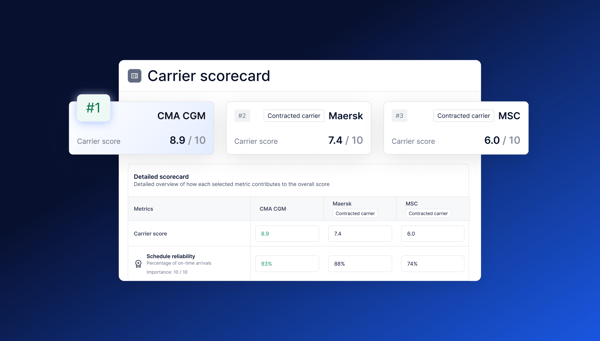
Xeneta's Carrier Scorecard allows construction logistics teams to evaluate carriers on on-time performance, blank sailing frequency, and actual versus announced transit times on specific trade lanes, alongside rate competitiveness. Awarding a project shipment to the lowest-bidding carrier without interrogating their reliability record on that corridor is a risk that Xeneta makes straightforward to avoid.
How does Xeneta help protect freight budgets on large international construction projects?
Large infrastructure projects involve significant equipment and material shipments across multiple phases and origins, where freight cost management is directly material to project profitability. This challenge is amplified for projects in emerging markets, where freight market knowledge is limited and carrier pricing power is correspondingly higher.
Xeneta provides benchmarks across a wide range of trade corridors, including less commonly traded routes, giving construction project procurement teams independent rate data regardless of where materials need to move. Rockwool, one of the world's largest building materials manufacturers, describes Xeneta as making it possible to benchmark and manage ocean freight spend and understand market directions in a way that would otherwise have been impossible. Read their case study.
How does Xeneta help construction companies expand sourcing into new markets?
Construction companies pursuing projects in growth markets across Africa, Latin America, or Southeast Asia often face a fundamental problem when it comes to freight: no historical rate data for the relevant trade corridors, and no independent reference to assess whether carrier or forwarder quotes reflect market conditions or simply the pricing power that comes from quoting to an unfamiliar buyer in an unfamiliar market.
Xeneta provides market benchmarks across a wide range of trade corridors, including routes that serve less frequently traded project destinations, giving construction procurement teams a credible rate reference before they approach carriers. This matters both for project bid preparation, where freight cost assumptions need to reflect realistic market conditions rather than a single quote, and for the negotiation itself, where having independent data removes the information advantage carriers typically hold when quoting on less-trafficked lanes. Find out more about Xeneta's ocean freight benchmarks.
How does Xeneta help when specialist or oversized cargo limits the carrier options available to you?
Construction shipments involving oversized equipment, heavy machinery, or specialist cargo face a narrower carrier market than standard containerized freight. When fewer carriers can handle your cargo type, the normal competitive tension that drives rates down in a standard tender is reduced, and carriers know it.
Xeneta's benchmarks are primarily built around containerized ocean freight, which covers the majority of construction material flows including standard equipment and building materials. For the containerized component of construction logistics, Xeneta provides the independent market reference needed to validate carrier quotes and push back where rates are above market. Even where specialist handling requirements add complexity, having a credible benchmark for the base ocean freight component removes one layer of information asymmetry from the negotiation. It is worth discussing with your Xeneta contact how well specific lane and equipment combinations are covered for your project requirements. Find out more about Xeneta's data coverage.
How does Xeneta give construction procurement teams control over freight costs across complex, multi-origin projects?
Large construction projects are rarely simple to source. Steel comes from one country, fixtures from another, prefabricated components from a third, and each flow sits on a different trade lane with different market conditions and different carrier dynamics. Without a consistent way to benchmark all of these simultaneously, it's almost impossible to know which lanes are well-priced and which are quietly eroding project margin, especially when the procurement team is also managing timelines, subcontractors, and site logistics at the same time.
Xeneta gives construction procurement teams a single view across all active project lanes, benchmarked against the market in real time. Rather than managing each origin in isolation and hoping the overall freight cost lands within budget, teams can see the full picture across every corridor at once, prioritize attention on the lanes with the largest gap to market, and go into carrier conversations with independent data rather than competing quotes as the only reference point. Learn more about network and supplier strategy with Xeneta.