

Trusted by the world's biggest buyers & sellers of ocean and air freight












What success with Xeneta looks like for Finance Teams
Freight shifts from an unpredictable cost line to a measurable financial input.

Predictable freight costs built into credible forecasts
.svg)
Clear explanations for spend variance

Fewer accrual surprises at month-end and quarter-close
.svg)
Confidence when answering “what changed, and why?”

Data-driven explanations for board and investor reporting
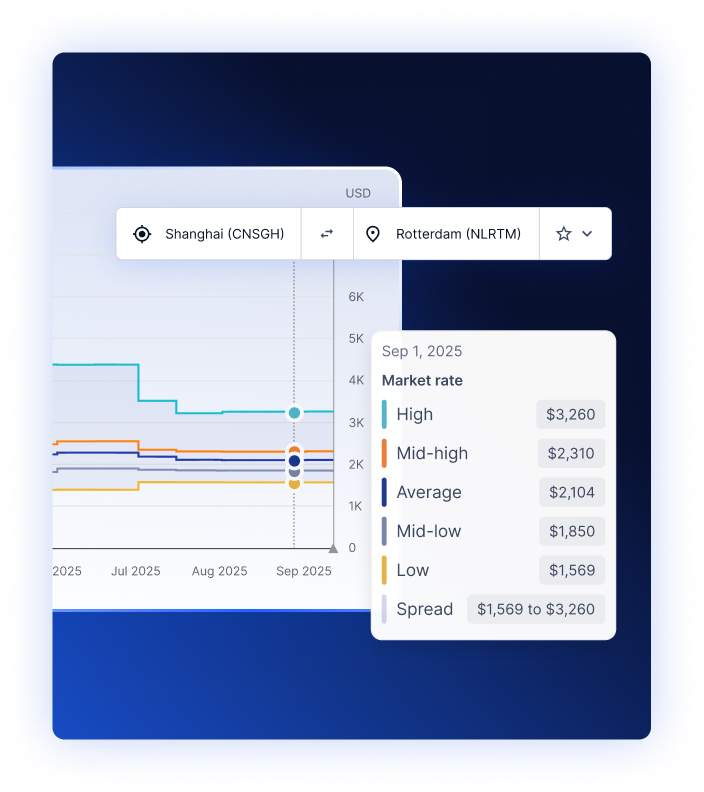
Understand why freight costs move
Xeneta provides cost and service-level market benchmarks across key trade lanes, enabling you to identify:

Market-driven cost changes
Contract performance issues
Effects of operational or sourcing decisions
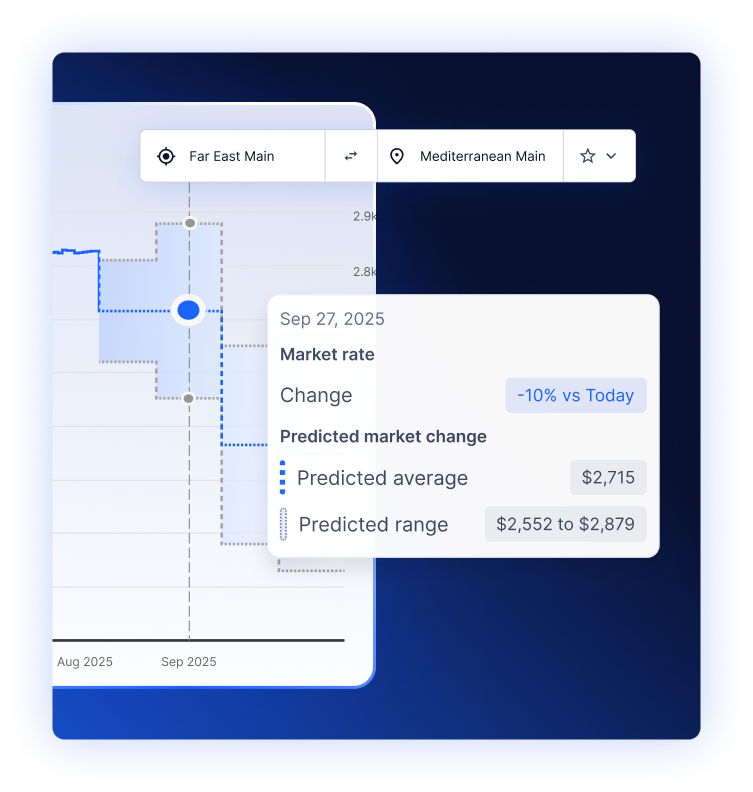
Improve forecasting and accrual accuracy
With visibility into both historical and emerging freight rate trends, you can:
Build more accurate accruals
Improve forecast reliability
Reduce quarter-end surprises
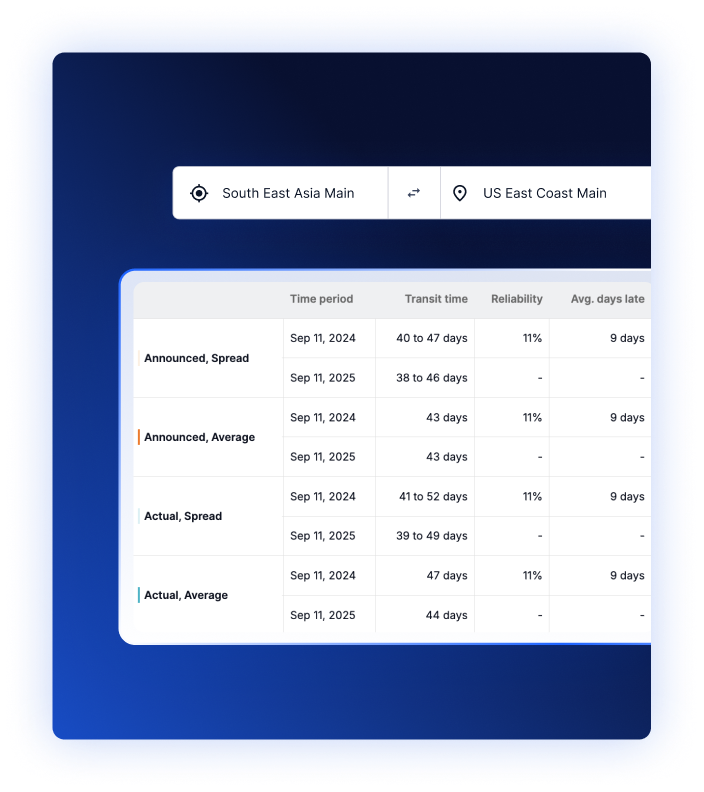
Identify and manage financial risk
Identify, quantify, and manage freight-related risk, including:
Exposure to freight market volatility
Sensitivity of margin to rate changes
Risk concentration by trade lane or region

"Logitech uses Xeneta throughout the year to compare our performance against the market and create awareness of the current happenings in the air and ocean freight industry."
(Boolean: false) || (Long: 195251605098)
.jpg?width=387&name=Prospect_LIpost_WebinarAugust2025%20(6).jpg)
(Boolean: false) || (Long: 196787169548)

(Boolean: false) || (Long: 200515375792)
.png?width=387&name=Forecasting%20use%20case%20(2).png)