Xeneta for Agriculture Shippers
Build a More Resilient Agriculture Supply Chain
Get the real-time ocean and air freight intelligence you need to secure capacity, protect product quality, and keep your goods moving on time.
Trusted by the world's biggest shippers

The CHallenge
Volatile markets and tight transit windows are challenging agriculture supply chains
Get the real-time freight visibility you need to secure reliable capacity, prevent delays, and keep time-sensitive agricultural products moving.
Seasonal cycles create sharp rate fluctuations
Delays and service inconsistency threaten product quality
Thin margins demand knowledge of the market freight rates
Get the visibility to compare service levels, assess carrier reliability, and secure the capacity you need long before seasonal swings or disruptions impact product quality and delivery.
Why Xeneta
Keep your agricultural supply chain moving with full market visibility
Xeneta gives you real-time benchmarks and reliability data, helping you choose dependable carriers, anticipate delays, and keep time-sensitive agricultural goods moving on schedule.
700m+
170k+
60k+
Use cases
What agricultural shippers can do with Xeneta
Secure reliable capacity and stay ahead of delays with real-time freight intelligence.
Leading agriculture and food producers rely on Xeneta to bring clarity to supply chain volatility and improve freight performance.
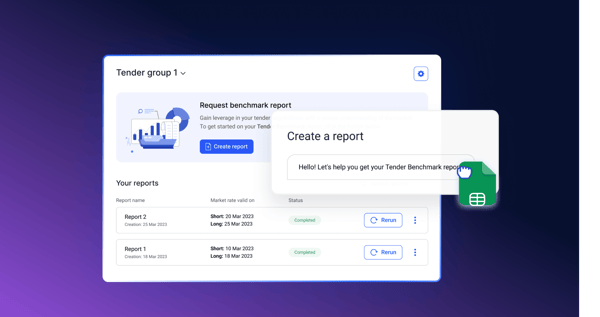
"Xeneta has helped us understand our position in the marketplace and evaluate our procurement strategy regularly. Every time we do a tender, we make excellent usage of Xeneta data through the executive reporting feature. It is great to have all the data in one place to see synergies that different businesses"
Karen Goodall
Global Category Leader, Freight & Logistics, Associated British Foods
Customer Story
Discover how Associated British Foods optimized their freight procurement with Xeneta.

Find out more about our solutions
One platform, two modes. Discover all you need to know about our Ocean and Air offering.
Ocean
Air
Frequently asked questions
How does Xeneta help agricultural exporters protect margins when freight rates and commodity prices move independently?
Agricultural commodity exporters face a compounding challenge that most other industries do not: the price ceiling for acceptable freight spend is set by commodity markets that move completely independently of ocean freight rates. When commodity prices fall while freight rates stay elevated, margin can be wiped out on specific lanes before procurement has had a chance to respond.
Xeneta gives agricultural procurement teams continuous visibility into whether contracted rates remain competitive on their key export corridors, and early warning when market conditions are shifting. By identifying where contracted rates have moved above market, teams can renegotiate proactively rather than absorbing margin erosion through the remainder of a contract cycle. On high-volume commodity lanes, even a modest rate reduction per TEU can make the difference between a commercially viable trade and one that is not. Find out more about Xeneta's ocean freight benchmarks.
How does Xeneta help agricultural shippers manage reefer capacity and rate competitiveness for temperature-sensitive cargo?
Fresh produce, dairy, and other temperature-sensitive agricultural products depend on reefer container services, which are managed by a smaller carrier base and priced at a premium to dry freight. In peak harvest periods, reefer capacity can tighten significantly, and carriers with leverage will price accordingly.
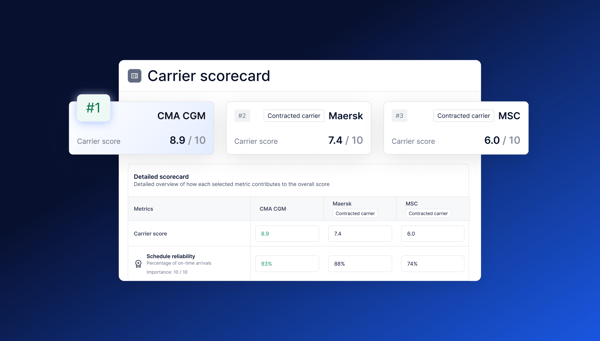
Xeneta provides reefer rate benchmarks across key agricultural trade lanes, allowing procurement teams to assess whether contracted reefer rates are genuinely competitive or whether they reflect seasonal carrier pricing power that should be challenged. Xeneta's Carrier Scorecard also gives teams visibility into which carriers are delivering reliably on specific reefer lanes, combining cost and service data in a single view. For products where a transit delay means spoilage, carrier reliability data is as important as the rate itself.
How does Xeneta help agricultural companies time procurement decisions around seasonal harvest cycles?
Agricultural freight demand follows predictable but sharp seasonal patterns. When multiple origins harvest simultaneously, competition for capacity pushes rates higher. In off-peak windows, carriers are more motivated to fill forward commitments and rate concessions become achievable.
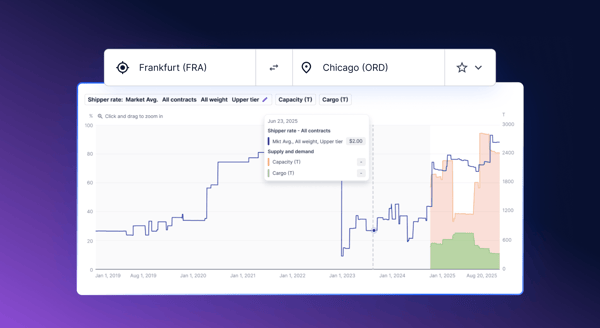
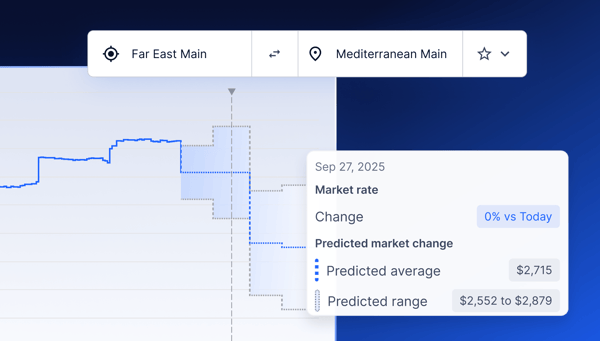
Xeneta's market trend data and 3-month outlook allow agricultural procurement teams to track these seasonal rate patterns on their specific trade lanes and identify the windows where market conditions favor buyers. Timing a tender or contract renewal to coincide with an off-peak capacity period, rather than defaulting to a fixed annual calendar, is one of the most consistently valuable levers available to agricultural procurement teams, and one that is only accessible with lane-level market data.
How do agricultural businesses justify investment in Xeneta?
Thin operating margins in agriculture mean every overhead cost is scrutinized, and a freight intelligence platform needs to demonstrate a return that is concrete and immediate rather than theoretical. The most effective way to make this case is to run a pre-purchase lane analysis, comparing current contracted rates against live market benchmarks on a representative sample of lanes to identify specific overpayment before any commitment is made.
Xeneta goes beyond a simple market average. Industry peer comparison shows how your rates stack up against other agricultural shippers specifically, and volume peer comparison shows how you compare against companies moving similar freight volumes on the same corridors. If businesses shipping comparable volumes are consistently paying less than you on your key export lanes, that gap has a quantifiable cost and a clear negotiating mandate.
For agricultural businesses where freight represents a meaningful share of total delivered cost, even a modest improvement in contracted rates on high-volume export lanes typically generates savings that substantially exceed the platform cost in the first year. The value story is not about having more data, it is about the specific, quantifiable cost recovery that benchmark-informed negotiation delivers. Book a demo to see exactly where your lanes stand against the market.