Xeneta for FMCG
The Tender Is a Moment. The Surcharge Stack Is the Whole Year.
You run one of the biggest multi-carrier tenders in freight — and the market keeps moving for the eleven months after it's signed. Xeneta benchmarks every carrier and validates every surcharge line against real contracts, so the tender you signed stays the tender you pay.
Trusted by the world's biggest shippers
The Challenge
Freight is one of the few cost lines you can still move
With private label taking half the shelf in Europe and price increases off the table, freight is one of the few cost lines procurement can still move — and it's under pressure from below the base rate.
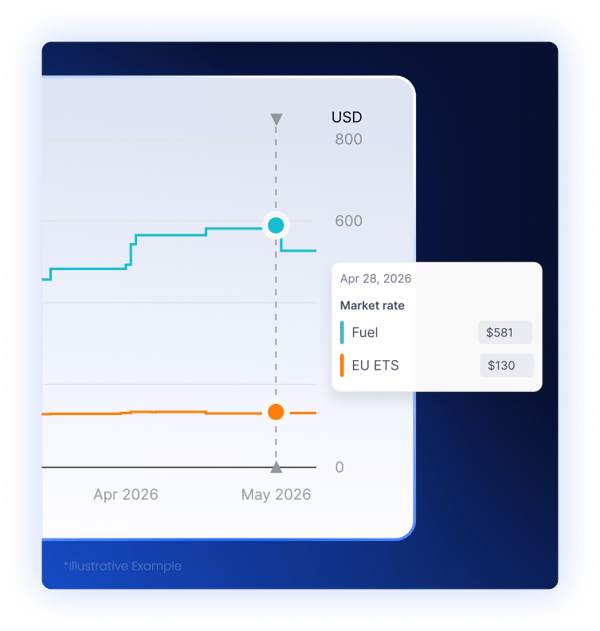
PSS, BAF, ETS — stacking on base rates negotiated in good faith across dozens of carriers. Fuel surcharges get renamed, peak charges land inconsistently on the same lane, and a line that looks standard can sit well above what the market pays on that corridor.
The annual tender locks a diversified carrier mix in January — then rates, surcharges and service drift for eleven months before the next formal look. Mini-tenders help, but each one needs its own market position.
A carrier's on-time performance slips quietly from what was promised in the tender. By the time the pattern is visible, it's an empty-shelf conversation with a retailer — not a freight line item.
Margins with nowhere left to hide
Private label has crossed 50% of unit share in Europe's biggest grocery markets, and price-led growth has run out of room. Every point of freight cost now lands straight in COGS — with no pricing power to pass it through.
Why Xeneta
Built for the scale FMCG tenders run at
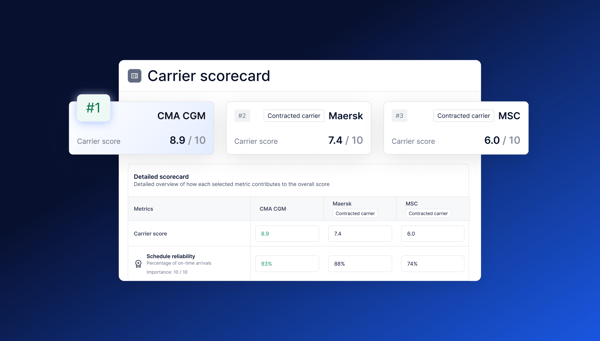
Xeneta benchmarks every carrier in your tender against real contract data on your lanes, validates the surcharge stack line by line — PSS, BAF, ETS and the rest — and tracks each carrier's actual on-time performance against what was promised, all contract long.
800m+
170k+
Surcharges
Use cases
What FMCG shippers can do with Xeneta
Run the tender, hold the rate, and keep every carrier to the deal — across the whole contract year.
7 of the World's Top 10 FMCG Giants have revolutionized their freight procurement with Xeneta.
“Xeneta’s data coverage matches with more than 95% of our port pairs across the globe. This is not only useful on our main corridors, but provides big support on more regional, exotic trades, too. It means everyone can use it and we have one source of truth”
David Lenaers,
Global Director of Logistics Sourcing, Stanley Black & Decker
Find out more about our solutions
Your volume sails dry. Your launches fly.
Ocean
Air
Frequently asked questions
How does Xeneta help FMCG procurement teams validate the surcharge stack across a multi-carrier tender?
Checking every carrier's surcharge terminology across every lane in a global tender has historically been too slow to do at scale — so most teams end up trusting the invoice line. Fuel surcharges get renamed, peak-season charges land inconsistently across carriers on the same lane, and a charge that looks standard in isolation can sit well above what the rest of the market pays on that corridor.
Xeneta itemises the stack against real contract data on each lane: when a bunker or peak-season surcharge arrives that doesn't match what the market is seeing, it's visible immediately and gets challenged in the same quarter, not absorbed into COGS. Over a contract year, across dozens of carriers, this is where tender savings are actually defended. Learn more about rate management with Xeneta.
How does Xeneta help FMCG companies manage carrier risk during seasonal peaks?
Food and beverage supply chains are acutely exposed to carrier risk during peak periods. Back-to-school and year-end retail builds create a peak season that runs roughly late July to October, especially ex-Asia — capacity tightens, blank sailings rise, and carriers that performed reliably in quieter months start to show cracks. For a brand with a promotional window or a retail replenishment commitment that cannot move, a missed sailing is not an inconvenience, it is a direct commercial loss.
Xeneta's Carrier Scorecard gives procurement and logistics teams continuous visibility into carrier reliability by trade lane, including schedule adherence, blank sailing frequency, and actual versus announced transit times. Monitoring this data in the lead-up to and throughout peak periods means deteriorating carrier performance is visible before it creates a supply chain failure, giving teams the time to reallocate volume, engage backup carriers, or escalate early rather than reacting after the fact.
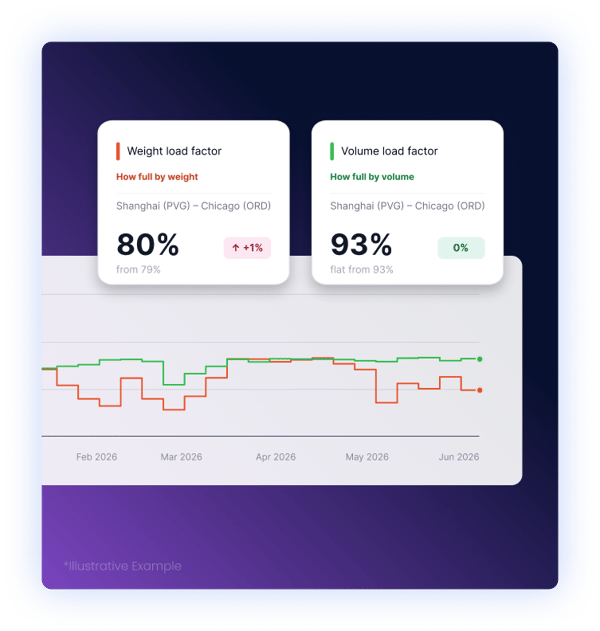
Our market monitoring capability adds another layer, tracking capacity signals and rate movements that often precede service disruptions. When spot rates spike sharply on a key lane heading into peak season, it is frequently a leading indicator of tightening capacity and elevated blank sailing risk. Having that signal in advance allows procurement teams to act on it strategically rather than absorb the consequences operationally.
How does Xeneta help major FMCG manufacturers know if their freight rates reflect their volume leverage?
FMCG manufacturers shipping at significant scale should not be paying average market rates. With the volume leverage the world's biggest consumer brands bring to carrier negotiations, contracted rates should consistently sit at or near the bottom of the market on key lanes. The challenge is knowing whether they actually do.
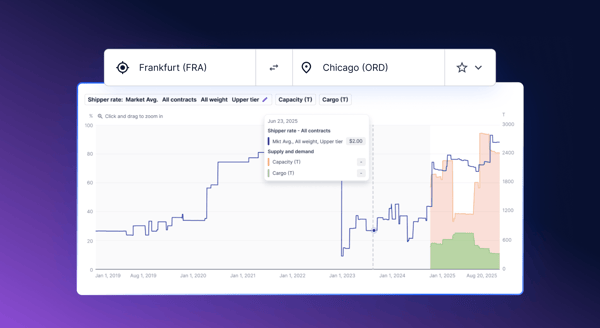
Xeneta's volume peer comparison allows procurement teams to benchmark their rates not just against the broad market, but against other shippers moving comparable volumes on the same corridors. If a shipper moving 100,000 TEUs is paying above the market average while volume peers are at the market low, that gap has a quantifiable cost and a clear negotiating mandate. Find out more about Xeneta's ocean freight benchmarks.
How does Xeneta help sourcing teams demonstrate procurement performance to internal stakeholders?
Many large FMCG groups run centralized sourcing or procurement functions that provide freight buying as a service to business units, who in turn pay for that service. For these teams, demonstrating that their freight procurement delivers market-competitive outcomes is not just a nice to have, it is how their value is measured and their budget justified.
Xeneta gives sourcing teams the independent, third-party evidence to make that case. Round-by-round tender analysis shows how each carrier's bids compared to market benchmarks and how the team's outcomes compared to industry peers. Year-on-year performance reviews quantify improvement over time. This turns what is often a subjective internal conversation into a structured, data-backed performance story that finance and leadership can interrogate and trust. Learn more about Xeneta's forecasting and reporting capabilities.
How does Xeneta help food and beverage procurement teams demonstrate their value to finance leadership?
Finance leaders in FMCG businesses understand that freight is one of the most significant and volatile cost lines in the P&L, but they often lack visibility into whether it is being managed effectively. Procurement teams that cannot quantify their performance in market terms struggle to justify budget, headcount, and strategic investment.
Xeneta provides the reporting capability to answer that question with data. How do contracted rates compare to market? Where did the team outperform? Where is savings potential still available? Presenting this analysis with independent third-party benchmarks transforms the internal procurement narrative from a qualitative claim into a quantified performance story, which is exactly what finance leadership needs to see.
Stanley Black & Decker track savings in the range of 3–5% across a multi-million-dollar freight spend using exactly this kind of market-backed reporting — read their case study.
Does Xeneta cover air freight for new-launch and high-value FMCG shipments?
A small share of FMCG volume — prestige beauty, new-launch SKUs, promotional replenishment gaps — moves by air because the window matters more than the freight bill, and that's the right call. It's a small share of volume but a disproportionate share of cost, and it's rarely benchmarked against anything.
Xeneta provides air freight benchmarks alongside ocean, so teams flying launch volume can validate that spend against the market rather than negotiating on the forwarder's number alone. Find out more about Xeneta's air freight benchmarks.
Much of our inbound is bought CIF — the supplier prices the freight. What's left to benchmark?