Xeneta for Food & Beverage
Keep Your Food & Beverage Supply Chain Fresh, Fast, and On-Budget
Protect margins, secure reliable delivery, and adapt to seasonal volatility with full visibility into freight costs and service levels.
Trusted by the world's biggest shippers

The CHallenge
Volatility, spoilage risk, and tight delivery windows are straining food & beverage supply chains
Tight delivery windows and temperature-sensitive cargo leave little room for error, making visibility into rates, capacity, and carrier performance more critical than ever.
Perishables demand consistent, predictable transit times
Seasonal exports cause rate spikes and capacity shortages
Margins are tight, making freight rates market-low visibility essential
In food and beverage, timeliness is everything. Xeneta helps you move product on time, protect margins, and stay ahead of seasonal swings.
Why Xeneta
Built to protect and keep your supply chain moving
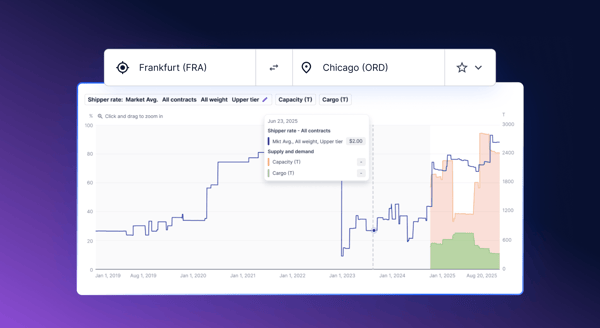
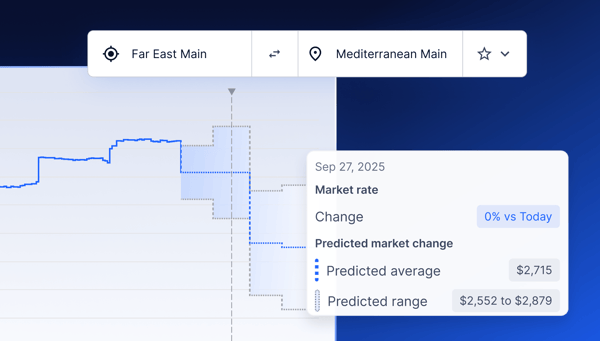
Xeneta gives you real-time freight benchmarks and service-level insights, so you can secure temperature-reliable capacity, manage tight delivery windows, and avoid delays that put shelf-life and availability at risk.
700m+
170k+
60k+
Use cases
What food & beverage shippers can do with Xeneta
Optimize your supply chain strategy with real-time market data that helps you secure reliable ocean and air freight capacity, avoid risking delays, and keep products moving on time.
7 of the World's Top 10 FMCG Giants have revolutionized their freight procurement with Xeneta.
"Xeneta has helped us understand our position in the marketplace and evaluate our procurement strategy regularly. Every time we do a tender, we make excellent usage of Xeneta data through the executive reporting feature. It is great to have all the data in one place to see synergies that different businesses"
Karen Goodall
Global Category Leader, Freight & Logistics, Associated British Foods
Customer Story
Discover how Associated British Foods optimized their freight procurement with Xeneta.
Find out more about our solutions
One platform, two modes. Discover all you need to know about our Ocean and Air offering.
Ocean
Air
Frequently asked questions
How does Xeneta help food and beverage procurement teams manage reefer freight costs?
Food and beverage supply chains frequently depend on reefer container services, which are priced at a premium to dry freight and serviced by a smaller pool of carriers with specialized equipment. Without an independent benchmark, procurement teams have no way to know whether the rates they are paying reflect market conditions or simply what their carriers were willing to accept.
Xeneta provides reefer rate benchmarks across key food trade lanes, giving procurement teams a clear view of where contracted rates sit relative to the market. This is the foundation for identifying overpayment, setting credible targets for the next tender, and ensuring that the premium paid for temperature-sensitive capacity is genuinely justified by market conditions rather than carrier pricing power. Find out more about Xeneta's ocean freight benchmarks.
How does Xeneta help food and beverage companies manage carrier risk during seasonal peaks?
Food and beverage supply chains are acutely exposed to carrier risk during peak periods. Harvest seasons, promotional windows, and holiday demand surges all create moments where freight capacity tightens, blank sailings increase, and carriers that performed reliably in quieter periods start to show cracks. For a retailer with products that have a shelf life or a promotional commitment that cannot move, a missed sailing is not an inconvenience, it is a direct commercial loss.
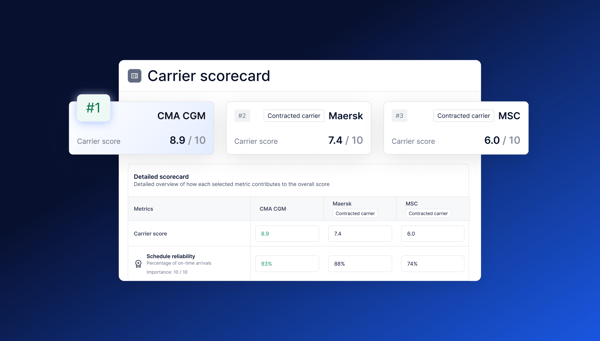
Xeneta's Carrier Scorecard gives procurement and logistics teams continuous visibility into carrier reliability by trade lane, including schedule adherence, blank sailing frequency, and actual versus announced transit times. Monitoring this data in the lead-up to and throughout peak periods means deteriorating carrier performance is visible before it creates a supply chain failure, giving teams the time to reallocate volume, engage backup carriers, or escalate early rather than reacting after the fact.
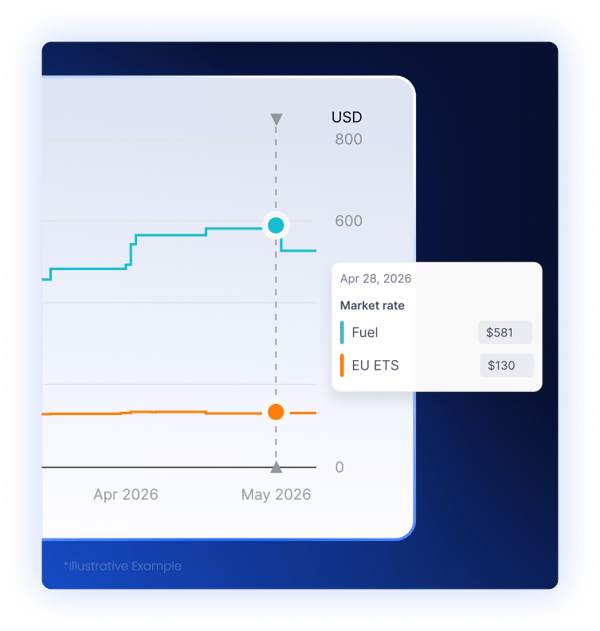
Our market monitoring capability adds another layer, tracking capacity signals and rate movements that often precede service disruptions. When spot rates spike sharply on a key lane heading into peak season, it is frequently a leading indicator of tightening capacity and elevated blank sailing risk. Having that signal in advance allows procurement teams to act on it strategically rather than absorb the consequences operationally.
How does Xeneta help large food and beverage retailers know if their freight rates reflect their volume leverage?
Retailers shipping at significant scale should not be paying average market rates. With the volume leverage that major food retailers and supermarkets bring to carrier negotiations, contracted rates should consistently sit at or near the bottom of the market on key lanes. The challenge is knowing whether they actually do.
Xeneta's volume peer comparison allows procurement teams to benchmark their rates not just against the broad market, but against other shippers moving comparable volumes on the same corridors. If a retailer shipping 100,000 TEUs is paying above the market average while volume peers are at the market low, that gap has a quantifiable cost and a clear negotiating mandate. Find out more about Xeneta's ocean freight benchmarks.
How does Xeneta help sourcing teams demonstrate procurement performance to internal stakeholders?
Many large food and beverage businesses run centralized sourcing or procurement functions that provide freight buying as a service to business units, who in turn pay for that service. For these teams, demonstrating that their freight procurement delivers market-competitive outcomes is not just a nice to have, it is how their value is measured and their budget justified.
Xeneta gives sourcing teams the independent, third-party evidence to make that case. Round-by-round tender analysis shows how each carrier's bids compared to market benchmarks and how the team's outcomes compared to industry peers. Year-on-year performance reviews quantify improvement over time. This turns what is often a subjective internal conversation into a structured, data-backed performance story that finance and leadership can interrogate and trust. Learn more about Xeneta's forecasting and reporting capabilities.
How does Xeneta help food and beverage procurement teams demonstrate their value to finance leadership?
Finance leaders in food and beverage businesses understand that freight is one of the most significant and volatile cost lines in the P&L, but they often lack visibility into whether it is being managed effectively. Procurement teams that cannot quantify their performance in market terms struggle to justify budget, headcount, and strategic investment.
Xeneta provides the reporting capability to answer that question with data. How do contracted rates compare to market? Where did the team outperform? Where is savings potential still available? Presenting this analysis with independent third-party benchmarks transforms the internal procurement narrative from a qualitative claim into a quantified performance story, which is exactly what finance leadership needs to see. Associated British Foods, whose brands include Primark and Twinings, use Xeneta's executive reporting feature in every tender to bring all the data into one place and demonstrate the value of their freight procurement across multiple business units. Learn more about forecasting and budget planning with Xeneta.