Xeneta for Automotive
Protect Production.
Cut Freight Costs.
Improve Reliability.
Control logistics spend without risking line stoppages. Benchmark cost and service performance across time-critical automotive lanes, with independent market data.
Trusted by the world's biggest automotive shippers
The CHallenge
Margin pressure is forcing tougher trade-offs in automotive logistics
As OEMs and suppliers face shrinking margins and aggressive cost-cutting targets, freight decisions are under intense scrutiny, yet production timelines leave no room for failure.
Severe cost pressure across inbound and outbound logistics
Time-critical supply chains amplify the cost of delays
Limited insight into carrier performance at key automotive gateways
When margins are under pressure, logistics decisions must impact cost without disrupting production. Get the visibility needed to balance price and reliability, and explain decisions clearly to leaders.
Why Xeneta
Built for margin-constrained, production-critical supply chains
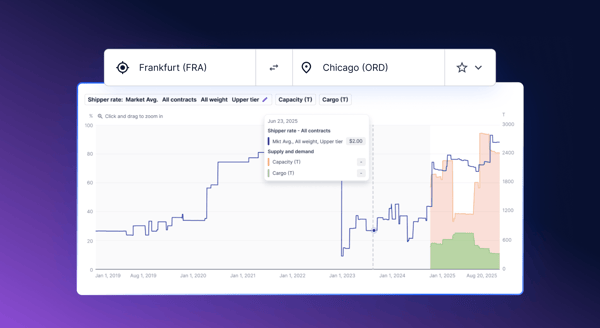
Xeneta gives automotive teams independent freight rate benchmarks, capacity signals, and port-level carrier performance data, so you can control freight spend, select reliable carriers, and defend decisions under intense cost scrutiny.
700m+
170k+
60k+
Use cases
What automotive shippers can do with Xeneta
Optimize your freight strategy with real-time market data that helps you secure capacity, prevent delays, and keep production running on schedule.
50% of the world’s top 10 automotive companies trust Xeneta’s freight intelligence
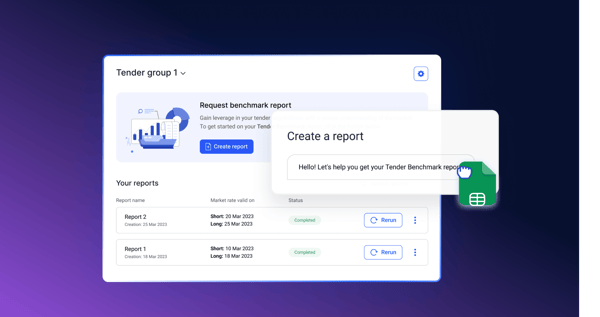
"Market intelligence gives us a critical business advantage. We use Xeneta ocean and air rates as the benchmark to all tender bids. The team checks if the rates they are negotiating are in line with the market level or optimal for Continental. The data is crucial for evaluating our supply chain performance and improving internal processes."
Dr. Jens Röttger, Head of Cluster Freight - NPM Purchasing, Continental
Customer Story
Discover how automotive parts manufacturer Continental optimized their freight procurement with Xeneta.
Find out more about our solutions
One platform, two modes. Discover all you need to know about our Ocean and Air offering.
Ocean
Air
Frequently asked questions
How does freight rate volatility impact automotive supply chains, and how does Xeneta help manage exposure?
Automotive supply chains operate on tight just-in-time principles where a delayed component shipment can halt an assembly line at a cost of tens of thousands of dollars per hour. In this environment, carrier reliability is the primary procurement risk, not just rate levels. A below-market rate from a carrier with deteriorating schedule adherence on a critical inbound lane is not a saving, it is a liability.
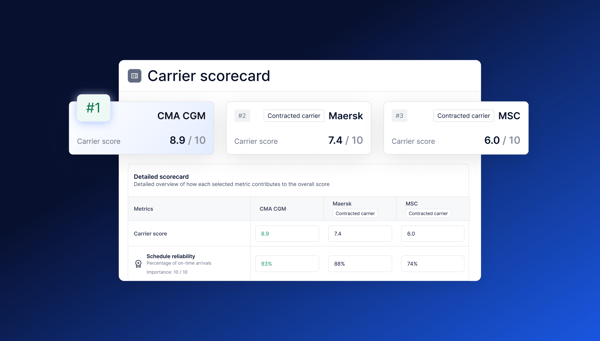
Xeneta gives automotive procurement teams visibility into both dimensions in one place. Carrier performance data covering schedule reliability, blank sailing frequency, and actual transit times by trade lane sits alongside rate benchmarks, so decisions on carrier selection and volume allocation are made with a full picture of cost and service risk. When reliability signals start to deteriorate on a lane that feeds a production line, Xeneta's Carrier Scorecard makes that visible before it becomes an operational crisis.
How do automotive OEMs and Tier 1 suppliers align freight procurement strategies across a global supply base?
Automotive supply chains span multiple tiers, regions, and supplier relationships, often with different procurement teams managing freight for different component categories or geographies. Without a consistent benchmarking framework, it is impossible to assess whether freight costs across the supply base are competitive or where consolidation could generate leverage.
Xeneta provides a common market reference that allows global procurement teams to apply consistent standards across regions, compare supplier-managed freight costs against independent benchmarks, and build the evidence base for network and supplier strategy decisions. Continental, one of the world's largest automotive suppliers, uses Xeneta ocean and air rates as the benchmark for all tender bids, giving their team a consistent foundation for evaluating whether negotiated rates are in line with the market across their global network.
How should automotive procurement teams evaluate carrier reliability on inbound component lanes?
Assembly line efficiency depends on freight reliability, making carrier schedule adherence a procurement KPI as critical as contracted rate. A carrier offering a below-market rate on a key inbound lane may represent a false saving if their reliability record cannot support the service levels production requires.
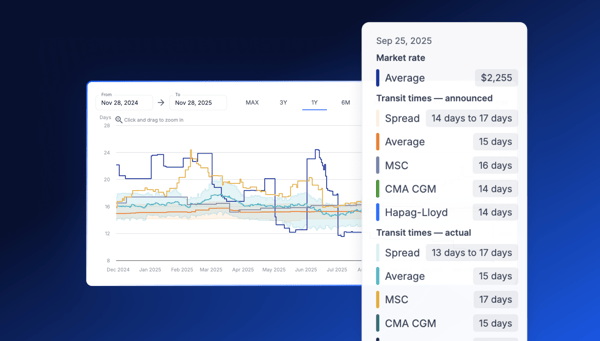
Xeneta's Carrier Scorecard allows automotive procurement teams to evaluate carriers on schedule reliability rates, blank sailing frequency, and actual versus announced transit times by trade lane, alongside rate competitiveness. When a carrier's reliability deteriorates on a critical lane, Xeneta provides the objective evidence needed to trigger a service review, activate contractual remedies, or initiate a targeted RFQ to replace an underperforming supplier before it becomes a production risk. Find out more about how Xeneta supports supplier performance evaluation.
How do automotive companies with lean teams manage freight procurement across hundreds of component lanes?
Automotive procurement teams often manage freight for hundreds of distinct component lanes across multiple sourcing geographies, a portfolio far too large for manual monitoring. Without a systematic approach, lanes drift above market undetected until the next tender cycle, by which point the overpayment has accumulated for months.
Xeneta's continuous benchmarking automatically tracks the market positioning of every contracted lane, surfacing the specific lanes that have moved out of competitive range and need attention. This exception-based model is exactly what lean teams need: rather than reviewing every lane, procurement capacity is focused on the subset where action will generate the most value. Learn more about how Xeneta supports freight rate management across complex portfolios.
How does Xeneta support air-to-ocean conversion decisions for automotive component sourcing?
Automotive companies sourcing components from Asia often rely on air freight for urgency and supply chain flexibility, at a cost premium that can be ten to twenty times the equivalent ocean rate. Where lead times allow, converting to ocean generates substantial savings and reduces carbon emissions, but the business case needs to be built on accurate market data rather than carrier quotes alone.
Xeneta provides independent ocean and air freight benchmarks across key automotive sourcing lanes in China, Southeast Asia, and Eastern Europe, giving procurement teams the data to model conversion economics accurately, set credible ocean rate targets before approaching carriers, and verify that awarded contracts are actually delivering the expected cost advantage before committing to a broader mode shift across the component base.