
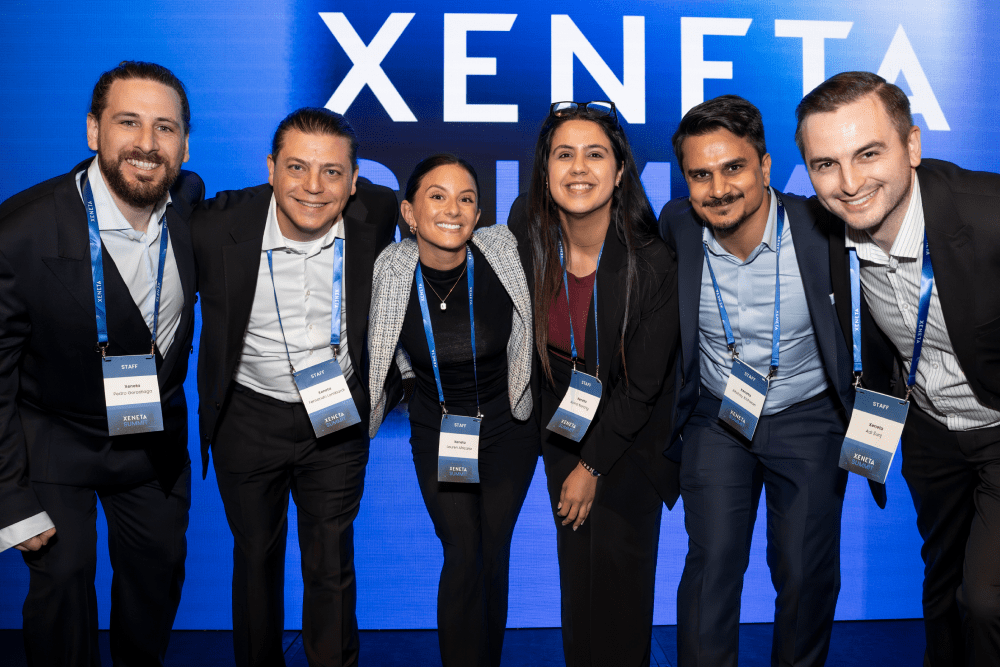

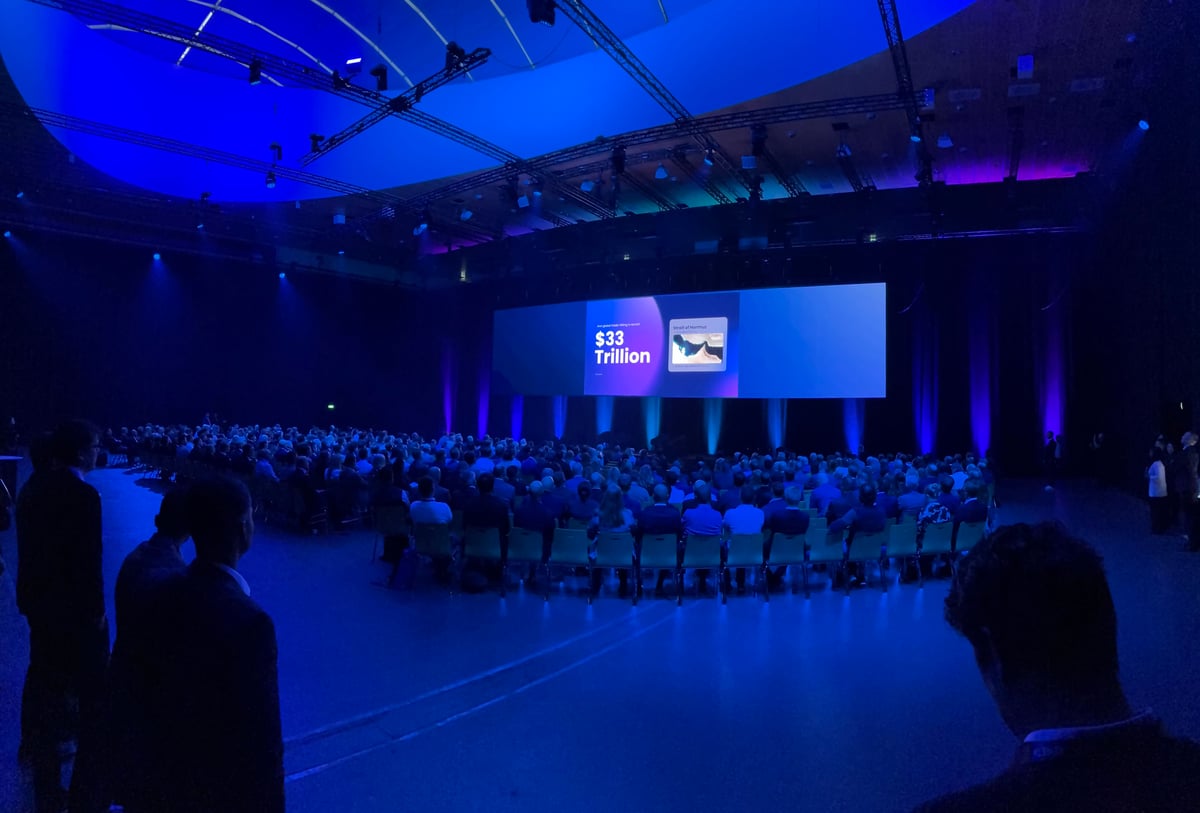
The tenth Xeneta Summit opened in Munich today with 600 shippers, forwarders, carriers and airlines in a single room. Every other day of the year these companies negotiate against each other. For two days they sit together.
Patrik Berglund opened the morning with the story of how the Summit started: a few people who believed this industry deserved one set of facts. Ten summits later, the data is there. Xeneta holds 850 million ocean rates across 170,000 port pairs, adds 16 million more each month, covers 25,000 airport pairs and 17 million tonnes a year in air, and tracks 6,500 vessels against 1,700 liner schedules.
Day one was about what that data is for. Let's dive in.
1. Predictability, not price
Across a variety of sessions, the word that kept coming back from stage and floor was predictability. In a year that delivered the closure of Hormuz, a partial return to Suez, four typhoons in seven weeks and a doubling of bunker prices, the people who buy and sell freight want to know what happens next and what to do about it.
Tanguy Caillet, Xeneta's CRO, had the number. Forty customers attended a selection of peer-to-peer roundtables across six cities. During these session, 45 core questions were captured; a quarter were about price, three quarters about predictability. One procurement lead summed up the year: "We spend half the year building the budget, and the other half defending it."
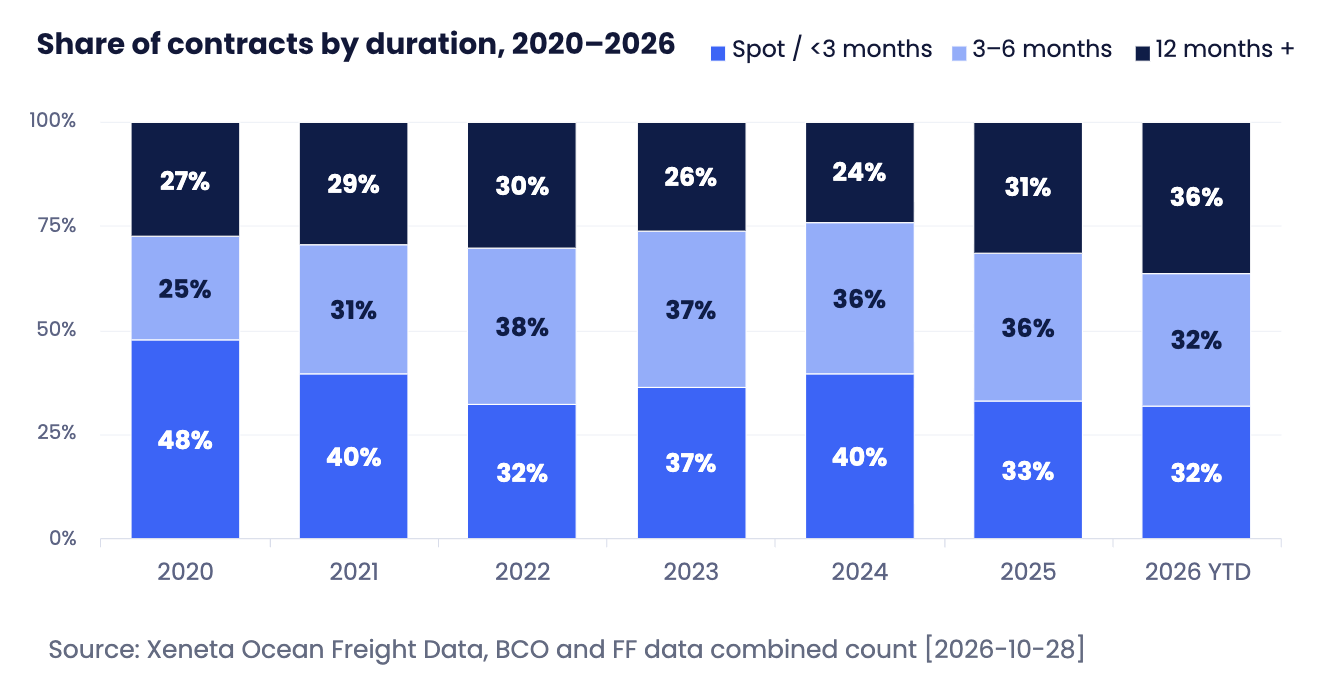
If predictability is what buyers want, the obvious question is whether the instrument built to deliver it, the annual contract, still can. The closing panel took that on. Bjorn Vang Jensen, with Arcadio Martinez (DSV) and Michael Aldwell (Kuehne+Nagel), reframed "is the long-term contract dead" as "is a traditional contract a viable strategy for the coming tender season?" The data says yes: 36% of contracts signed in 2026 run 12 months or longer, up from 27% in 2020 and the highest share in six years. Six years of shocks produced spot spikes rather than a lasting flight from contracts.
Aldwell located the root problem in forecasting: most customers mis-forecast 2026, some by 15% to 40%, and index-linked terms give both sides a transparent way to handle the overflow. Martinez described the split he sees working: fix the predictable volume, put the volatile part on an index with a collar, and finance still gets a number it can budget. Asked from the floor whether forwarders will exist in ten years, Aldwell called forwarding a problem-solving industry in a market where problems are multiplying, and Martinez pointed to the 18 companies involved in moving one container and the neutrality a forwarder brings between them.
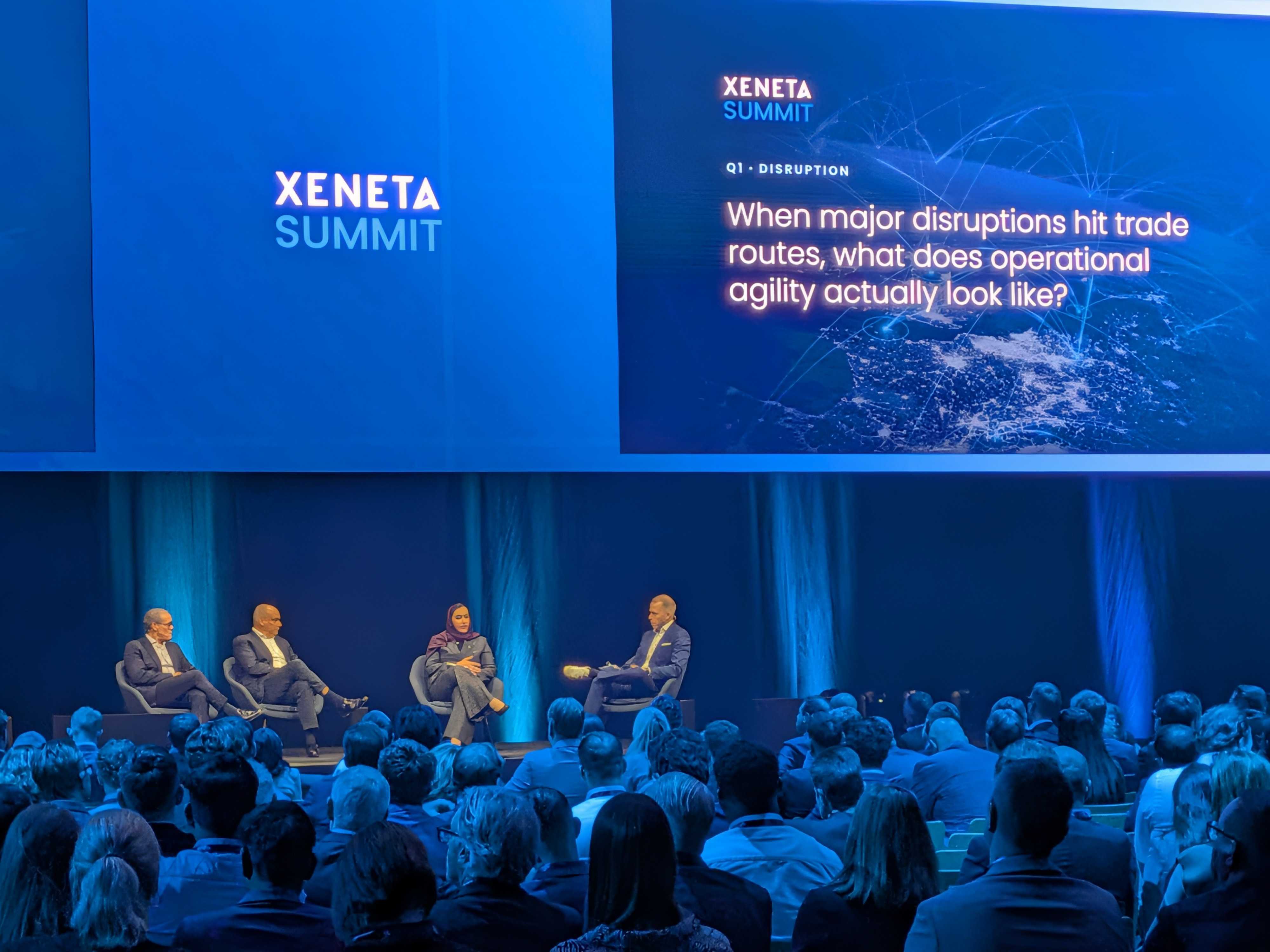
The carrier and shipper panel landed in the same place from the other side. Rolf Habben Jansen (Hapag-Lloyd) argued the fixed twelve-month rate no longer fits the volatility of the last six years: agree the scenarios upfront, whether index-based terms, volume tiers or a mechanism for sharp market moves, because "any long-term partnership where the economic benefits are very unbalanced over time will break, no matter how much trust you have." Alejandro Parodi (Bekaert) put it from the shipper's seat: “Trust matters, but trust without measurable reciprocal commitments is not a commercial model.”
The year the budget broke
Erik Devetak and Tobias Vernon opened Xeneta's annual data review with a confession. Analysts, Xeneta included, predicted a softer 2026, and for eight weeks they were right: Far East spot rates fell every week until 27 February. Then the war in the Middle East closed the Strait of Hormuz. Spot rates rose on every lane from the Far East, from around 60% at the low end to 540% into the Gulf, and Far East to US rates now sit at more than five times their February level. Europe has since pulled back; the US has not. The two markets have stopped moving together.
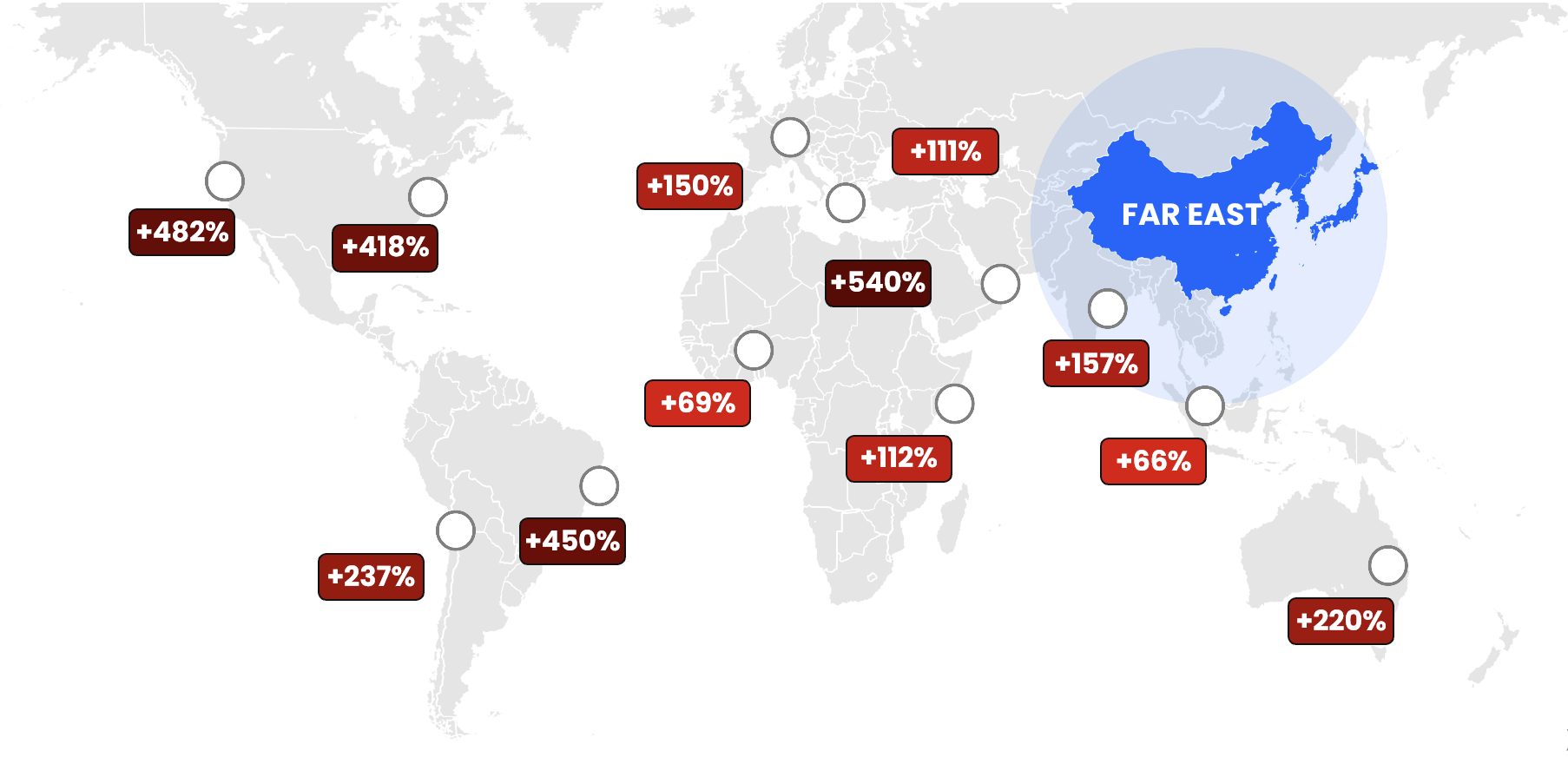
Source: Xeneta. % change in Far East ocean spot rates by destination, 27 Feb 2026 to regional peak
Three findings stood out.
Fuel surcharges rose 72% to 89% while bunker prices stayed flat from April, so surcharges now follow supply and demand rather than fuel. Jebel Ali went from 459,000 scheduled TEU a week to 12,000; neighbouring ports picked up 38% of the loss and 62% disappeared from the Gulf entirely. Middle East reliability fell from 23% on time in December to 12% in October, and the apparent April rebound to 27% came because carriers cancelled 36% of planned capacity. A smaller schedule is not a better one.
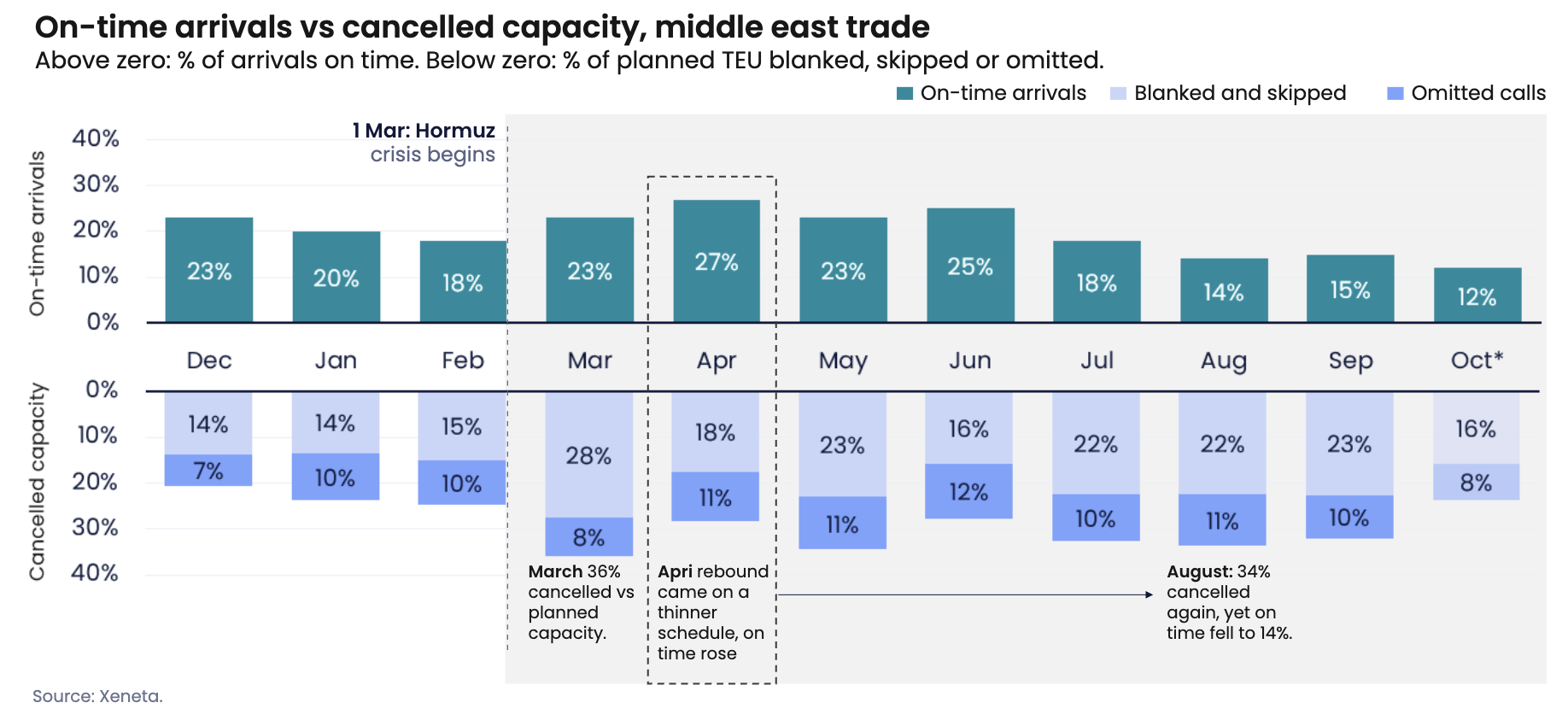
Typhoons compounded it: Far East to Europe was 5% on time in October with 9.5 days of average delay, a 12-month low. The good news was the Red Sea, where scheduled capacity reached 467,297 TEU a week on 21 October, half the pre-crisis level, although Suez sailings saved only 3.3 days end to end because vessels left Shanghai 12.5 days late.
The market's response: contracts got a little shorter, forwarders priced above the market as carriers squeezed them on allocation, the largest shippers won the sharpest rates, and pharma and automotive paid above the market because a delay costs them more than the freight does. In the words of Vernon: "there’s a pattern. The more a delay costs you, the less you can push the market, and the more you pay. In a tight market, that gets amplified."
Trade is rerouting, not retreating
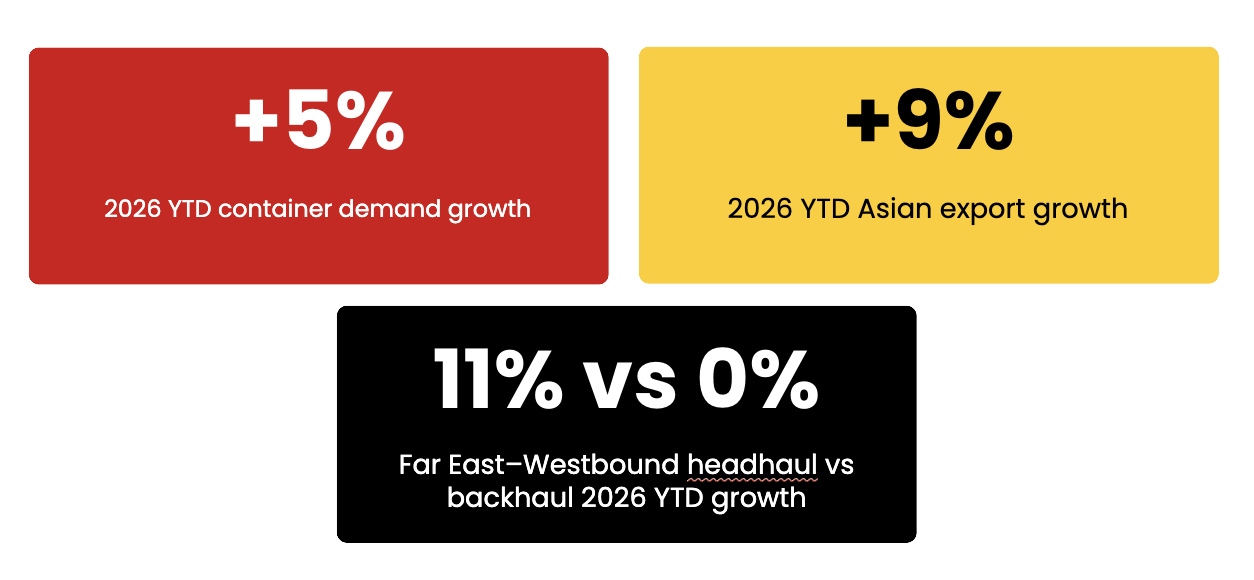
Peter Sand and Jacob Moe opened the macro session with growth that is real and lopsided. Global container demand is up 5% year to date and Asian exports 9%, but Far East westbound headhaul volumes grew 11% while backhaul stood still. North American imports fell 1.9 million TEU in 2025 while European imports rose 1.2 million TEU in 2026. The 2026 forecasted fleet growth sat at 4% this year, yet 3.8 million TEU sits in congested ports and roughly 20% of effective capacity is lost to congestion and diversions.
Habben Jansen, in a later session, offered an explanation as to why diversification means more shipping rather than less: a shipment that once went Shanghai to Los Angeles now sends components to Thailand for assembly and moves on via Singapore, two or three moves instead of one.
Khawla Abdullah (Emirates SkyCargo) observed a similar shift in air. According to industry reports, EU e-commerce imports declined by 47% in August 2026 compared with June 2026, with capacity being redeployed to other markets, including North America and Asia Pacific. This reflects a broader shift in market dynamics that is reshaping global trade flows. Abdullah spoke to Emirates SkyCargo's priorities over the next 12 months, including enhancing the customer experience through its digital tools and introducing products that support the growth of its network, such as its recently launched AI Tech product.
Data is just the beginning
Ryan Petersen of Flexport opened his keynote with a typewriter covered in duct tape at Jakarta airport, one finger typing an air waybill. Given how much of the industry still runs on inboxes, he said, it "should be called freight email forwarding at this point." His argument was that the freight bill is not the industry's biggest cost. The waste around it is, roughly $2 trillion a year: $1.2 trillion in lost sales from stock-outs, $600 billion in inventory written off or discounted, $100 billion in containers shipped 70% full, and half of all air freight booked unplanned. For scale, the entire SaaS industry earns about $500 billion a year. Every item on that list is a data problem.
If the waste is a data problem as Petersen suggests, the obvious question is why an industry this well instrumented has not solved it. Caillet's keynote offered an answer from the inside. Five months into the role after 25 years running shipper supply chains, he listed what had surprised him: budgets and tenders still built in spreadsheets, contracts that flex with the market, visibility without matching of volume to capacity, and boards asking about AI when AI can only see the data it is given.

Fabio Brocca, Xeneta's CPO, drew the conclusion. Fourteen years of data got the industry to "see" the market; the next phase is "decide" and "act". The announcements: Ocean Schedules with transshipment, comparing direct and indirect services with promised transit next to actual, updated daily; four Asian airlines and 3 million tonnes of new air visibility; Xeneta AI agents for all shippers and an MCP connector in early access that brings Xeneta data into Copilot or ChatGPT; Rate Management in every bundle, with AI that standardises any rate sheet in minutes; and Xeneta Tender, the 92-day tender run against the benchmark at every step, with five customers live this quarter and launch in January 2027.
"The decisions stay yours", Brocca said. "What disappears is the spreadsheet and effort that stood between you and them."
AI: decision support, for now
The most grounded AI conversation of the day came from the people running the assets. Rolf Habben Jansen was candid: Hapag-Lloyd applies AI to empty repositioning, equipment and some pricing, but "the number of real decisions being made by AI is still quite limited," and the industry still does not know what it does not know.
Ryan Petersen’s answer was that the limit was never the intelligence. It was the inputs. His example was consolidation. Combining two shipments to ship less is maths you could do on a whiteboard, and the industry has known that for decades. What stopped it happening at scale was feeding that maths live data. Once Flexport did, it saw an average 14% reduction in freight shipped.
Petersen then offered two further ideas to sit with:
- Agents that monitor the KPIs of their own work and propose the next automation, a loop where quality compounds.
- A question: who captured the value of refrigeration? Not the fridge makers. Coca-Cola. The companies with the most to gain from AI are the ones with the messiest, most consequential data, and that is freight. The opportunity is planning and optimisation down to the SKU in a profitable industry that does not need to cut headcount.
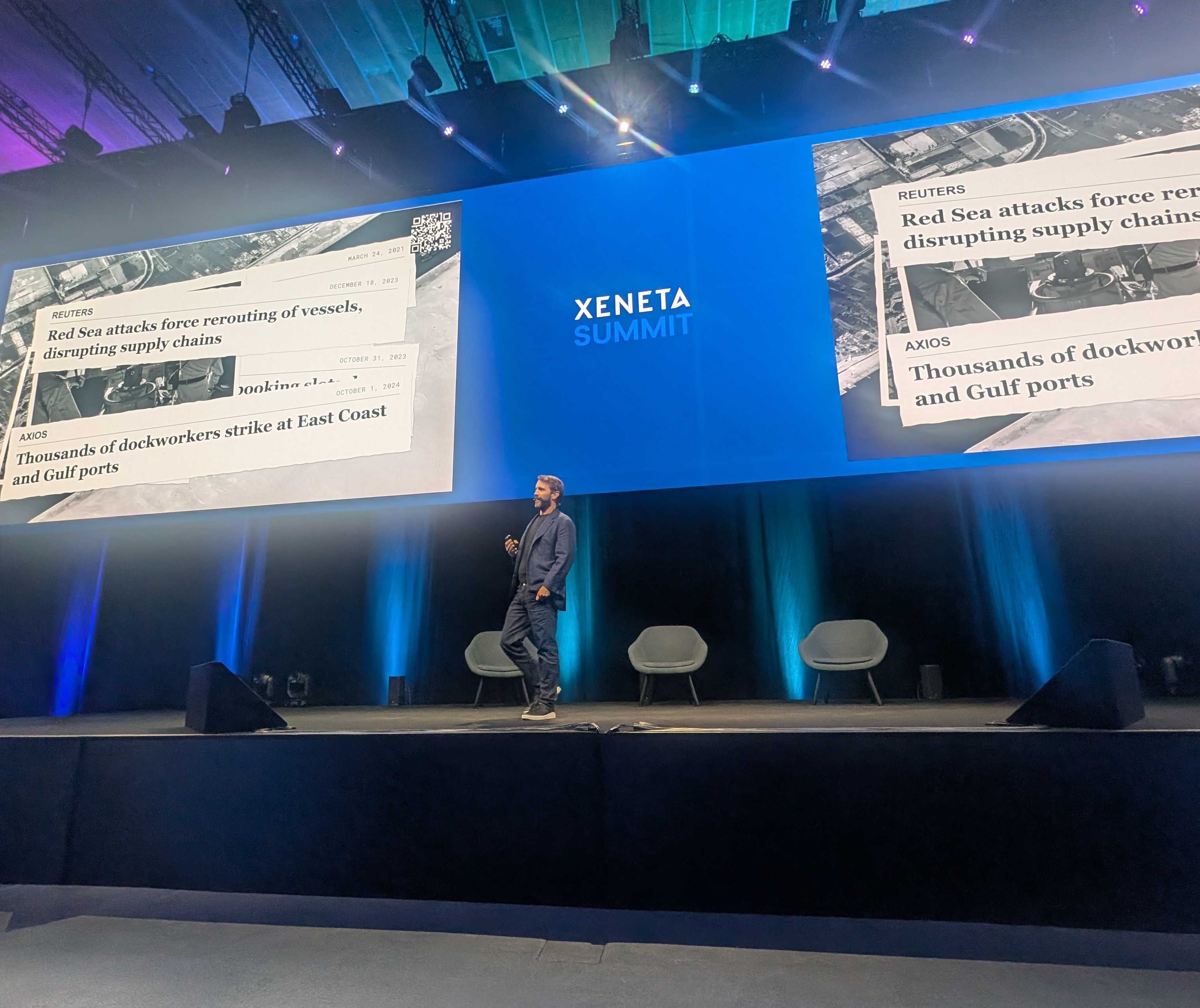
Xeneta’s own update landed somewhere between the two. The agents shown at the 2025 Summit answered questions. The two added this year run on their own: they compare a customer’s contracted rates against the market and against peers, and flag where a rate looks high or where volume could move to a cheaper lane or supplier. The decision stays with the buyer, which is Habben Jansen’s point, but the agent now finds the question rather than waiting to be asked, which is Petersen’s. Two early examples were cited: a chemicals company that took a flagged rate into negotiation and came out $252 a container lower, and a Canadian manufacturer that reviewed its full portfolio in minutes rather than days.
Off the main stage
Between the main-stage sessions, the breakouts did the hands-on work.
Product teams showed Air Freight in action; exploring how Air Canada Cargo utilizes Xeneta Weekly Data insights to identify trends before the market shifts. Other sessions looked at how organisations are moving from market visibility toward predictive, integrated and decision-ready intelligence.
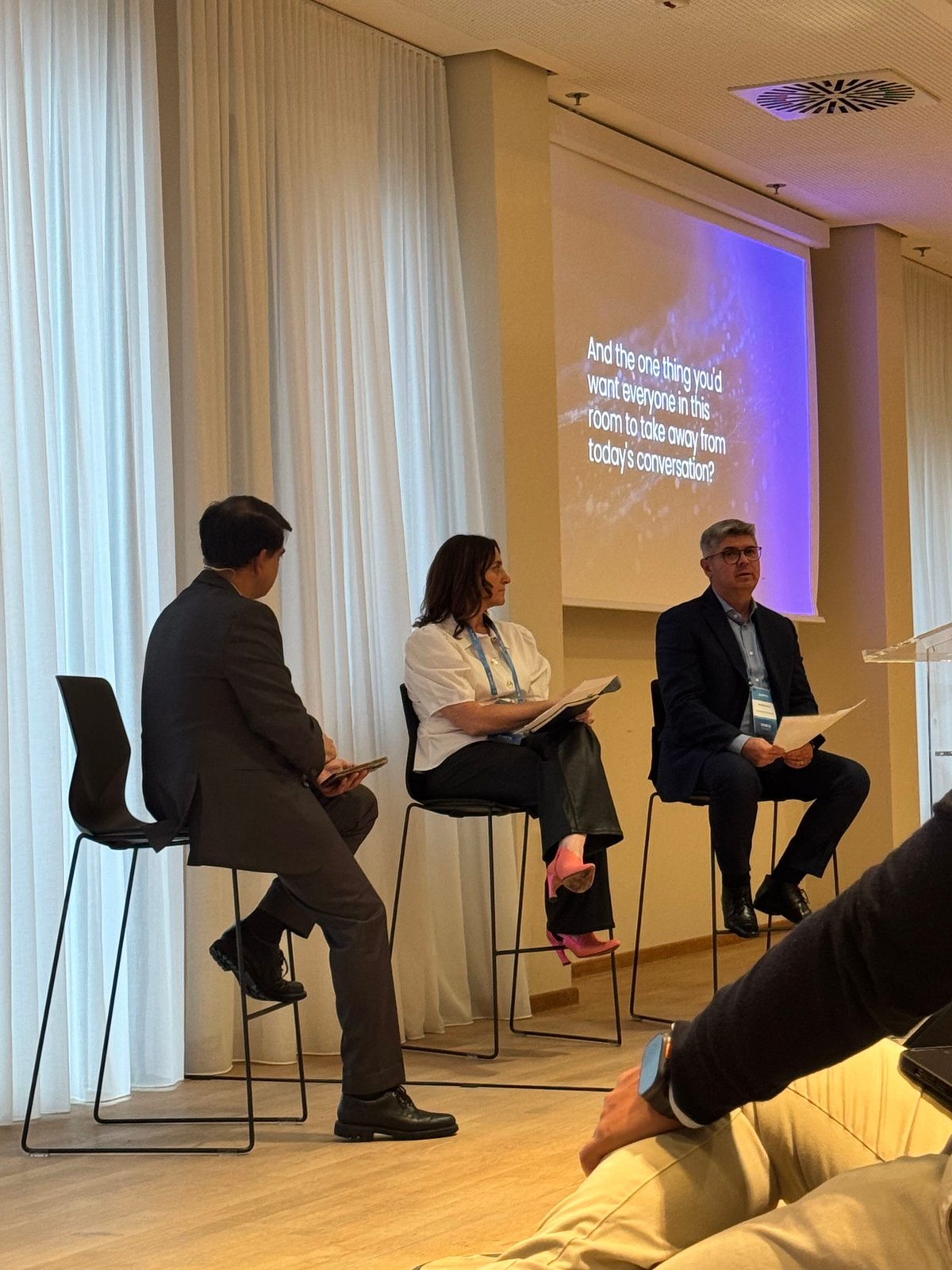
The real value, though, was the intimacy of the rooms: customers sharing ideas with peers who face the same tender, the same lanes and the same CFO, and asking the candid questions that rarely get asked from a conference floor.
What's on the agenda for day two
If day one had a single message, it was that the industry has stopped asking what the rate is and started asking what to do about it.
Tomorrow turns to the answers: the 2027 outlook for ocean and air from the Xeneta analyst team, and the leadership tracks, where the conversation moves from what the market is doing to how procurement, supply chain and commercial leaders organise their teams around it.
Circle back for the day two recap blog.