Munich, 4 November 2026
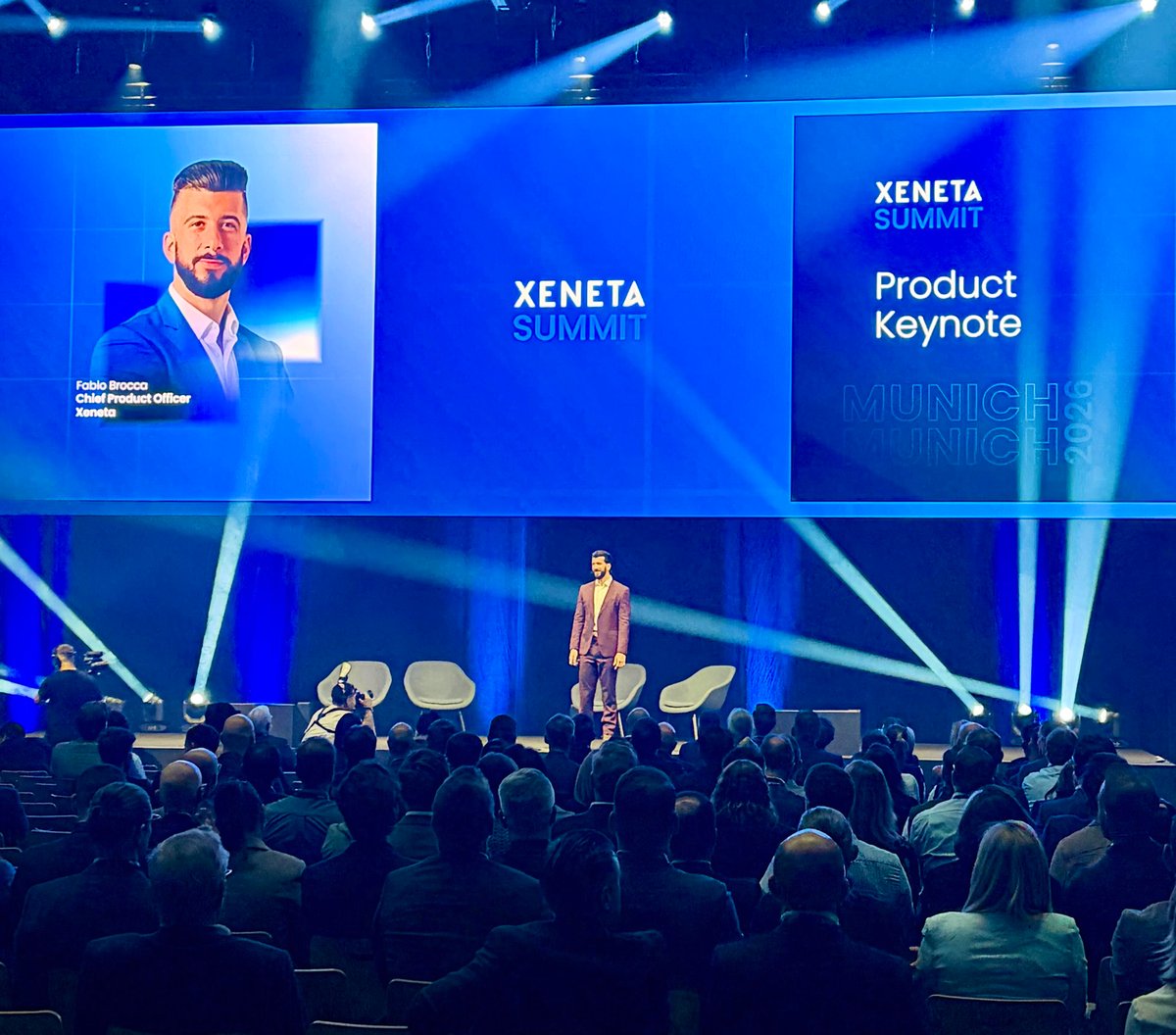
Xeneta, the AI-powered ocean and air freight intelligence solution, today announced its largest set of product launches at the 10th annual Xeneta Summit, Munich. Presented live to over 600 shippers, forwarders and carriers, the launches mark a shift in what Xeneta does for its customers.
For 14 years, Xeneta has given freight procurement the data to see the market; now it moves into the decisions that data informs and the actions that follow.
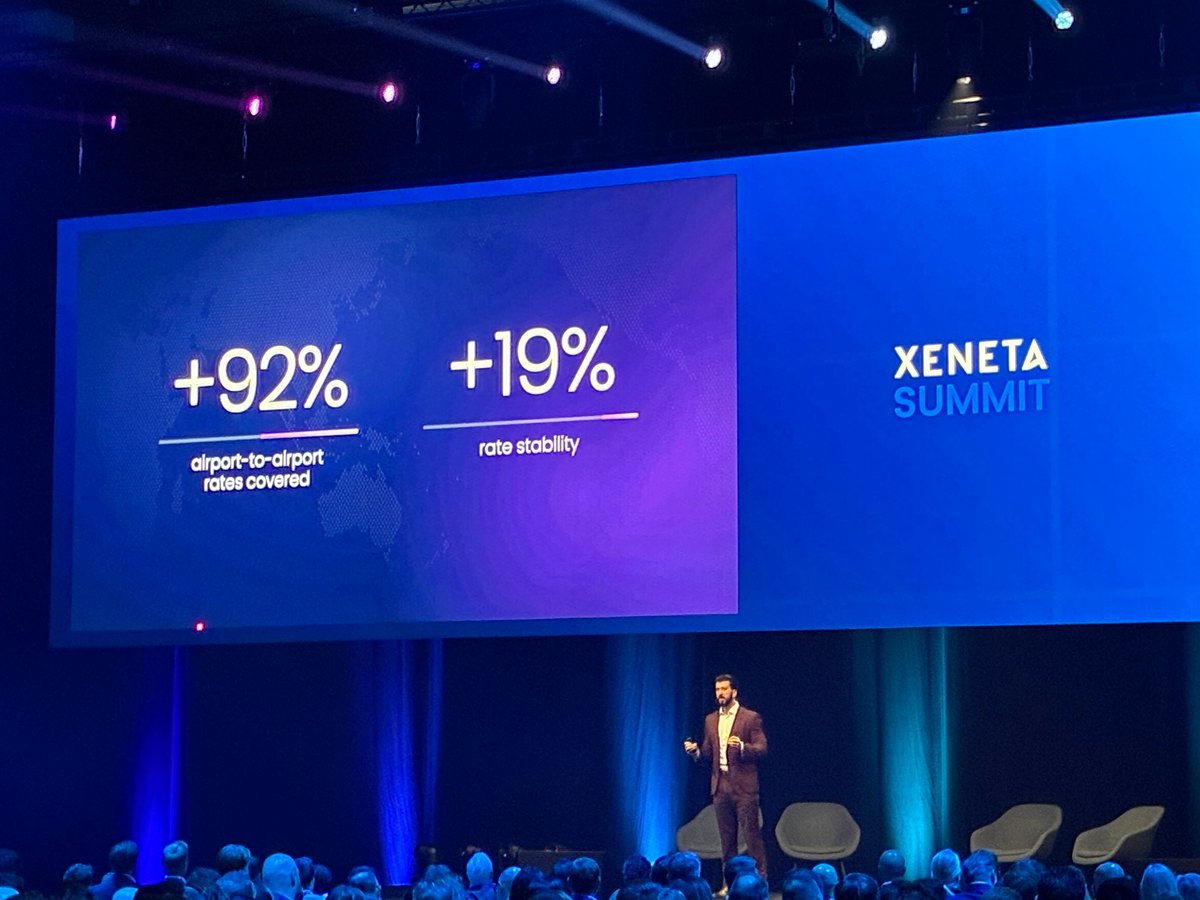
The launches span three areas: new data, led by the first dataset to show both the announced and the actual transit time of cargo moving via a transshipment hub and an air benchmark covering over 17M tonnes of airfreight on 92% more lanes than before; AI Agents with embedded Xeneta freight expertise reading a customer’s contracts against the market and recommending what to do first; and new execution tools, Xeneta Rate Management (XRM) and Xeneta Tender, that put the live market rate next to every contract and every bid, so teams manage rates and award tenders on evidence they can defend.
Fabio Brocca, Xeneta Chief Product Officer, told the Summit: “Procurement teams are hired to decide, but they spend their days buried in data. For 14 years Xeneta has given them the most trusted benchmark in the industry. This year we put that benchmark inside the work itself, so you can see what is happening, decide with confidence and act, all in one place.”
See: the data foundation grows
Every launch stands on the same foundation: more than 850 million contracted rates across 170,000 ocean port pairs, updated daily, sourced from shipper and forwarder contracts rather than carriers; air rates, volumes and load factors across around 18,000 airport pairs, refreshed weekly; and schedule and reliability data on more than 7,500 vessels across 50,000 port pairs, showing the promised voyage against the actual one.
Transshipment, the transit time nobody could see
A large share of containerized cargo moves on transshipment routes, and until now shippers planned on the transit time the carrier promised and found out the truth too late. The new Xeneta Transshipment dataset shows how long shipments really take on indirect routes, by carrier and by hub, promised against actual, taking Xeneta total ocean coverage to 27,000 lanes. Built on the AIS vessel movement data behind Ocean Schedules and data models developed by Xeneta, it shows what the ships actually did, side by side with what the timetable said.
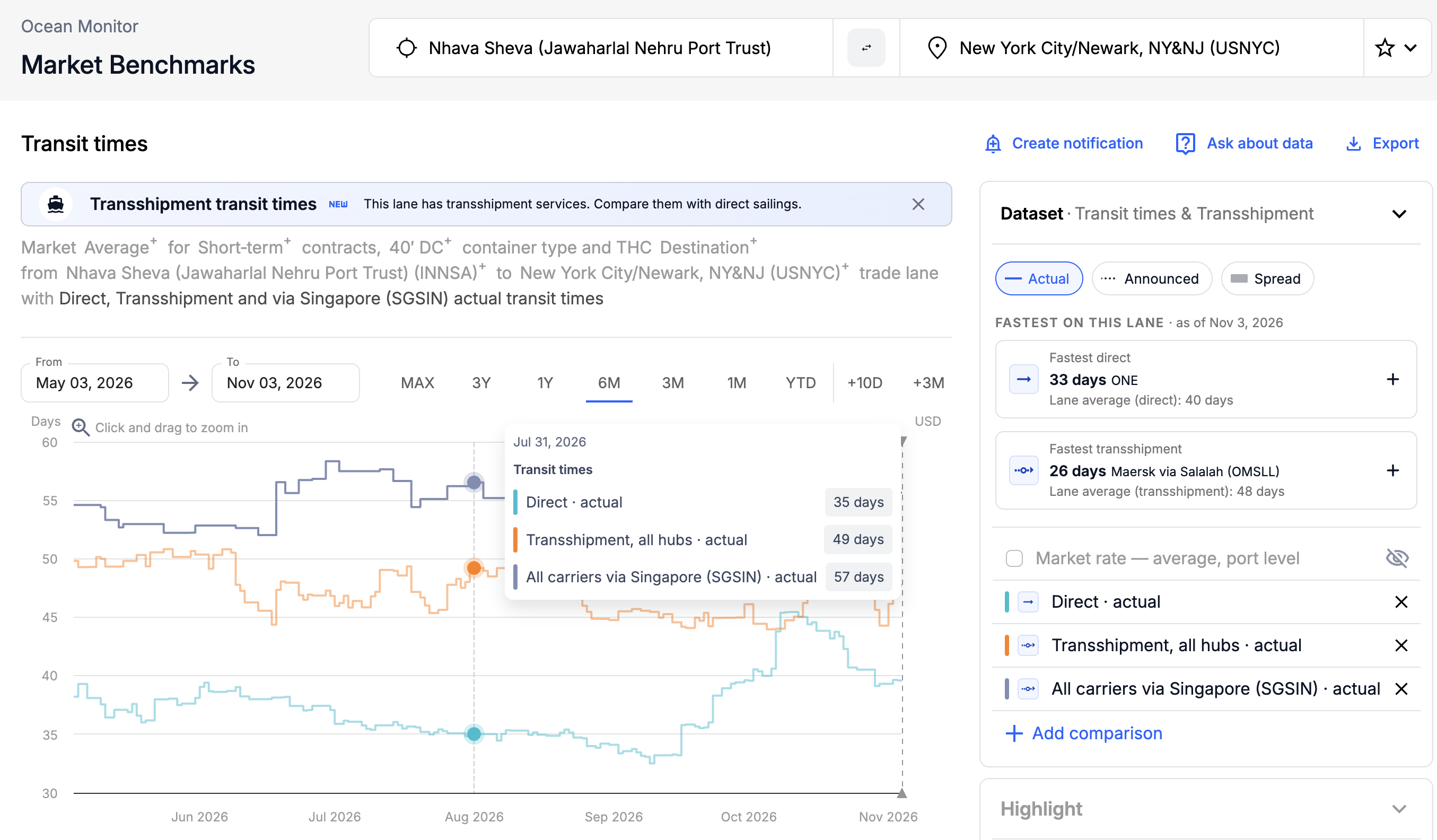
With it, procurement and planning teams can pick the carriers and hubs that arrive on time on their lanes, cut the safety stock they hold against late arrivals and stop paying for transit time they never get.
Brocca said: “So far the industry has benchmarked the price of a container. Nobody could benchmark the time, because part of the journey was hidden. Transshipment makes that part visible.”
Transshipment is available now as an add-on for existing Xeneta Ocean customers. It complements Ocean Schedules, live since March, which tracks more than 7,500 vessels across 50,000 port pairs and places the carrier’s published schedule next to the actual voyage.
New Xeneta Air, rebuilt to cover 45,000 airport pairs
Xeneta Air now covers approximately 18,000 lanes and is the only air freight benchmark built from both sides of the market: what shippers pay and what airlines fly. Shipper rates sit next to airline rates, volumes and load factors across 13 parameters that help buyers make better procurement decisions, including five special cargo types: pharma, perishables, live animals, valuables and dangerous goods. Air Datalink delivers lanes and time series straight into the customer’s BI tool.
Brocca said: “Air has been priced on month-old averages for too long. With both sides of the market in one view, refreshed every week, air freight buyers finally get the same clarity ocean buyers have had for a decade.”
Decide: AI that recommends, wherever you work
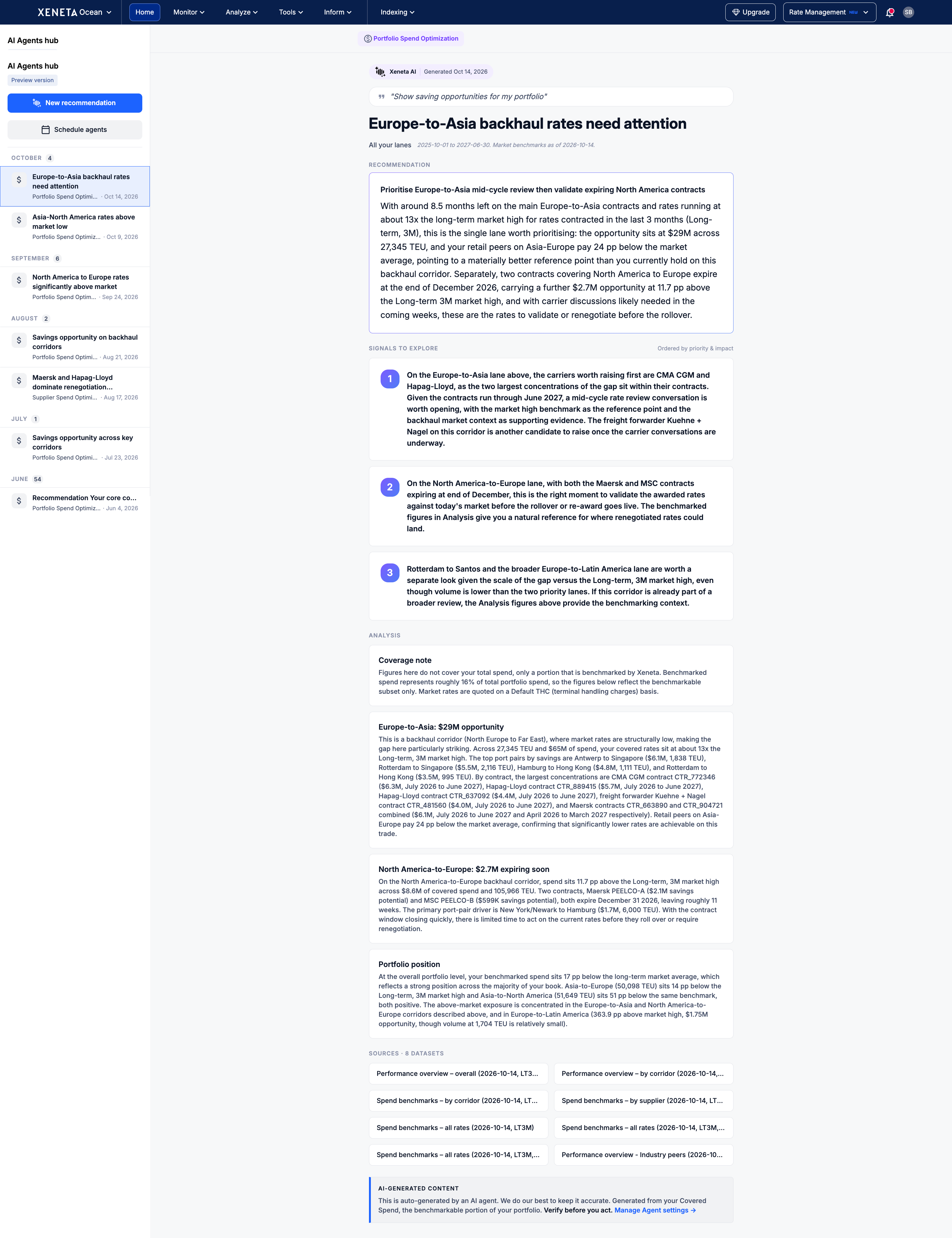
AI Agents in the platform, now generally available
Two agents answer the two questions every procurement team asks. The Portfolio Spend Optimization agent answers “where am I overpaying?”: it spots every lane above market, ranks them by savings and flags them before the contract renews. The Supplier Spend Optimization agent answers “which suppliers should I challenge?”: it shows how each carrier and forwarder performs against the market and suggests who to challenge and who to lock in.
Brocca said: “What we’ve built means that in a few clicks, Xeneta shows you where the money is going and what you can do about it. The agent gives you a recommendation, but the decision stays with you, and now you’re making it with the numbers already in front of you.”
Ask Xeneta, the MCP connector for AI assistants
Not every rate decision is made inside Xeneta. Ask Xeneta is a Model Context Protocol (MCP) connector that puts Xeneta data and agents inside the AI assistants customers already use. Users can ask it to benchmark rates on a lane, by market or by carrier, check a contract against the market, and the answer comes from Xeneta data. Ask Xeneta is in exclusive early access, and sign-up opened at the Summit.
Brocca said: “We didn’t want to build yet another tool that people have to log into. Ask Xeneta brings our data and our agents into the AI assistants our customers are already working in, so the market view is right there when they’re actually making the decision.”
Custom AI Agents
For teams that want AI to do the work, not only recommend it, Xeneta now builds Custom AI Agents directly into the customer’s IT environment with connections to their existing systems, deployed by Xeneta engineers in weeks. The agents run spot bids, quotes, rate updates and reports, and check every step against the live market rate. This service is available now and sold separately.
Brocca said: “Other AI agents can fill in a tender or process a quote. Only ours knows what the market rate is, so it can tell you when a quote is too high.”
Act: workflows that do the work for you
Most procurement teams still run their rates and tenders in tools never designed for freight: spreadsheets, generic sourcing suites and email threads, with multiple versions, slow amendments and every team on a different file. XRM and Xeneta Tender replace that with workflows where every rate and every bid sits next to the market.
Xeneta Rate Management: AI ingestion, Rate Adjustments and a first step into allocations
XRM, launched at last year’s Summit, now holds customers' full rate books, including inland, surcharges and other variables beyond the ocean rate, benchmarked against the market daily. Customers can now hand XRM any rate sheet and let the AI map it: it reads the columns, standardizes the values and asks only when unsure. When a carrier changes a surcharge mid-contract, they apply the change from whatever arrived, an incomplete Excel, a PDF, a Word file or an email, and XRM updates every rate it touches in one confirmed step. A quarterly BAF change no longer means re-uploading the whole contract.
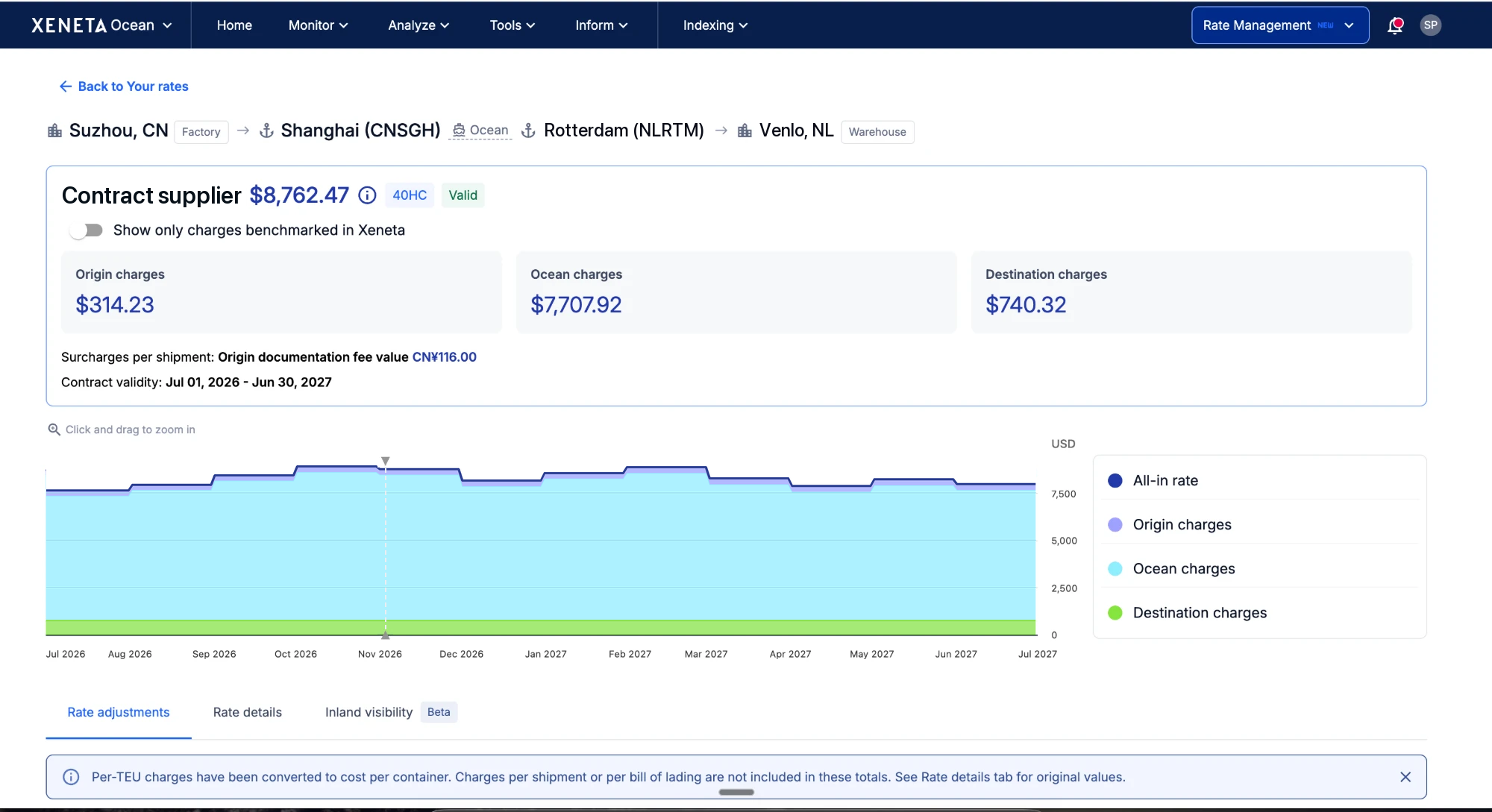
The Rate Adjustments pilot, starting this quarter, goes one step further: customers copy Xeneta on carrier rate-change emails and the update lands in XRM ready to review, so no surcharge is ever retyped or lost. It is the first step towards a rate book that keeps itself up to date. XRM Allocations, with a first release by the end of 2026, lets shippers import booking data and see actual volume against the minimum committed to each carrier, per rate and per contract.
Brocca said: “XRM gives you every rate from every supplier in one place in minutes, not weeks, and keeps the record current and error-free, so Finance and Procurement get a number they can trust. Gone are the days of hunting through email threads for the surcharge somebody agreed months before.”
Xeneta Tender preview
The benchmark a procurement team uses all year is the one thing it has no time for during a tender. Xeneta Tender changes that without changing how a team works. Users bring their tender files, rules and templates as they are, in any format, and drag and drop. Tender then show every bid next to the market rate and the metrics that matter beside it, so an overpriced bid stands out instantly and the award is made with the full picture in view. Tender can also simulate any scenario a buyer describes in plain language and show the acctual spend with clarity. Tender is in exclusive early access to selected customers with general availability planned for 2027.
Brocca said: “Tender is where everything comes together. The data you trust, the agents that spot the outliers and the workflow that gets you to an award you can defend in front of your CFO.”
From benchmark to workflow
The launches are the next chapter in Xeneta’s plan to build one integrated decision platform for freight procurement: neutral market data, service performance, AI that recommends, and the workflows where rates are managed and tenders are run.
To see the new launches on your own lanes, book a demo or, if you're an existing customer, reach out to your CSM.