


What’s Top of Mind for Shippers Right Now
Before diving into tender strategy, it’s important to recognize the operational pressures many procurement and logistics teams are currently navigating. In conversations with shippers across industries, several immediate challenges are dominating boardroom discussions.
Disruption across key trade routes is forcing companies to rethink how they manage both short-term operations and long-term procurement strategy. Many shippers are facing cancelled shipments or orders into the Middle East and Africa as risk exposure rises, while others are urgently pulling forward buffer stock to protect supply chains against further volatility.
Capacity availability remains another major concern. Some organizations report struggling to secure space on critical lanes, while communication breakdowns in disrupted regions are making it difficult to provide customers with clear updates on cargo location and delivery timelines.
At the same time, procurement teams are being asked to prepare for prolonged disruption scenarios. That includes building multiple budget outlooks, assessing the potential impact of rising bunker fuel costs, and gathering market intelligence to present to executive leadership and boards.
Operational challenges are also creating new pressure points in commercial discussions. Shippers are increasingly pushing back on war risk surcharges (between $1500-$3000 per dry container in some trades) and reassessing contract timelines — in some cases delaying tenders or extending existing agreements while market conditions remain uncertain.
Looking further ahead, companies are beginning to rethink their network strategies. Many are exploring alternative routing options, identifying cargo that may be exposed to disruption risk, and using technology and data to improve visibility across their supply chains.
Port congestion is also re-emerging as a potential constraint on certain trades, reinforcing the need for reliable data when making procurement decisions.
Against this backdrop of operational uncertainty, the question becomes clear: how can shippers design tender strategies that remain effective even when markets are volatile?
That’s exactly what we explored in a recent webinar.
Let’s break down the top 5 insights.
1. Two Rounds Win — Complexity Loses
Perhaps unsurprisingly, over 50% of webinar attendees said they prefer a two-round tender process.
Why? Because more rounds don’t necessarily mean better outcomes.
When tenders become overly complex or drag on for months:
- Supplier fatigue increases
- Bid quality drops
- Negotiations become defensive
- Engagement weakens
In practice, simpler and faster processes often produce stronger results. Several participants shared that their RFQs run in as little as eight weeks from launch to award.
But there’s another factor that can significantly streamline the process: market visibility.
One of the main reasons tenders require multiple rounds is that initial bids often start far from the true market level. Carriers may submit inflated first-round offers, expecting negotiations to follow.
With access to accurate, real-time market benchmarking, shippers can enter negotiations with a clear understanding of where rates should sit — allowing them to challenge outlier bids immediately and avoid unnecessary tender rounds.
Xeneta Data Insight:
When procurement teams benchmark bids against live market data, they can quickly identify rates that sit above market levels and bring negotiations back to realistic levels from the start.
For example, XPD Global used Xeneta market intelligence to improve the efficiency of its tender process. With immediate access to accurate market rates, the team can now prepare and submit tenders more effectively — reducing their tender cycle by 20%.
The impact has been significant:
- 50% increase in successful tender submissions
- Faster negotiation cycles
- Greater commercial confidence when engaging carriers
The takeaway is simple: The goal isn’t more rounds. It’s better preparation and better structure.
And increasingly, data is what makes that possible.
2. You Can’t Time the Market — But You Can Manage the Cycle
A recurring theme from the audience:
“It’s impossible to time the market. The key is to be on the market frequently enough.”
Exactly.
Ocean freight moves in cycles. Over a 10-year period, markets rise and fall dramatically. The organizations that perform best:
- Go to market regularly (often annually)
- Evaluate performance over a multi-year cycle
- Avoid overreacting to short-term volatility
Trying to “hit the bottom” rarely works. Instead, disciplined, recurring exposure to the market ensures you stay aligned with fair value.
But there’s a caveat....
3. Renegotiation Flexibility Can Undermine Trust
One attendee raised an important warning:
If you want the ability to reopen contracts when the market moves in your favor, carriers will expect the same flexibility when the market moves against you.
And that cuts both ways.
Constant renegotiation erodes trust and damages long-term relationships. Healthy partnerships are built when both parties:
- Stick to what’s agreed
- Honor contracts in good and bad markets
- Avoid opportunistic behavior
Stability and predictability often create more long-term value than short-term gains.
But in volatile freight markets, locking into fixed rates for long periods can also create risk.
This is where index-linked contracts are gaining traction.
Rather than reopening negotiations every time the market shifts, indexed agreements allow rates to move in line with a transparent market benchmark. This creates a more balanced framework where both shippers and carriers share market movements without constant renegotiation.
We are increasingly seeing indexed contracts structured over 12–24 month agreements, combining long-term partnership stability with built-in market responsiveness.
Xeneta Data Insight:
Index-linked contracts tied to reliable market benchmarks allow both sides to maintain commercial fairness while avoiding the disruption of repeated contract reopenings.
The result is often stronger relationships, fewer renegotiation cycles, and greater confidence that rates reflect real market conditions.
4. Alliances, Geopolitics, and Structural Market Shifts
Attendees also asked about broader structural changes in the market — from carrier alliances to geopolitical disruption — and how these factors may influence freight markets in the year ahead.
Alliance Changes
One example is the integration of ZIM into Hapag-Lloyd’s GEMINI Alliance, which forms part of the wider reshaping of carrier partnerships. Network changes like these can temporarily influence:
- Capacity allocation
- Service loops
- Port rotations
- Pricing strategies
While alliance shifts often create short-term uncertainty, markets typically rebalance as carriers adjust their networks and competitive dynamics stabilize.
For shippers, however, these changes reinforce the importance of understanding carrier network fit when structuring tenders.
Middle East Disruption and Global Supply Chains
At the same time, geopolitical developments in the Middle East are introducing a new layer of volatility into global logistics networks.
Escalating conflict in the region is impacting both ocean and air freight operations, with security risks affecting shipping routes and airspace availability. In ocean freight, disruptions across key corridors such as the Red Sea continue to force carriers to reroute vessels around the Cape of Good Hope, increasing transit times and tightening available capacity.
Air cargo is also being affected as airspace closures force airlines to reroute flights, reducing available capacity and pushing freight rates higher.
Xeneta Data Insight:
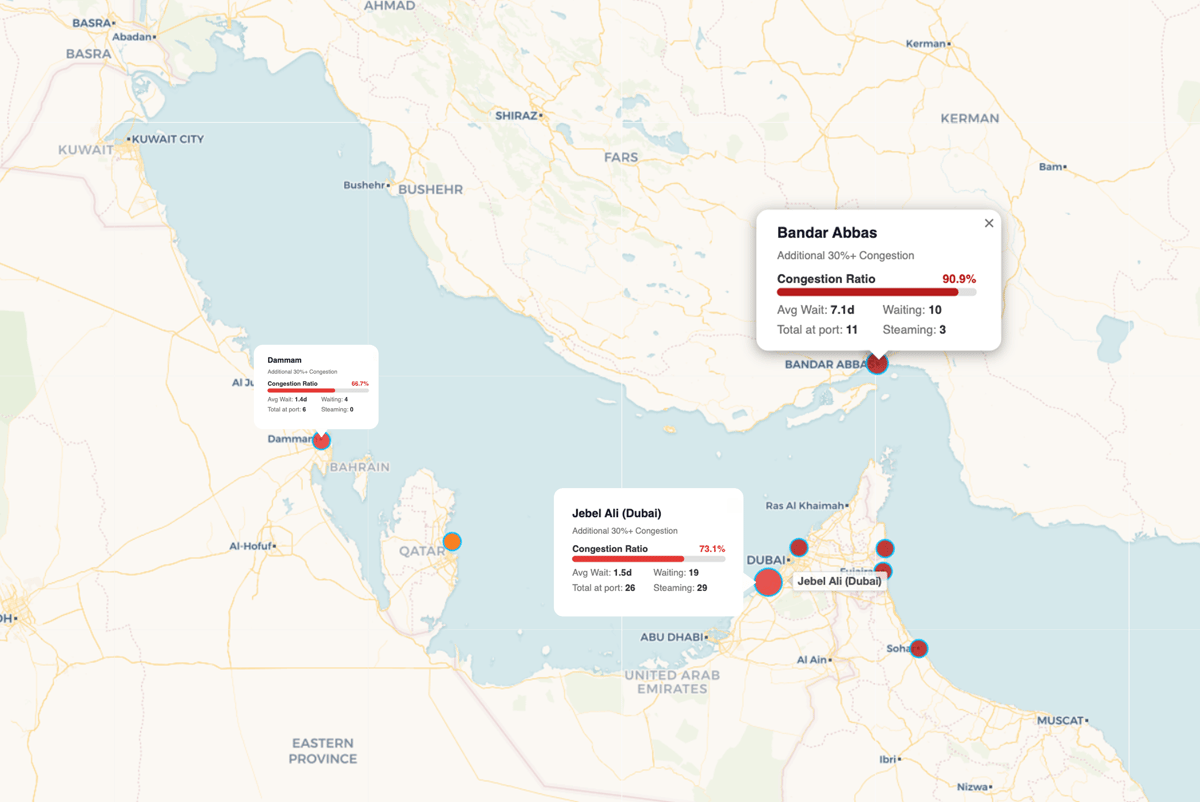
As of March 6th, 121 vessels remain inside the Persian Gulf, including vessels steaming, in port, and waiting.
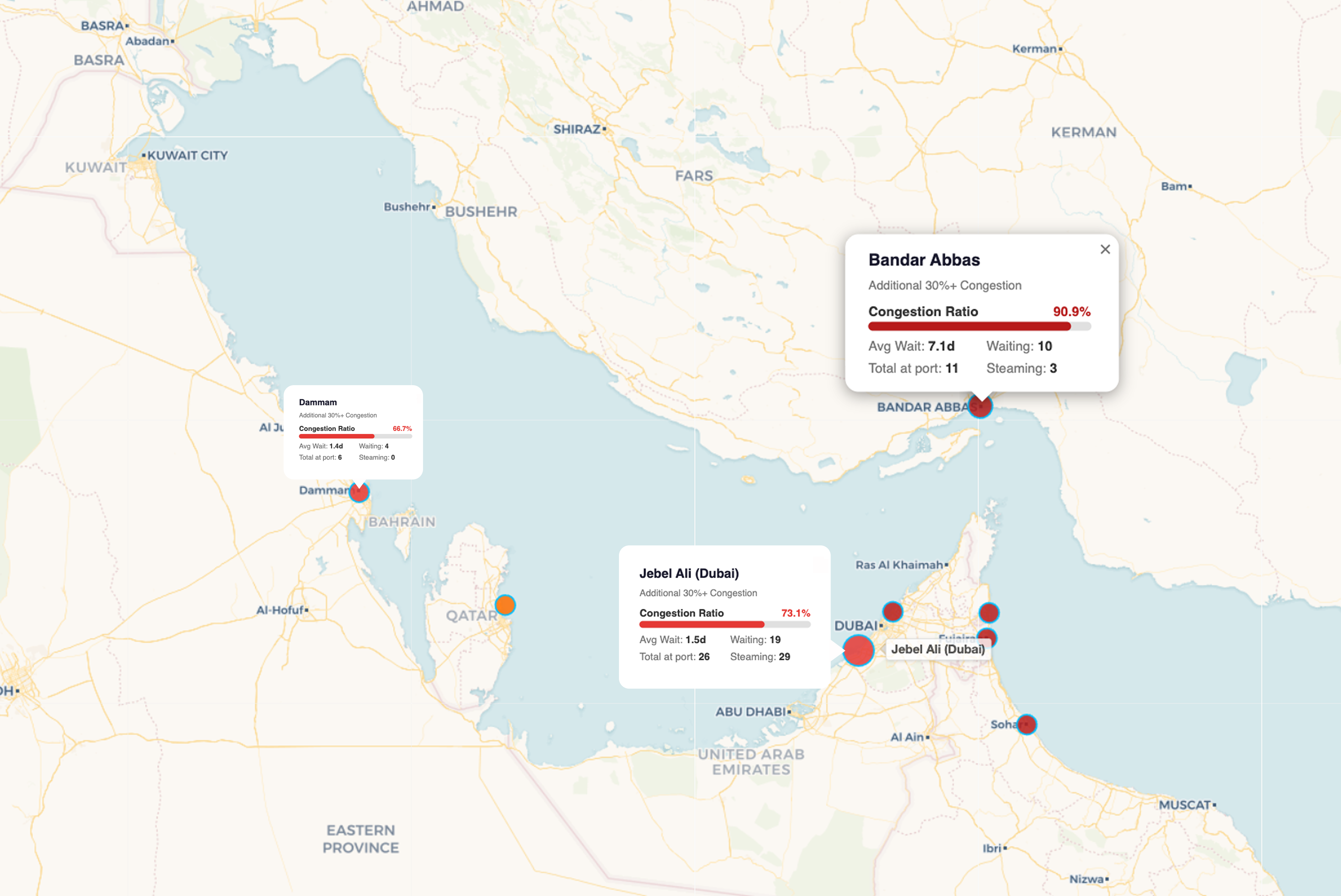
Shippers with containers on these vessels will be impacted by significant delays, with the next available move is dependent on military operations and the resources available to escort / secure safe passage for these ships.
Xeneta Chief Analyst, Peter Sand, and Director of Communications and Commercial Partners, Phil Hennessy, also addressed the growing impact of rerouting during a recent analyst briefing, warning that official carrier schedules are increasingly unreliable as networks adjust to disruption. Published schedules may no longer accurately reflect vessels’ true port calls or ETAs as carriers continue to adapt routes in response to security risks.
As they noted:
"Even if your shipment is not destined for a port in the Arabian Gulf or transiting Suez Canal, cargo is not automatically clear of disruption."
For procurement teams, the lesson is clear: structural market changes rarely occur in isolation. Alliance shifts, geopolitical tensions, and operational constraints often combine to reshape capacity, routing, and pricing across global networks.
Our advice: Monitor congestion closely and work with your logistics service providers to route cargo through the ports best positioned to minimize disruption based on your supply chain setup and inland transport requirements.
5. Visibility Across Alternate Trades
As shippers explore alternative routes to reduce disruption risk, data completeness becomes ever more critical.
If you cannot see the full set of carrier options across alternate trades, you may be missing competitive opportunities — or exposing your supply chain to hidden risks.
Technology and market intelligence are becoming essential tools for identifying:
- Alternate routing options
- Emerging congestion risks
- Carrier capacity availability
But visibility into options is only part of the equation.
When shippers shift cargo across new routes or diversify their carrier portfolio, they also need to ensure those carriers are delivering on service reliability and contractual commitments. This is where Carrier Scorecards are becoming increasingly important.
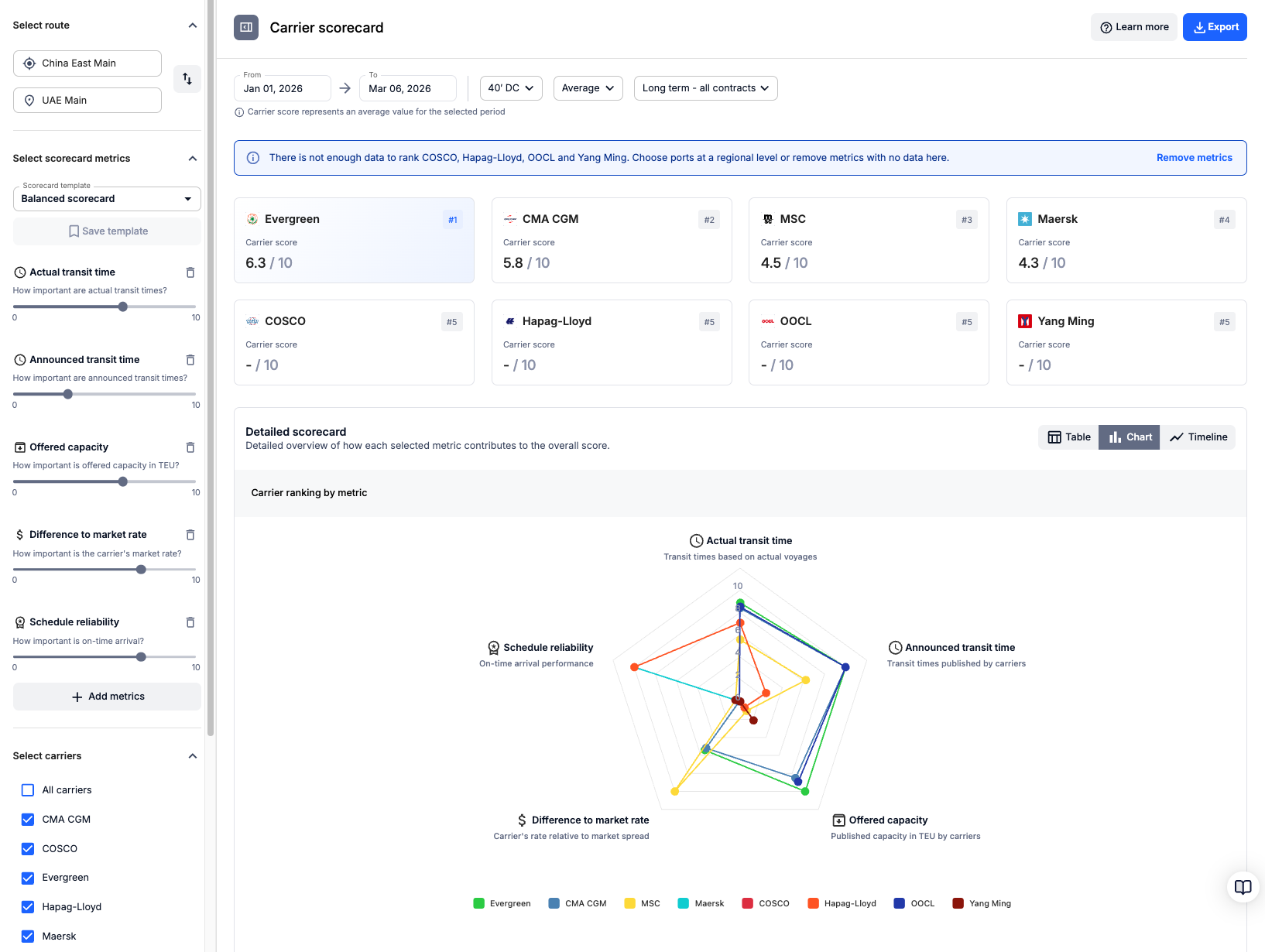
By benchmarking carrier performance across key metrics such as schedule reliability, transit time consistency, and contract compliance, procurement teams can move beyond price alone and make more informed allocation decisions.
Xeneta Data Insight:
Carrier scorecards allow shippers to compare carrier performance across their portfolio and identify which partners consistently deliver on service and contractual terms. This visibility helps procurement and logistics teams allocate volume more effectively and strengthen accountability in carrier relationships.
For procurement leaders presenting to senior management or boards, this level of insight is also critical. It allows teams to demonstrate not only that they are securing competitive ratesm, but that they are working with carriers who can reliably execute the supply chain strategy.
The One Shift That Strengthens Tender Strategy in Volatile Markets
Geopolitical tensions, shifting alliances, congestion, and capacity swings are becoming a permanent feature of global supply chains. The question is no longer if disruption will occur — but how prepared your procurement strategy is when it does.
The organizations outperforming the market are focusing on fundamentals:
- Structuring tenders efficiently
- Going to market regularly instead of chasing market timing
- Using index-linked contracts to balance risk
- Monitoring carrier performance, not just price
- Leveraging real-time market intelligence to guide decisions
In an environment where conditions can change overnight, visibility and discipline are becoming the real competitive advantage.
Because in volatile freight markets, the winners aren’t those reacting the fastest.
They’re the ones best prepared from the start.
.jpg?width=2253&height=628&name=2026%20Q1%20eBook%20One%20Small%20Shift%20Blog%20Banner%20(1).jpg)
.png?width=387&name=freight-ship-reliability%20(1).png)