
.jpeg?width=1200&name=IMG_4400%20(2).jpeg)
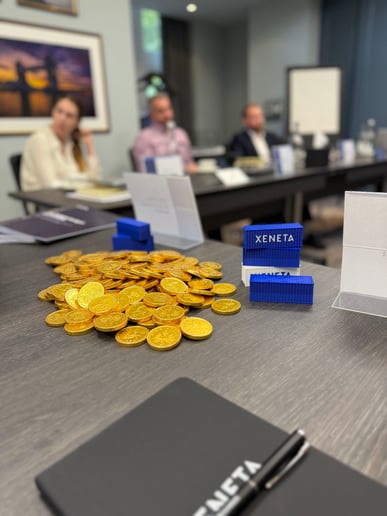
Among all topics discussed at the NYC Freight Roundtable on June 4, Emergency Fuel Surcharge (ESC) negotiations emerged as one of the most debated issues. As uncertainty around the Strait of Hormuz continues and many market participants see no meaningful resolution before at least Q3, shippers and carriers are increasingly grappling with a difficult question: when supply chains face prolonged disruption, how should the costs be shared?
The discussion reflected an industry attempting to balance contractual discipline with long-standing commercial relationships. While surcharge negotiations often focus on dollars and cents, participants repeatedly returned to broader themes of trust, transparency, and partnership.
.jpeg?width=5712&height=4284&name=IMG_4400%20(2).jpeg)
A Proactive Approach to Surcharge Discussions
One shipper participant described taking a proactive approach, engaging carriers before being approached with surcharge requests. The company ultimately reached agreements across its carrier portfolio, with some carriers applying ESCs as separate line items while others incorporated them into base freight rates.
A key condition was that all agreements included clearly defined end dates tied to anticipated bunker fuel resets in Q3.
Several other participants reported adopting a similar strategy. Rather than viewing surcharge requests as purely transactional negotiations, they framed discussions around maintaining long-term partnerships and ensuring continued collaboration through a period of market uncertainty. For many, the objective was not simply to reduce cost exposure but to strengthen relationships that could prove valuable if capacity tightens further.
The Value of Being a Good Partner
That relationship-driven approach appears to resonate with carriers.
Multiple participants said carriers had explicitly communicated that they track which customers are constructive partners during periods of disruption. Several attendees noted that carriers referenced previous cooperation during the Red Sea crisis when discussing future space allocation and commitment to contracted rates.
The message was clear: commercial relationships continue to matter in container shipping, particularly when networks come under pressure and capacity becomes scarce.
Collaboration Does Not Mean Unlimited Acceptance
Yet the discussion also revealed that willingness to collaborate does not necessarily mean accepting every surcharge request without challenge.
One shipper participant described rejecting a carrier proposal to extend an emergency surcharge into Q3, arguing that the request was based on future assumptions rather than current market realities. According to the participant, the company walked away from the proposal and the carrier ultimately lost the volume.
The episode reflected a broader sentiment across the room that emergency measures should remain tied to measurable market conditions and clearly defined timeframes.
Despite differing views on implementation, participants appeared largely aligned on one principle: surcharges explicitly contemplated within existing contracts are obligations, while charges introduced outside contractual frameworks remain subject to commercial negotiation.
Transparency Remains the Biggest Challenge
A recurring frustration was the lack of transparency surrounding surcharge calculations.
Attendees reported receiving ESC requests ranging from $150 to $600 per container, often with limited explanation of how the figures had been determined. Many participants stressed that the issue was not necessarily the existence of surcharges themselves, but the difficulty in understanding the methodology behind them.
Several shared negotiation approaches that have proven effective. One commonly cited tactic was to pose a rhetorical question: if bunker prices were to fall unexpectedly, would carriers return the money?
The question was less about securing refunds and more about understanding whether the surcharge represented a true cost-recovery mechanism or a pricing adjustment based on anticipated future conditions.
Another participant challenged a carrier directly, arguing that if a surcharge continues indefinitely, it becomes increasingly difficult to justify calling it an emergency measure. The comment resonated with many in the room and highlighted the importance of clearly defined review periods and end dates.
The Evolving Emergency Surcharge Landscape
Beyond the philosophical debate, participants highlighted growing complexity in how emergency fuel charges are being implemented across the market.
Several attendees noted that many carrier emergency fuel surcharge programs are being applied alongside existing BAF or fuel cost recovery mechanisms rather than replacing them. Public carrier communications support this trend, with multiple lines introducing Emergency Fuel Surcharges while maintaining established fuel adjustment frameworks.
For example, carriers such as Hapag-Lloyd have outlined Emergency Fuel Surcharge (EFS) programs designed to address costs not fully covered by existing marine fuel recovery mechanisms, effectively operating in parallel with standard BAF structures. Similarly, MSC has implemented emergency surcharge measures while maintaining its broader pricing and fuel adjustment components within existing tariff frameworks.
This layering effect has created concern among some shippers about potential overlap between temporary disruption-related surcharges and existing bunker adjustment programs. The issue, participants argued, is less about the legitimacy of fuel recovery itself and more about ensuring clarity on which cost components are already captured within base mechanisms and which genuinely fall outside them.
Attendees also observed that carrier approaches are not uniform. While some lines have moved quickly to introduce emergency fuel measures, others have relied more heavily on existing BAF structures or taken a more cautious approach to additional surcharges. The absence of a single industry standard underscores the variability in how disruption-related costs are managed across the sector.
Index-Linked Contracts Offer an Alternative Approach
Several participants noted that index-linked contracts can help avoid many of the disputes currently surrounding emergency fuel surcharges.
Unlike fixed-rate agreements, they adjust automatically based on an agreed market index, providing a transparent mechanism for sharing risk as market conditions change. Rather than negotiating separate surcharges during periods of disruption, rates move in line with underlying market dynamics through pre-agreed rules and adjustment frequencies, reducing the need for repeated renegotiation and helping preserve commercial relationships.
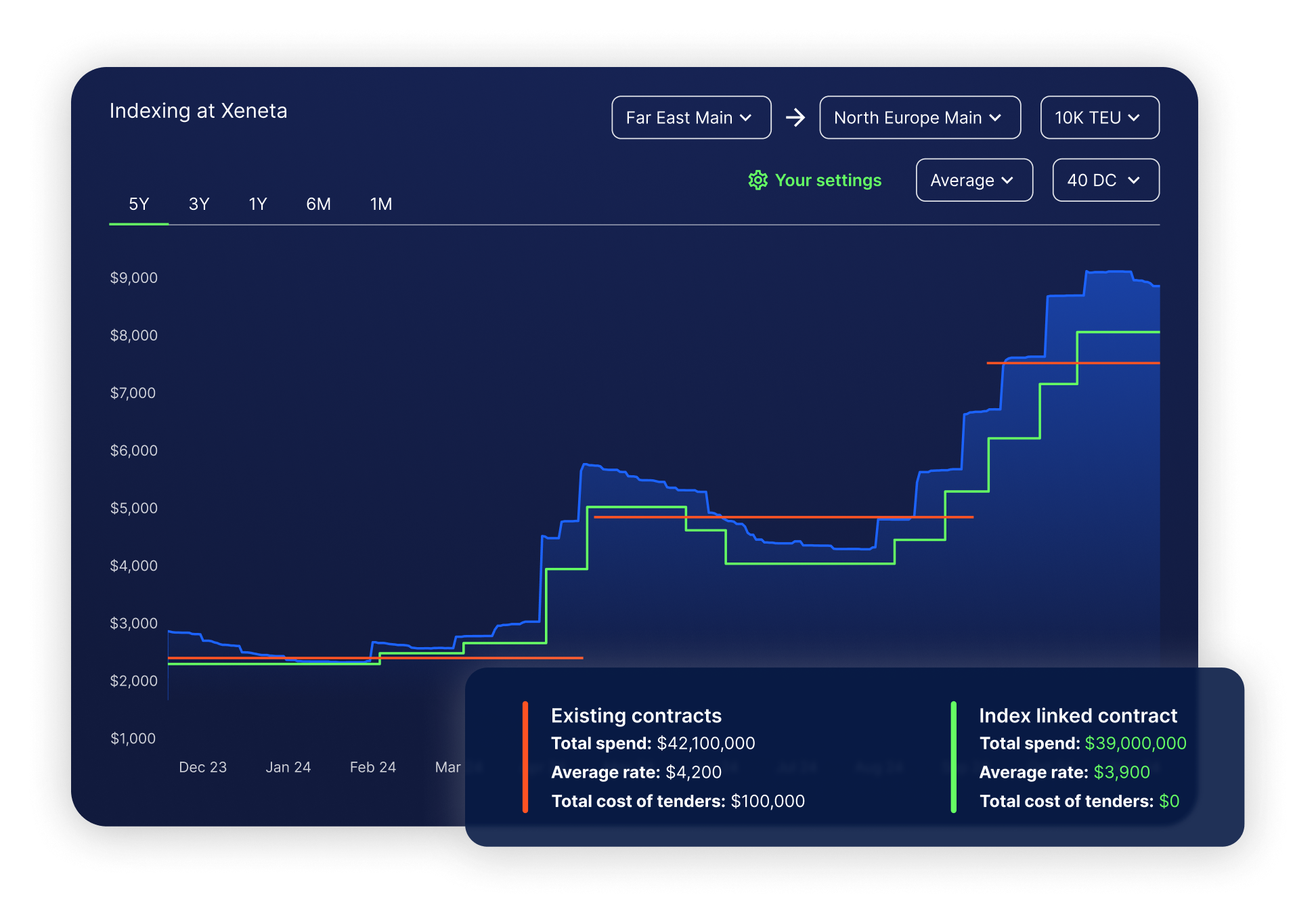
When properly structured, index-linked contracts also define clearly what is included in the indexed rate. In many cases, the methodology is designed to be all-inclusive for the agreed cost components, creating a simpler framework in which parties are not repeatedly debating whether disruption-related costs should sit inside or outside the contract.
Lessons from Recent Disruptions
For many participants, today's ESC discussions are informed by lessons learned from recent disruptions, particularly the Red Sea crisis.
As carriers rerouted vessels around the Cape of Good Hope, longer voyages increased fuel consumption, extended transit times, and created significant additional operating costs. Across the industry, carriers introduced various disruption-related surcharges while shippers worked to balance cost management against service continuity.
Several attendees noted that the experience reinforced two enduring lessons: strong carrier relationships remain critical during periods of disruption, and transparency becomes even more important when extraordinary charges are introduced.
At the same time, the Red Sea experience strengthened the case for clearer contractual structures around emergency measures. Many shippers now place greater emphasis on defined triggers, review mechanisms, and sunset clauses when agreeing to additional costs.
For a deeper look at how successive disruptions are reshaping freight markets — and what it means for procurement strategies going forward — read our latest report: Three Disruptions, One Fragile System.
Relationships Versus Data? The Industry Increasingly Needs Both
The discussion highlighted an important evolution taking place across freight procurement.
Container shipping has long been a relationship-driven industry, and many participants emphasized that strong carrier partnerships remain critical during periods of disruption. However, recurring crises are also increasing demand for greater transparency and more objective mechanisms for managing extraordinary costs.
This tension was evident throughout the roundtable. Some participants viewed temporary surcharge acceptance as an investment in relationship capital and future service support. Others emphasized the importance of contractual discipline and avoiding the normalization of emergency charges that risk becoming permanent features of the cost base.
In reality, the industry appears to be moving toward a middle ground. Long-term partnerships remain essential, but increasingly those partnerships are expected to be supported by transparent calculations, clearly defined triggers, and a shared understanding of how extraordinary costs should be managed.
When Does an Emergency Stop Being an Emergency?
Perhaps the most notable takeaway was that the debate is no longer solely about fuel costs.
It reflects a broader question facing the industry: how should carriers and shippers share risk when disruptions become recurring events rather than isolated exceptions?
There was little appetite in the room for adversarial positions. Participants generally acknowledged that carriers face legitimate operational and cost pressures during periods of disruption, just as shippers face mounting budget pressures and supply chain uncertainty.
The future of freight procurement will likely depend not on choosing between relationships and contracts, but on strengthening both. The most successful partnerships will be those that combine commercial flexibility with transparency, accountability, and mutual understanding of how disruption-related costs should be managed.
As one participant put it, there comes a point when the industry must ask whether an emergency surcharge is still truly an emergency surcharge. As supply chains continue to face overlapping geopolitical and operational risks, that question is unlikely to disappear anytime soon.
.png?width=2134&height=639&name=BAF%20Estimator%20Banner%20(2).png)
Next Step: Understand the True Cost of Fuel Impact
Whether negotiating an Emergency Fuel Surcharge, reviewing a BAF adjustment, or evaluating carrier proposals, understanding the underlying bunker fuel exposure is critical to making informed decisions.
Our BAF Calculator helps shippers quantify fuel cost exposure across key trade lanes, providing greater transparency when evaluating fuel-related charges and supporting more informed conversations with carrier partners.