

Your day runs on the box.
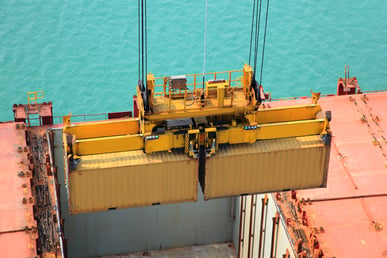
Or container, if you will.
The container is the unit of work. You book the space, secure the slot on the vessel, chase the equipment, track it port to port, reposition the empty, and watch the demurrage and detention (D&D) clock tick the entire way. The box is real to you in a way it is real to almost no one else in the building.
And that can be a problem. Everyone else in your organization sees the box through their own lens, and none of those lenses are yours.
Walk through the functions around you.
Supply chain cares about what's inside the box. The goods, the inventory, the right product reaching the customer on time. If the cargo could teleport, supply chain would be delighted. To them the container is the vehicle, not the cargo.
Procurement thinks in boxes, but as a price, not a physical object. They negotiate a rate per 40ft equivalent unit (FEU), commit to volumes, sign the contract, and hand the steel box back to you.
Your finance controllers see one line in a budget. When that line moves, they want to know why, and they want the answer before the quarter closes, not after.
Carriers are the other true box obsessives, and for one reason: asset utilization and empty repositioning. Their container, their balance sheet.
So you sit at the bottom of an odd hierarchy. You run the container every hour of every day, and you hold the least leverage when budget, headcount, and strategy get decided. The function closest to the work is the furthest from the room where the work gets funded.
What blind spots cost you
When the box is background noise to everyone else, you absorb the volatility that started upstream, in decisions made without container-level data.
A blank sailing lands on your desk as "why is our product late". A D&D spike turns up as a finance surprise nobody forecast. A capacity crunch becomes an unplanned air-freight bill that someone else approves and you get blamed for. A general rate increase (GRI) hits a lane you flagged three weeks ago, but no one actioned at the time .
You carry the consequences of choices you did not make, with a modest budget to fix them. Explaining demurrage one more time will not change that.
Start translating what the box means to others.
You will not win this by teaching the organization what detention is. You win it by expressing the box in the number each function already owns, and backing that number with neutral market data so it reads as fact, not as the logistics team lobbying for itself.
The moment your case rests on the carrier's quote or your own spreadsheet, you have lost the argument before it starts. Independent, market-wide data changes who gets believed in the room.
Here is how the translation works:
For procurement: the box as cost
Procurement wants to know one thing about a rate: is it competitive. Give them the answer in seconds.
Benchmark every rate, contract and spot, against the live market. Xeneta carries daily, lane-level benchmarks across 170,000+ port pairs, built from real shipper and forwarder contracts and kept independent from the carriers. When you can show that your rate per FEU sits 8% above market on a given corridor, procurement has leverage they did not have, and you handed it to them.
You stop being the team that "just moves the boxes." You become the team that finds the money.
For finance: the box as budget and margin
Finance budgets freight on the best forecast available and then chases the variance when reality moves. Replace the point estimate with a range.
Forward-looking market intelligence over the next three to six months lets finance set a freight budget grounded in where rates are heading, not where they were last year. Even good forecasts get overtaken by events: Xeneta's own Q4 2025 outlook called for a downward correction in air freight rates for 2026 — a reasonable call at the time — but global air cargo spot rates were up 41% year-on-year by May instead, once Middle East disruption reshaped the market. A live forward view lets finance plan for both scenarios, with the variance already explained by market drivers: capacity, fuel, demand, disruption.
And here's the point that earns you a seat at the table. The cost of moving the box is part of the landed cost of what is inside it. When freight swings, the margin on the product swings with it. Controlling the cost of the box is margin control. That single reframe moves logistics from a cost center to a function that protects the company's margin, which is exactly what finance and supply chain are measured on.
For supply chain: the box as reliability
Supply chain cares whether the contents arrive when promised. The box is how that happens or fails to.
Give them objective carrier performance instead of carrier self-reporting. Schedule reliability, proforma versus actual transit times, blank sailings, and side-by-side carrier comparison let supply chain teams plan around how services actually perform. When you can show that one carrier hits its schedule far more often on a critical lane, the routing conversation stops being a debate and becomes a decision.
The internal conversation gets easier when everyone has the same data
Most cross-functional friction is not disagreement. It is three teams arguing from three different sources, each convinced theirs is right.
When procurement, finance, and supply chain all work from one neutral source of truth, the conversation shifts from whose number is correct to what we should do. You become the function that brings the data everyone already trusts. That is how you get the box onto the agenda, and how you keep it there.
This is the quiet reason the world's largest shippers, including Nestlé, Electrolux, and Stanley Black & Decker, run on independent freight intelligence. Not because they enjoy dashboards, but because aligned teams make faster, better decisions, and they make them before the market forces their hand. When the stakes are high, analyst-backed reports give them an outside view to validate the call and the scenarios behind it. It is exactly what Xeneta's Mid-Year Ocean and Air Outlooks are built to provide.
What to do Monday coming
You do not need a transformation program. You need to start translating.
-
Pick your three worst lanes by cost or by reliability, and benchmark them against the market this week. Take the gaps to procurement as found money, not as a complaint.
-
Reframe one freight number for finance as a margin number. Show them how a rate swing on a key lane moves landed cost on the product it carries.
-
Bring carrier performance data to the next routing meeting. Let schedule reliability, not the carrier's pitch, decide the lane.
-
Put one forward-looking market view in front of leadership before your next budget cycle, so the freight line is a planned range, not a quarter-end surprise.
-
Agree on one shared source of truth with procurement, finance, and supply chain, so the next debate is about the decision, not the data.
The box is your world. We help you put it in everyone else's language, backed by data they can't dispute.
So start with one email. Send me and the team the three lanes that worry you most, by cost or by reliability, and we will show you where they sit against the live market this week. No RFQ, no commitment. Just the gaps, in writing, ready to take into your next internal conversation.
Email us directly: info@xeneta.com →