
<img height="1" width="1" style="display:none;" alt="" src="https://px.ads.linkedin.com/collect/?pid=502551789&amp;fmt=gif">
Skip to content
Freight Market Updates

Middle East Conflict

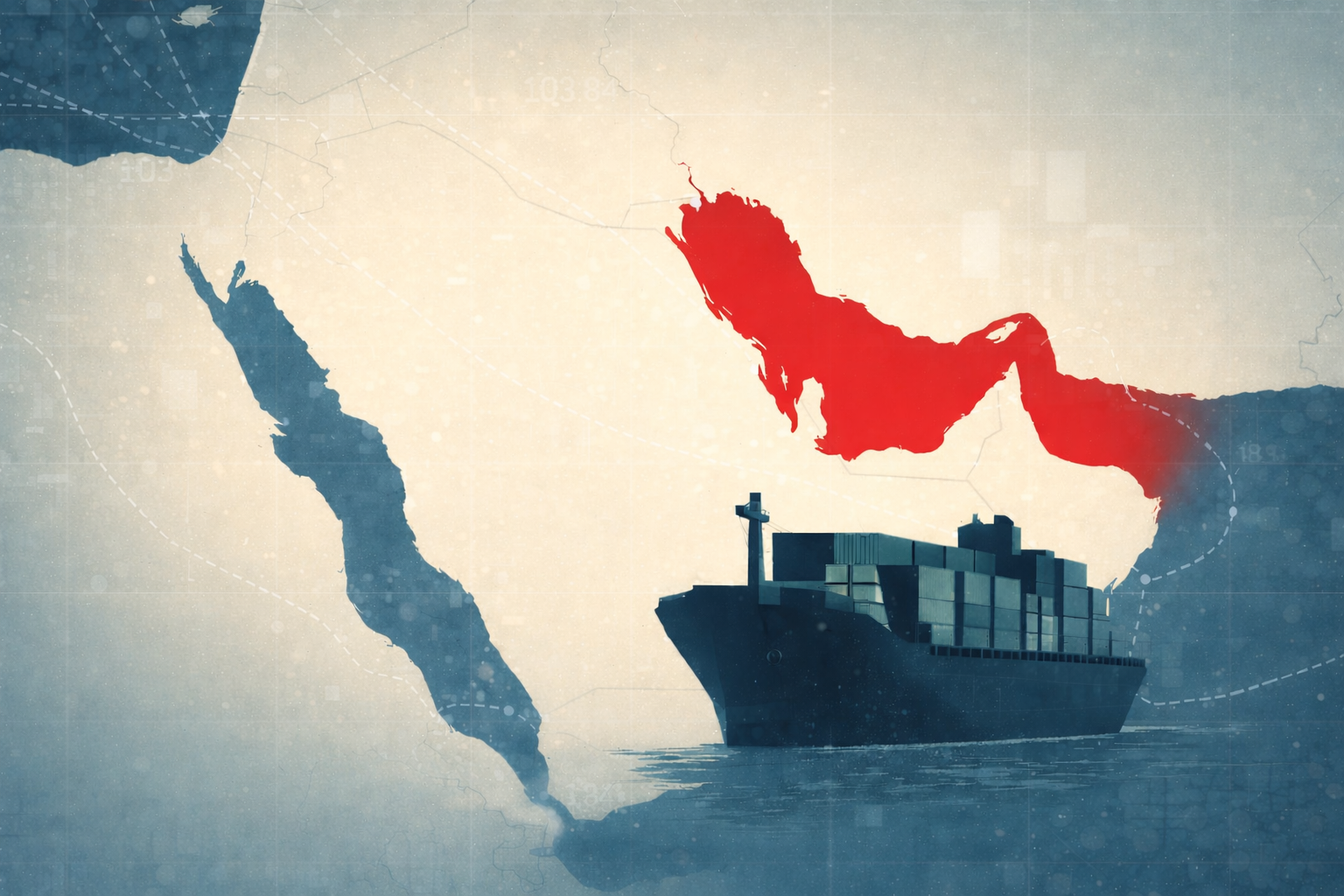
 Freight market analysis and operational insight into the impact of Middle East conflict on ocean and air freight routes, rates, and global supply chains. 


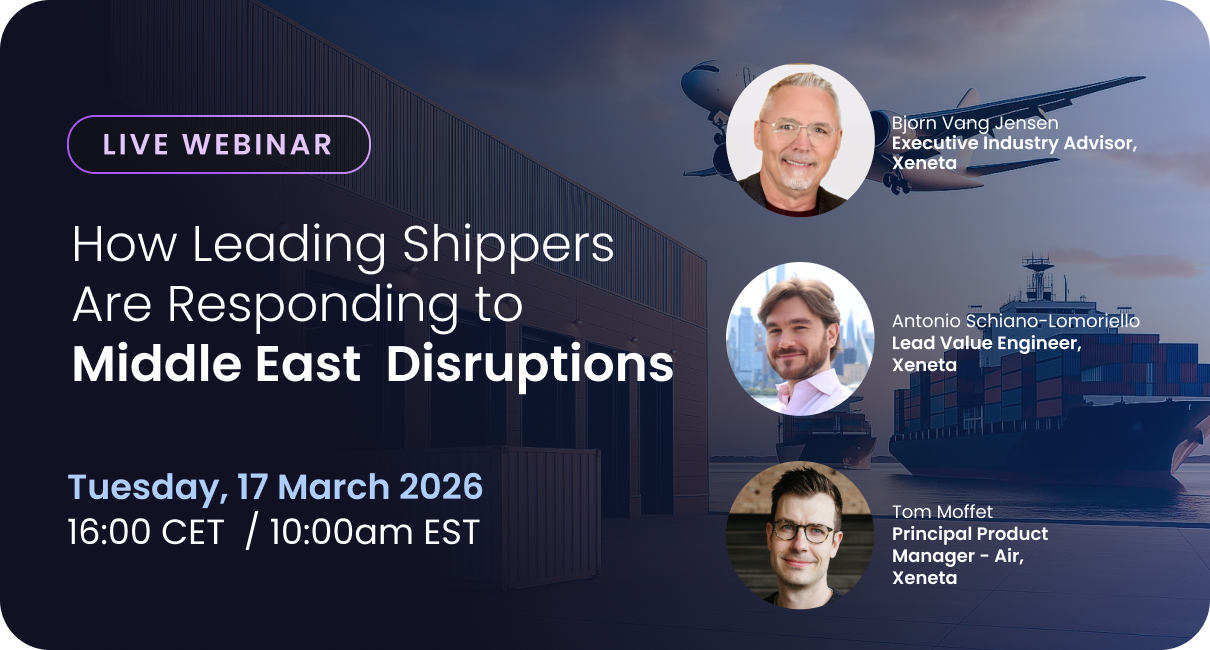
Upcoming Webinar

How Leading Shippers Are Responding to Middle East Disruption

 The Middle East conflict is already disrupting recently negotiated contracts, rerouting vessels, and driving up costs. Join Xeneta for a practical session on what the data is showing and what shippers can do now to protect budgets and service levels. 
TPMRecap_LIBanner

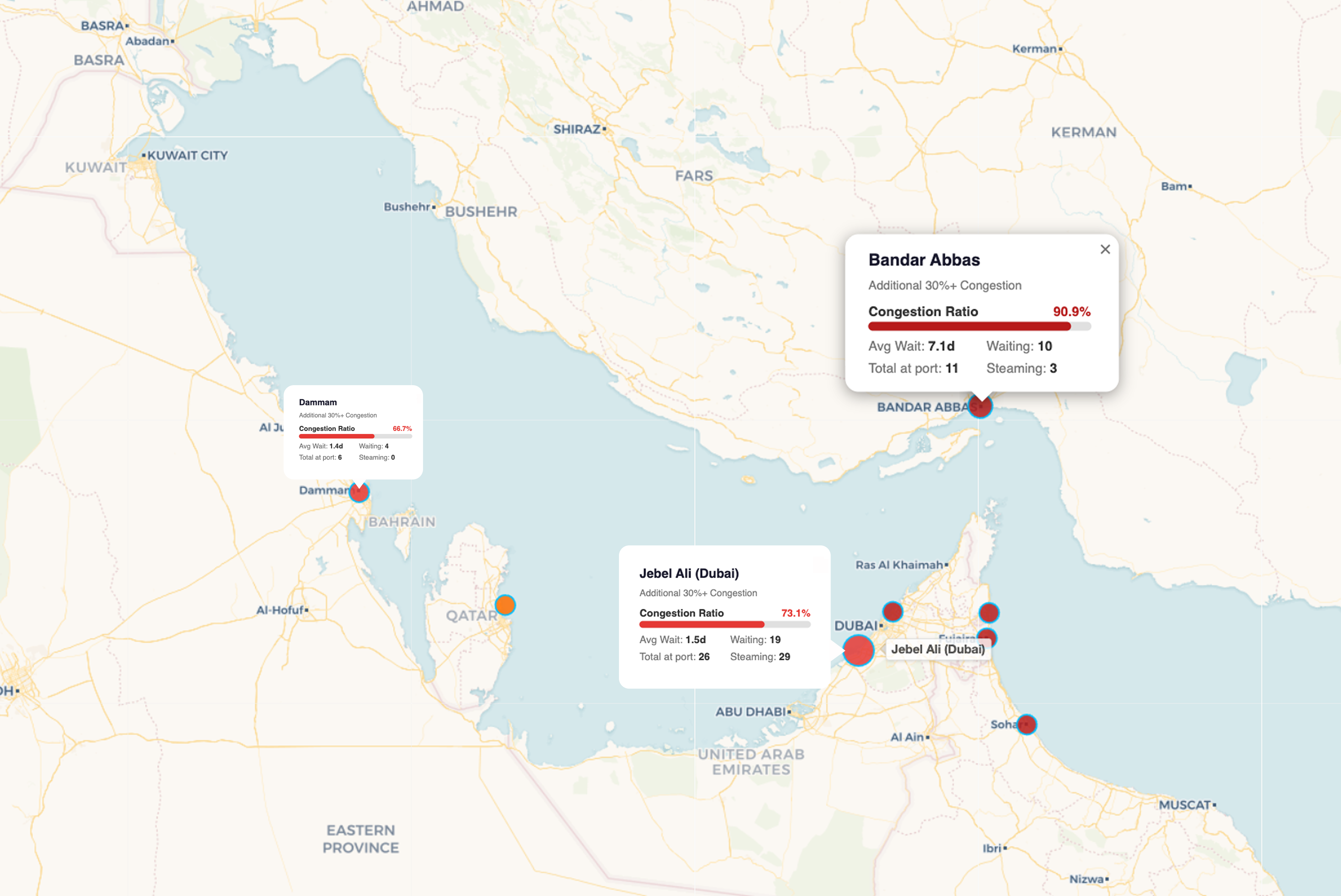
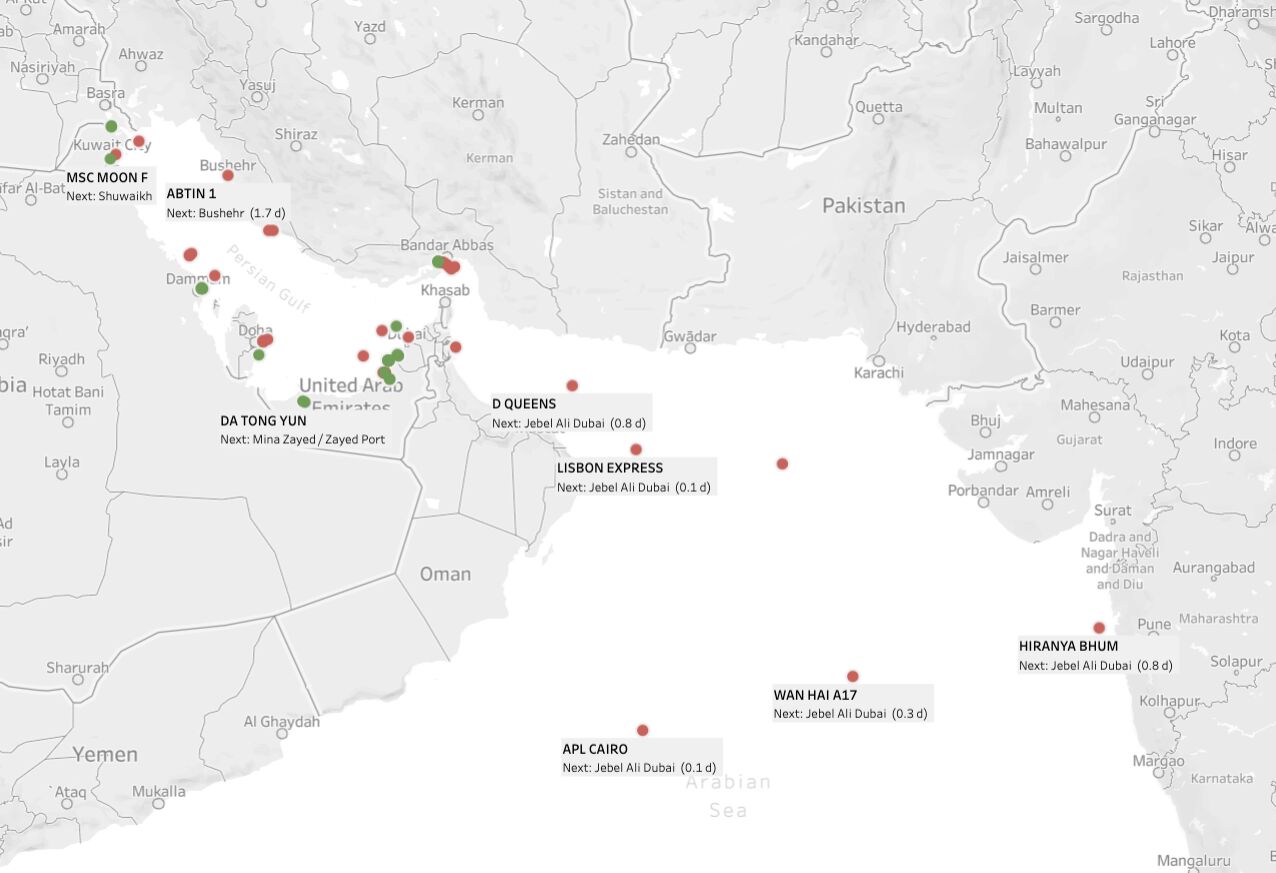
Port Congestion Service Map

 See port congestion levels and vessel wait times across major container ports, and how they're being impacted by the Middle East conflict. 


The map is updating in real time with Xeneta data. If you're seeing an older version, try opening the link in a private/incognito window, or do a hard refresh on the page (Ctrl+Shift+R on Windows, Cmd+Shift+R on Mac). 

The latest from our analysts

Frequently asked questions

Which routes are affected?

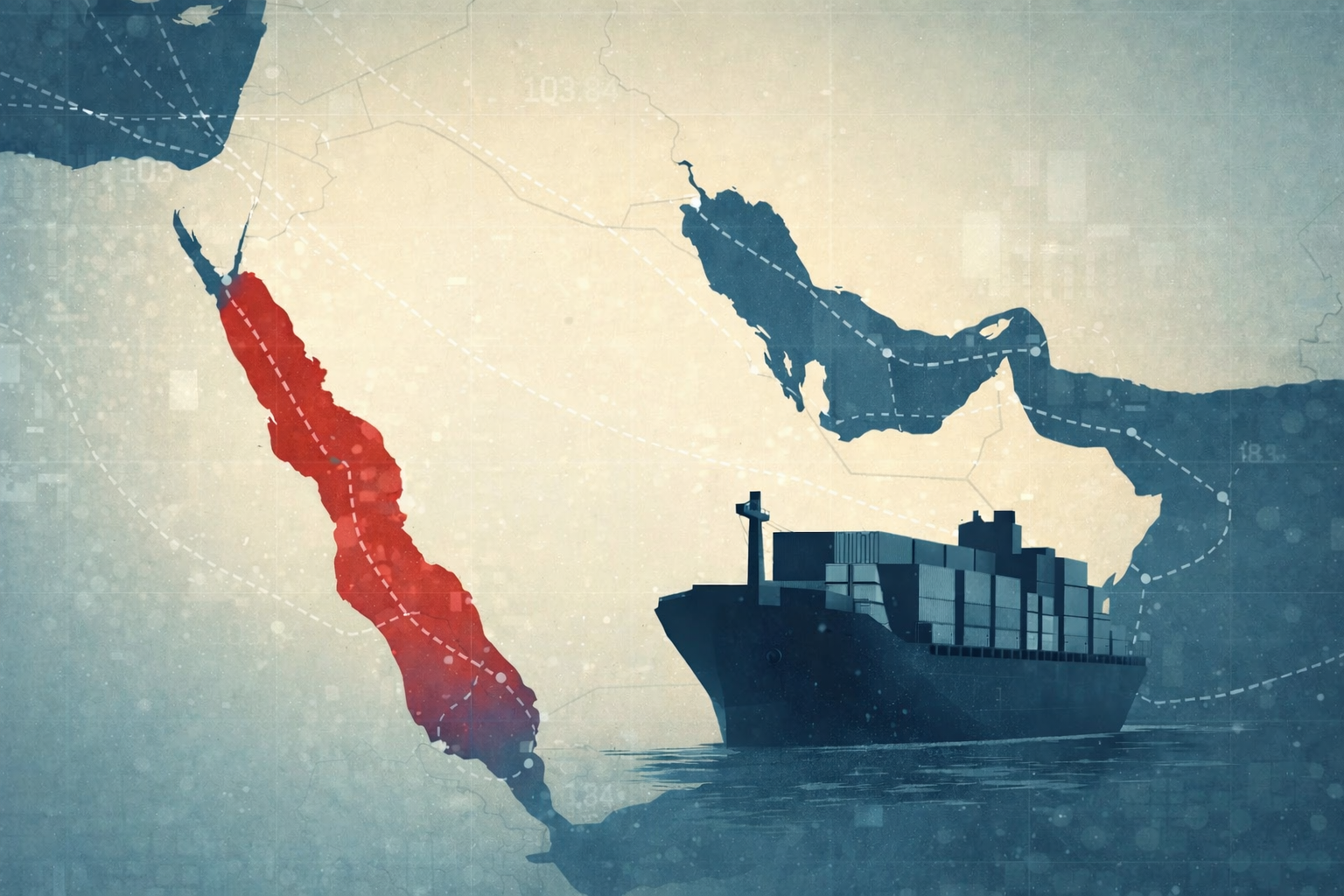
 Routes through the Arabian (Persian) Gulf and Red Sea are most impacted. Major carriers have omitted calls to ports including Jebel Ali and Abu Dhabi, and services scheduled to transit the Suez Canal are being diverted around the Cape of Good Hope. 

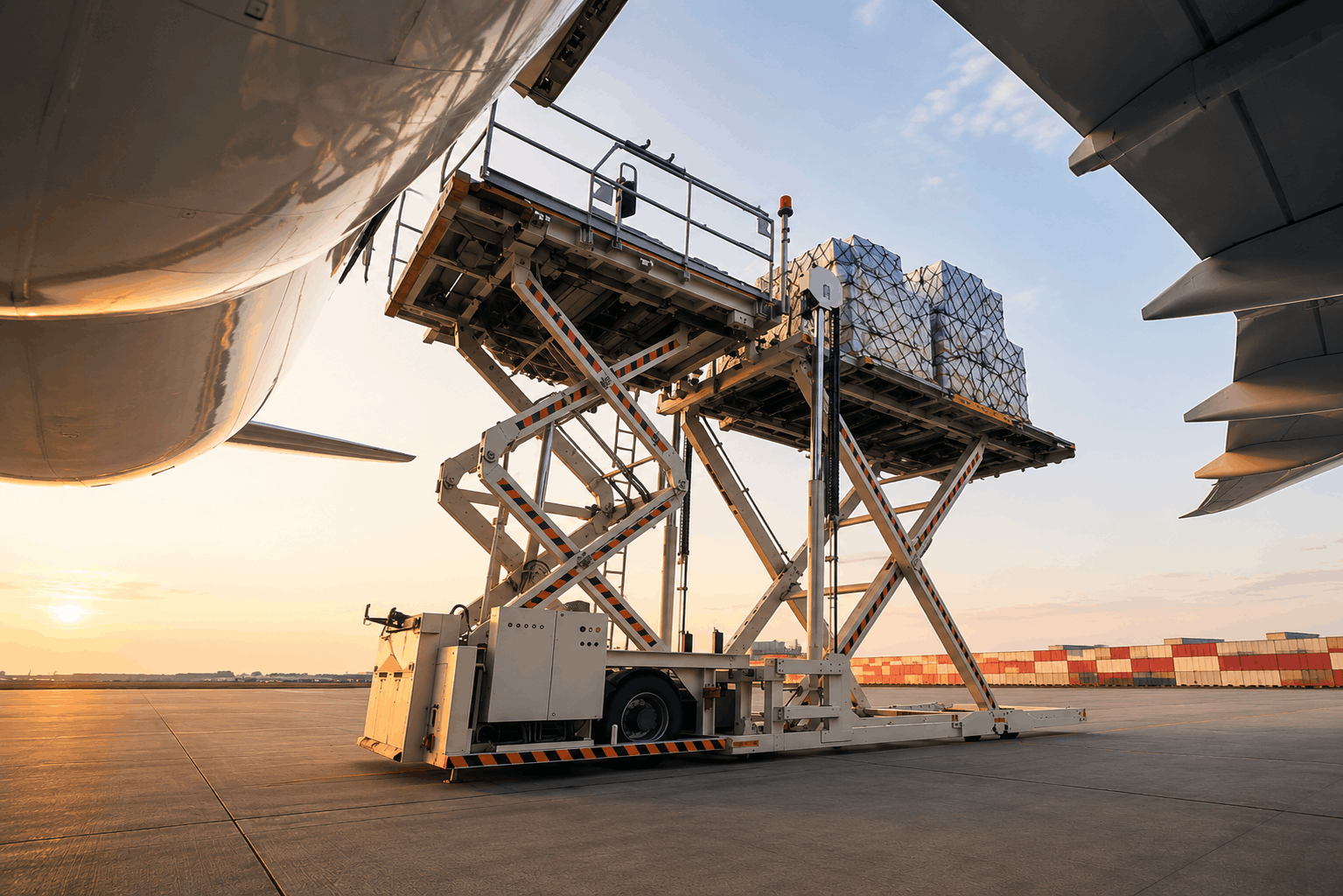
What's happening with airspace and air cargo?

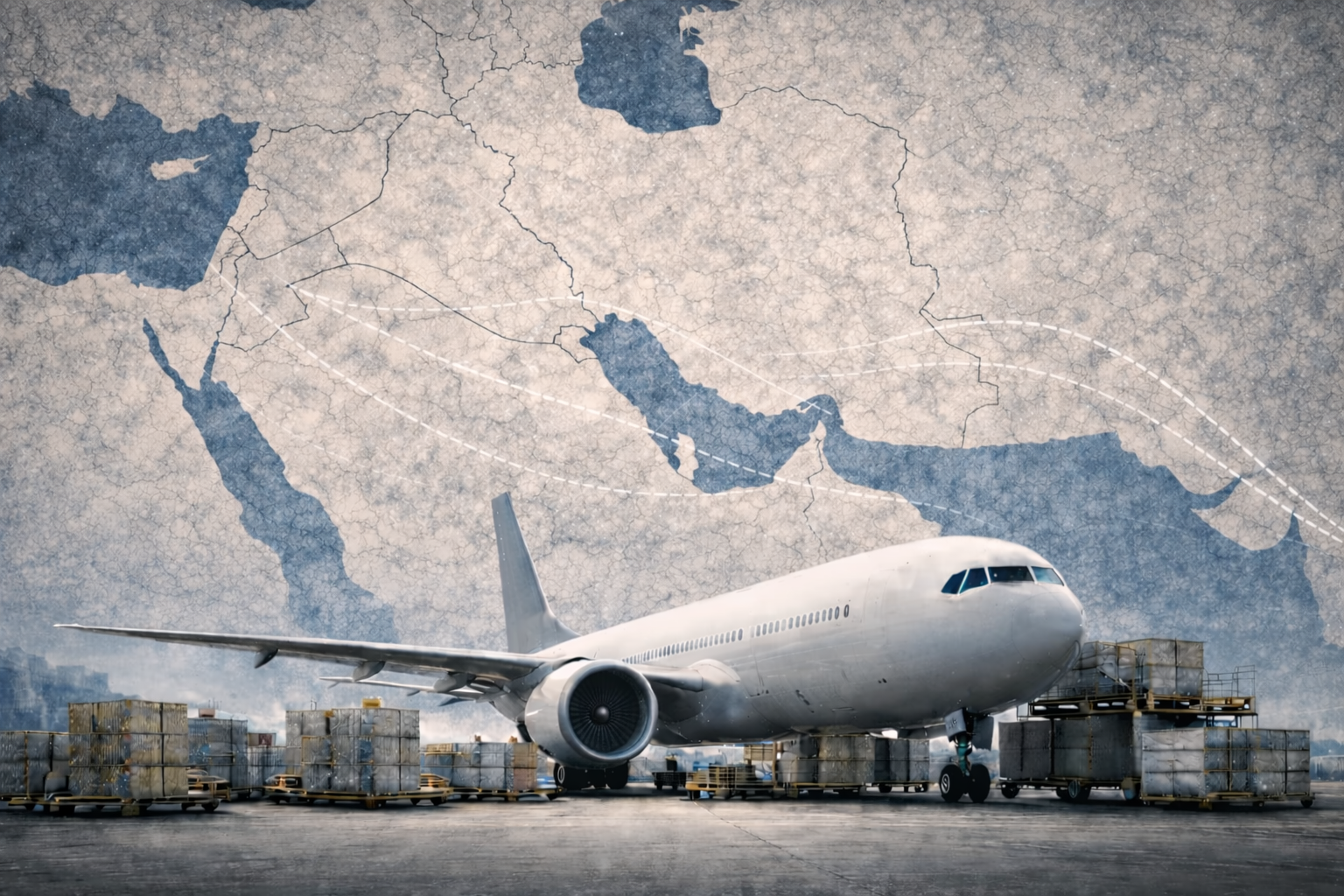
 Airspace restrictions have removed an estimated 16–18% of global air cargo capacity with little warning. Major hubs including Dubai and Doha have seen flight suspensions, with carriers rerouting via alternative corridors. Asia Pacific to Middle East cargo volumes are down ~25% week-over-week. We recommend building a watchlist and monitoring the air market daily. 

How are ocean freight rates being affected on impacted routes?

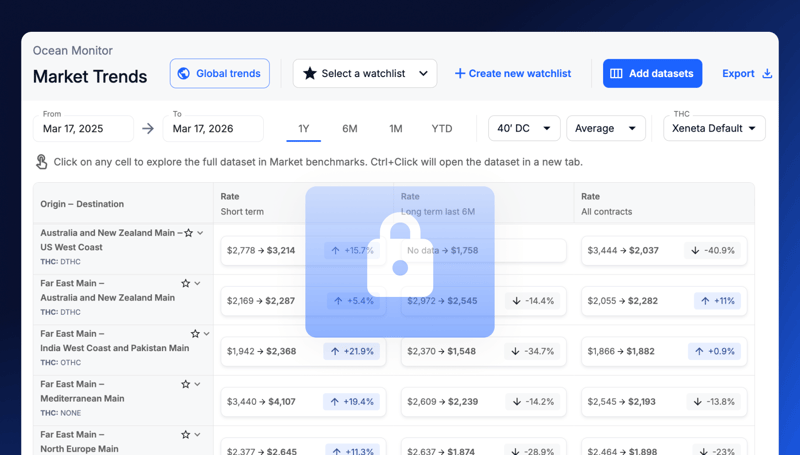
 Early indications are already visible in Xeneta short-term rate data: China to Salalah is up 28%, China to Colombo up 17%, and China to UK up 8%. 

Are non-impacted routes seeing rate increases too?

 Yes. Asia–Latin America lanes, particularly into Santos, Brazil, are seeing a disproportionate rate spike. Cape of Good Hope diversions are absorbing vessels normally deployed on these services, creating a capacity squeeze. CMA CGM and Hapag-Lloyd have already implemented war risk surcharges and emergency GRIs on these lanes. 

What emergency and war risk surcharges are being applied?

 Confirmed surcharges include MSC's Emergency Surcharge from Far East to Red Sea at $800/40DC, CMA CGM's Emergency Surcharge at $2,000/20DC, $3,000/40DC and $4,000/40RF, and Hapag-Lloyd's War Risk surcharge for the Gulf Region at $1,500/TEU. Additional surcharges are being reported across Asia-Europe, Asia-India, Asia-Africa, and North America trades. 

Should we accept emergency and war risk surcharges?

 Xeneta is gathering live community feedback on this. Current shipper approaches include keeping surcharges separated from base rates rather than baked in, time-limiting any surcharges to 30–60 days to allow renegotiation, and pushing back on carrier force majeure claims given that conflict risk was known for months and surcharges were already being paid. 

What's the impact on port congestion and transit times?

 Congestion is already building. Salalah and Jeddah have seen immediate impact. Secondary pressure is expected at Colombo, Mundra, JNPT, Singapore, Mombasa, Dar es Salaam, Durban, Tanjung Pelepas, and Nhava Sheva. Xeneta data is showing signs of congestion accumulating just five days into the crisis. 

How will vessel availability and capacity be affected?

 Capacity will be constrained by ships immobilised in the Arabian Gulf, widespread port omissions, and longer sailing distances due to Cape of Good Hope diversions. 

How much will bunker fuel costs increase?

 According to the Marine Bunker Exchange, marine bunker costs are up approximately 30% over the past week, measured in Singapore and Rotterdam. Longer sailing distances further increase fuel exposure, and higher crude prices will affect fuel-related costs in both ocean and air freight. 


Upcoming Events

Xeneta Summit - Speaker Presentation

Gartner Supply Chain Symposium/Xpo™ 2024 | Orlando, Florida

+60 BRAND AWARENESS

Digital signage for Android and AppleTV provides 60% more brand awareness

+60 BRAND AWARENESS

Digital signage for Android and AppleTV provides 60% more brand awareness

+60 BRAND AWARENESS

Digital signage for Android and AppleTV provides 60% more brand awareness