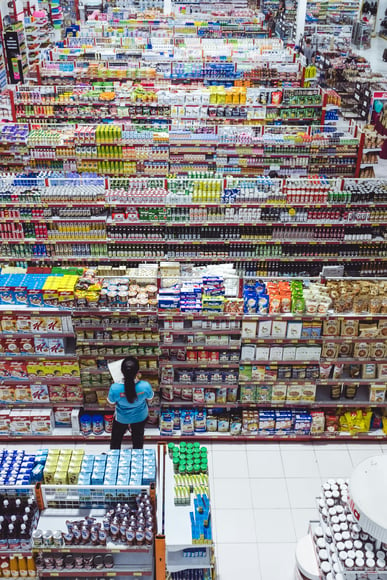


"It seems like every day that the carriers are coming out with a new one, it's named something different than it previously was, maybe, to get by with charging a new one." That's how one agricultural shipper described the surcharge stack on their ocean freight, and it points to a bigger problem: the same cost, relabelled repeatedly, making it genuinely difficult to tell whether you're paying a fair price or paying the same fee twice under two different names.
In agriculture, that's a direct hit to the trading margin, because freight here isn't managed as a back-office cost. It's priced directly into the deal.
That pricing problem shows up in a few different places across the industry: in how freight gets baked into a trade rather than filed as an overhead, in a tendering calendar that runs on harvest and reefer seasons instead of one clean annual date, and in how much of the actual rate-checking still happens by hand. Each one adds friction on its own. Together, they're why agricultural trading desks need a live, purpose-built freight benchmark more than most.
Freight is part of the trade, not separate from it
Agricultural trading majors run freight through in-house chartering desks, treating it as a cost of arbitrage between origins, not a line item to optimize after the fact. When a trader prices a CIF sale, the freight cost is baked directly into that price. Get the freight number wrong, and you've mispriced the trade itself, not just overpaid on shipping.
That makes accurate, current freight data a trading input, not a procurement nicety. And 2026 conditions make that harder than usual: Rabobank's flagship finding this year is that geopolitics, not supply and demand fundamentals, has become the dominant force shaping agricultural trade, with China shifting soybean purchases toward Brazil and away from the US in ways that scramble the assumptions underlying a lot of freight planning.
The tender calendar doesn't wait for you to catch up
Most packaged-goods shippers get one clean run at freight each year: a tender window, a contract, eleven months to live with the result. Agriculture doesn't work that way. Bulk grain and oilseed freight moves through a mix of spot chartering and contract commitments, timed to harvest. Produce exporters plan around reefer peak seasons and have to book weeks ahead just to secure tight capacity. There's no single date on the calendar where a desk gets current on rates and then coasts. The rhythm itself demands a live view of the market, not a periodic one.
That live view has to cover the lanes this industry actually trades on, not just the ones that are easy to price. Reefer and cold-chain freight, essential for meat, seafood, dairy, and produce exports, comes up constantly in agricultural freight conversations, alongside niche origin and inland lanes: Black Sea, US Gulf and PNW, Brazil Santos and Paranaguá, West Africa cocoa, Latin American produce. These are exactly the lanes a generic dry-box index was never built to price. A benchmark built specifically for reefer and origin freight, validated against a desk's own historical rates and mapped to the nearest comparable lane where coverage is genuinely thin, gives a trading desk something a dry-box number never could: a fair read on the freight that actually moves through their book. Free days and detention exposure matter here too, since a perishable container that dwells too long doesn't just cost money. It spoils.
Some desks are still working this in Excel. Others have stopped.
More than one agricultural shipper, some of them large, sophisticated trading operations, still manages rate data in an Excel spreadsheet, uploaded and cross-referenced by hand. It's a sign that the volume and complexity of modern freight surcharges have outgrown what a manual spreadsheet can reliably catch. For procurement teams, that shows up as unintentional human error, as tender rhythms that follow harvest and reefer seasons rather than a single annual date, and as surcharge cross-referencing that spans niche origin lanes.
A desk working from a spreadsheet has no fast way to notice that an "emergency bunker surcharge" from one carrier and a differently named fee from another are actually pricing the same underlying cost. That's the practical problem: cross-referencing carrier-by-carrier surcharge terminology by hand, across a global trading book, isn't realistic at the volume this industry operates at.
A desk working from a live benchmark sees past the renaming. The underlying rate and the real surcharge stack get checked against actual market data, regardless of what a given carrier decided to call a particular fee this quarter. That means a trader pricing a CIF sale is working from an accurate freight number, not one obscured by inconsistent labels.
What a clean freight number does for a trading desk
Picture pricing your next CIF sale with a freight number you actually trust, checked against real shipper and forwarder contracts on the reefer or dry lane you're using, with every surcharge mapped to what it actually represents regardless of what the carrier named it this month. That's a more accurate trade on margins that are already thin, and getting thinner as geopolitics, not fundamentals, drives more of this market.
The carriers will keep renaming surcharges. The tender calendar will keep running on harvest and reefer seasons instead of one clean date. Neither of those is going to stop. What can stop is your desk pricing a CIF sale on a freight number it can't fully defend.
See what this looks like in practice. Read the 2026 Freight Intelligence Buyers' Guide for the questions every agricultural trading desk should ask about surcharge validation, or explore how Xeneta supports agriculture freight procurement across reefer and dry-container lanes.