
For most of this industry’s history, shippers have had less visibility of the market than carriers and forwarders, and many still rely on individual quotes and last year’s budget as their starting point. Better data won’t remove the need for judgement, but it can help procurement teams negotiate from evidence, defend their decisions internally, and plan with more confidence.
At Xeneta, my team and I keep chipping away at that imbalance, and the last six months have been one of the busiest stretches we've had. If you're already a customer, some of this will be familiar. If it's been a while since we last talked, there's a fair amount of new ground to cover, and I'd love the chance to walk you through it.
AI that finds savings without being asked
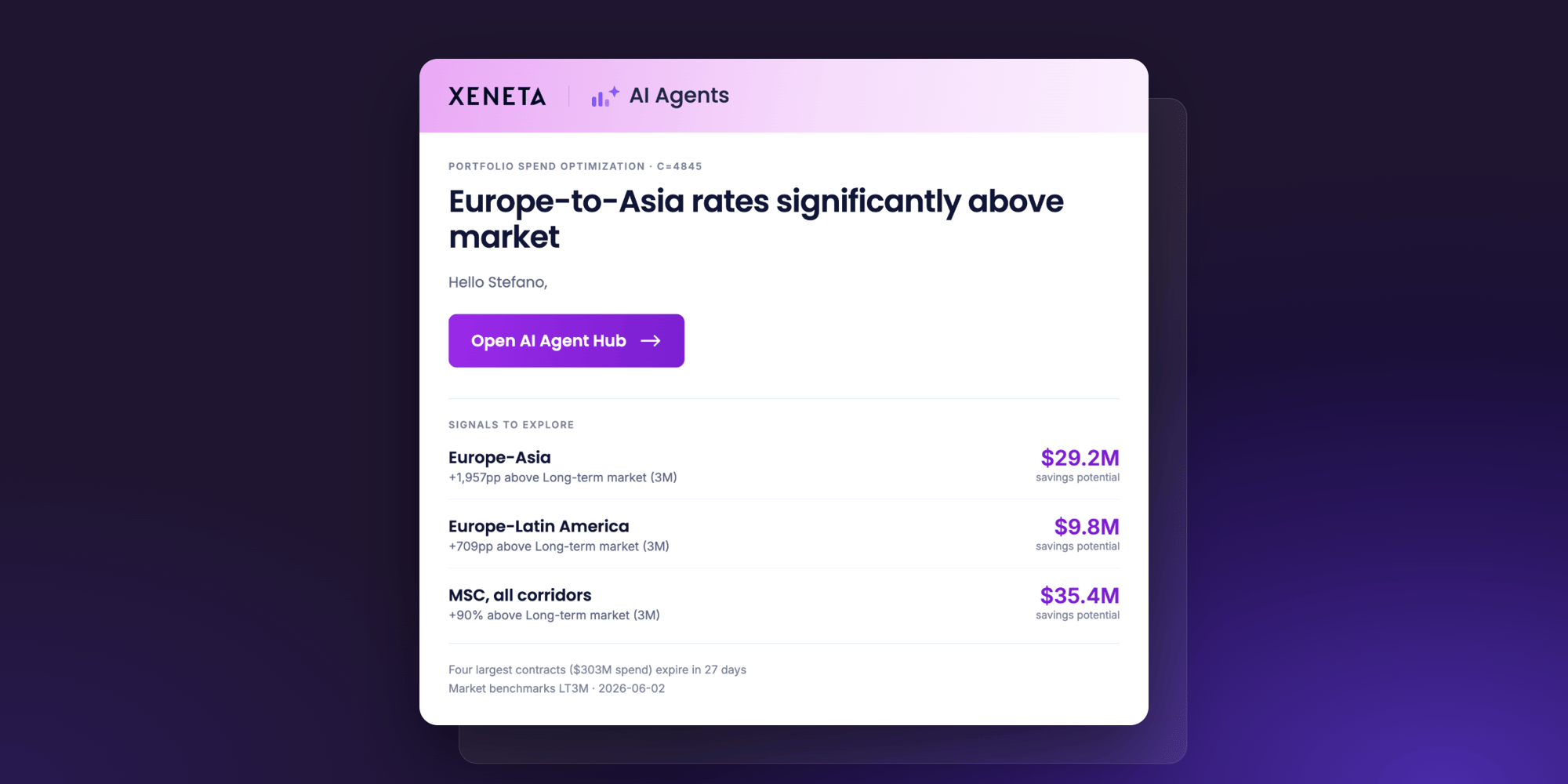
The biggest shift, and the one I'm most excited about, is that Xeneta now works for you even when you're not logged in. We've launched two AI agents that sit on top of your contracted rates and go looking for savings on your behalf. One scans your entire portfolio against the market and your peers, and flags where you're paying over the odds or where shifting volume to a different lane or supplier would save real money. The other does the same job from the supplier side, showing you where your spend is concentrated and where a single carrier relationship might be costing you leverage elsewhere.
Neither agent just hands you a black-box number. Every recommendation links straight back to the underlying data in the platform, so you can check the reasoning yourself before you act on it. The point isn't to replace your judgement, it's to help you identify the right lanes so you can act as soon as the market shifts.
Knowing what's actually happening on the water
We've also made it a lot easier to see how your services are really performing, rather than relying on what a carrier tells you. You can check actual versus promised transit times, delays, and reliability for any port pair, broken down by carrier, so you know exactly who to hold accountable at your next QBR.

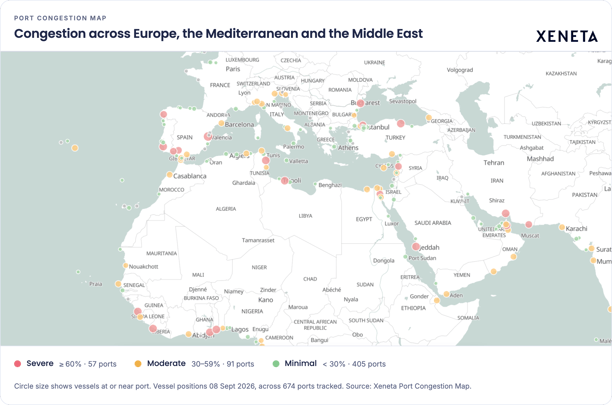
A live map shows you which ports are congested right now and how that's trended over the past month, so a disruption shows up on your screen before it shows up as an angry email from your customer.
We've also sharpened the model behind our reliability scores, so the numbers reflect what's happening on the water this week, not a few weeks ago.
Getting your rates under control, faster
Rate management is the part of the job that eats time without anyone noticing: spreadsheets, version control, and rates that go stale the moment they're saved. You can now upload your own rate sheet and have AI structure it and take it live in the platform, in minutes rather than weeks, with our team on hand if anything needs a second pair of eyes. Every rate shows its status and when it expires, so nothing quietly lapses on you, and if you run index-linked contracts, any adjustment now flows straight through to your rate sheet automatically. You're not maintaining the same number in two places anymore.
More depth in air freight
We've also put real investment into Xeneta Air this year. It now brings shipper contract rates, airline selling rates, and supply and demand signals together in a single view, something we don't believe anyone else in this market offers. On top of that, you can filter by the cargo you actually move, pharma, perishables, live animals, valuables, and dangerous goods, rather than pricing against a general average that doesn't reflect your freight.
For procurement teams, that means negotiating from the same information the forwarder has, instead of taking their word for what's fair. For supply chain teams juggling ocean and air, it means seeing an ocean disruption that's likely to push volume into air before it happens, rather than scrambling to book a mode shift at a moment's notice and a premium price.
One more thing, before the Xeneta Summit
At the Xeneta Summit in Munich this November, we're launching transshipment data, covering the 40 to 60% of ocean cargo that moves through a hub port rather than sailing direct. Today you can track those legs through carrier updates or a visibility provider, but there's no market view: no way to know whether that routing is competitive on cost or transit time. After Summit, you'll get routing and transit time visibility for those legs too, in Market Benchmarks. It's one of the most requested datasets we've had, and I think it closes a real gap. We'll also be opening early access to Xeneta Tendering, taking you from benchmarking a rate to running the tender itself in the same place. More details on both in Munich.
Why any of this should matter to you
Every one of these releases exists to answer one of two questions: are you paying a fair price, and can you see what's changing in your supply chain fast enough to act on it. We keep building this based on what customers tell us they need, and that's not going to stop. If it's been a while since we last spoke, I'd genuinely welcome the chance to show you where things stand, and if you'd like to see any of these products in action, I'd be happy to give you a demo.
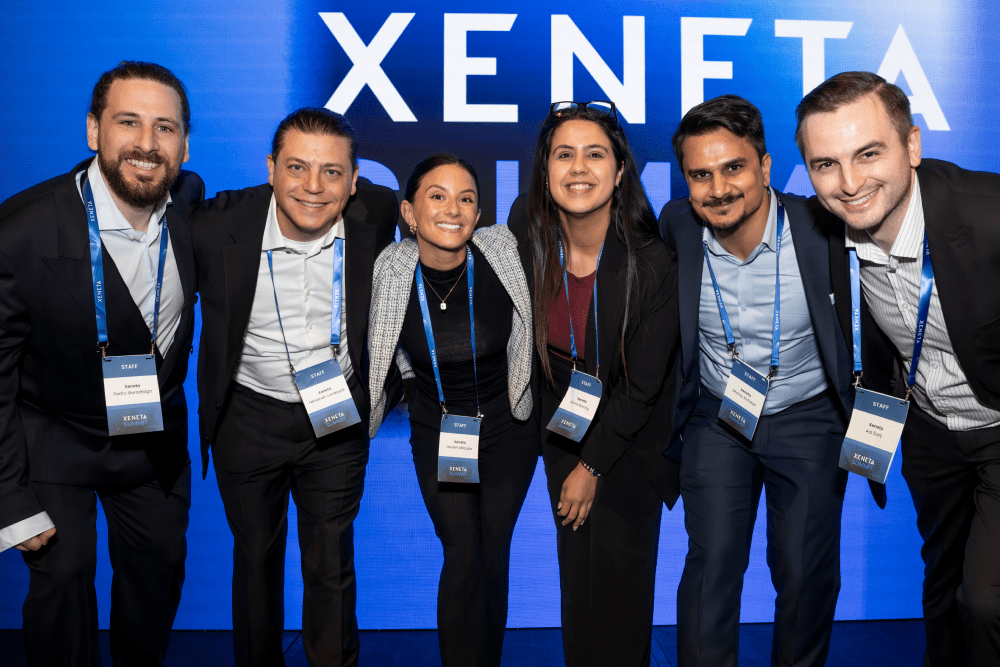
We'll be talking about what's next at the Xeneta Summit in Munich this November, our tenth year running it. I'd love to see you there.


.jpg?width=387&name=black-swan%20(1).jpg)