.png)



Latest Xeneta ocean container shipping data highlights are provided below quotes from Xeneta Chief Analyst Peter Sand.
Xeneta analyst insight
Peter Sand, Xeneta Chief Analyst:
“The escalation of conflict in the Middle East demonstrates how a regional crisis can quickly ripple across supply chains, eventually impacting shippers at a global level through delays, port congestion and escalating freight rates.
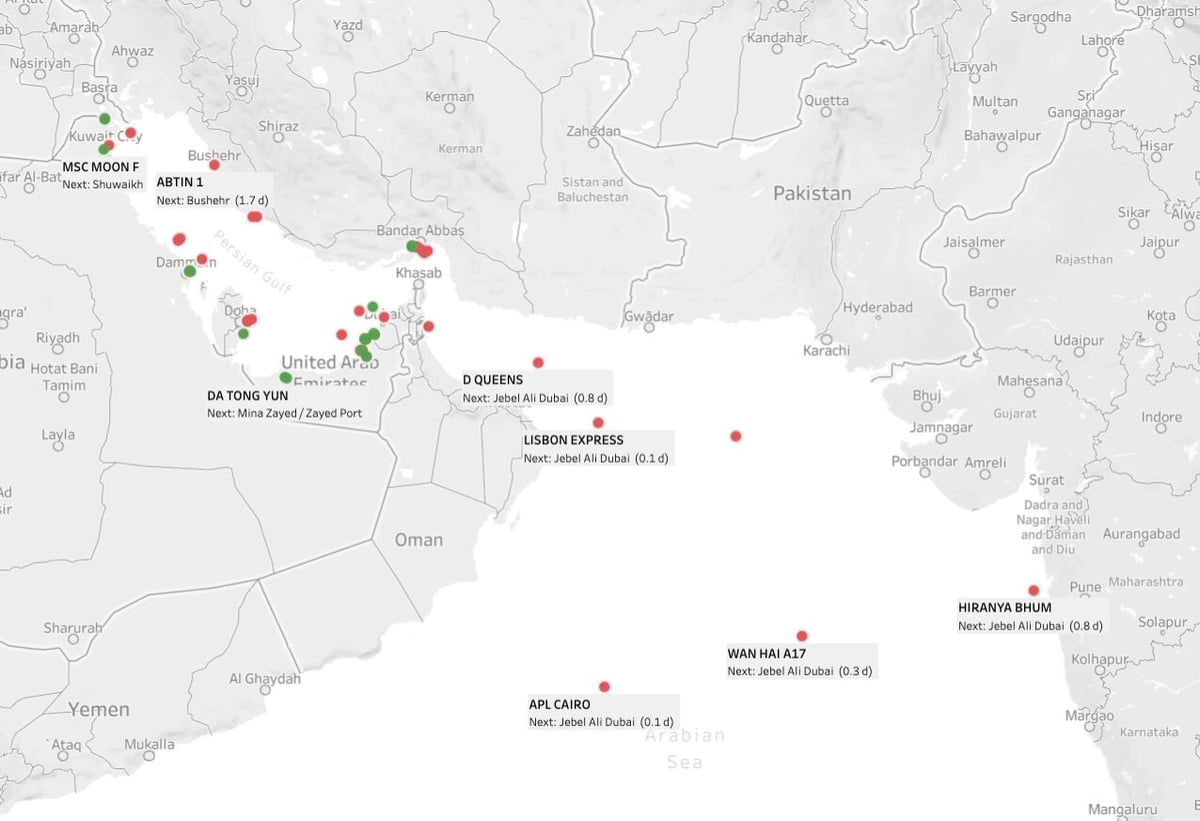
“Xeneta data shows 147 container ships sheltering in the Arabian Gulf and unable to leave due to the risk of sailing through an active conflict zone.
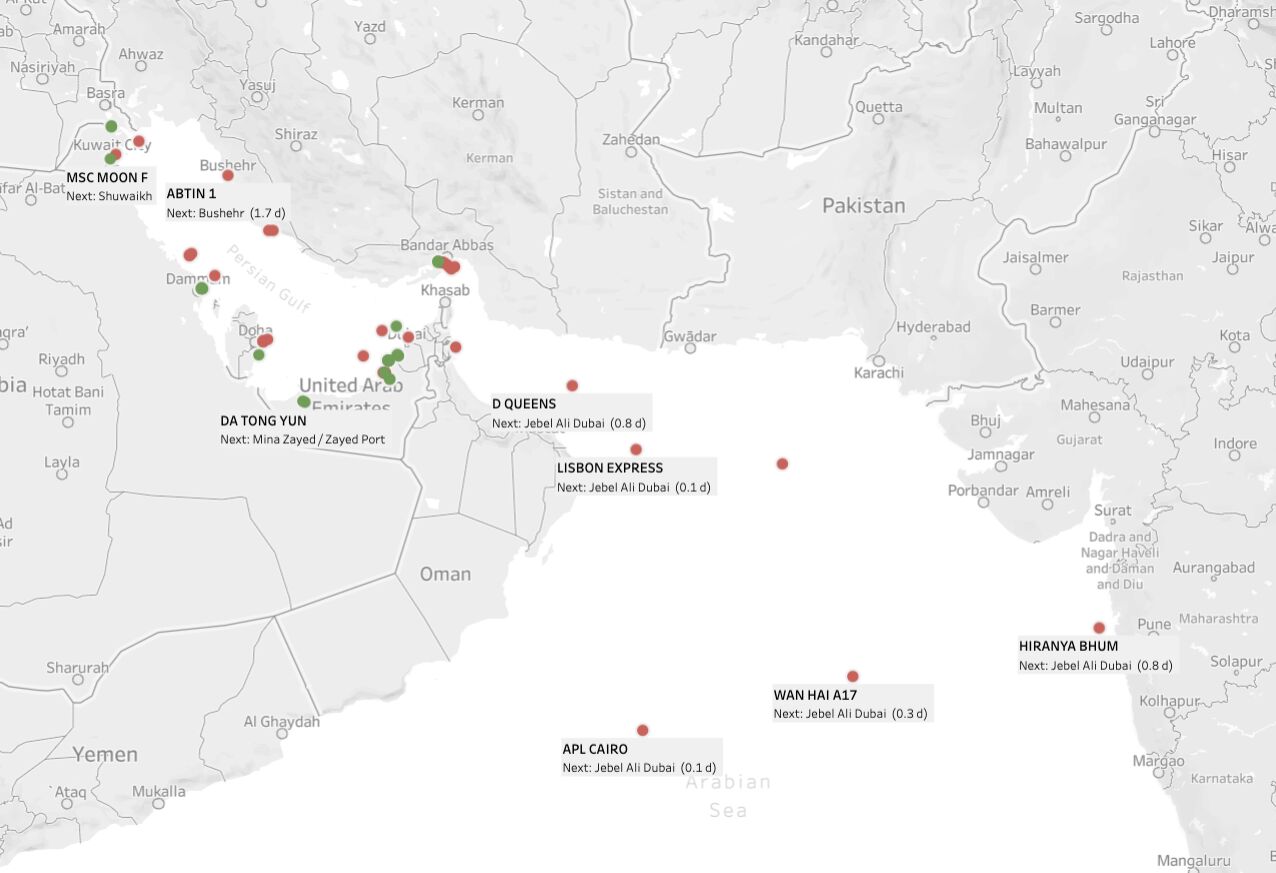
“Global supply chains do not stop, even during the most severe crisis, so more ships are on the water right now sailing to the Arabian Gulf – the question is what ports they will be diverted to and where containers will be offloaded.
“Alternative ports are not equipped to deal with a sudden increase in volumes arriving against chaotic schedules, so severe congestion is expected.
“Port congestion ripples across supply chains, so major transshipment hubs in Asia, such as Tanjung Pelepas and Singapore, will be impacted.
“Ripple effects are also seen in freight rates, with the most significant increases found on trades closest to the epicenter of conflict.
“Salalah in Oman is the next best option for many shippers, due to its close proximity to the Arabian Gulf for onward land transportation. Early Xeneta data shows average spot rates from China to Salalah increasing 28% compared to February 26, just before the conflict escalated.
“However, Salalah has been hit by drones, meaning carriers may look to ports further from the conflict zone, such as Colombo in Sri Lanka, where early Xeneta data shows average spot rates from China increasing a lesser 17%.
“Early Xeneta data shows ripple effects are starting to be seen well away from the conflict zone, with average spot rates from China to UK increasing 9% compared to pre-conflict.”
Data highlights
-
Early Xeneta data to demonstrate ripple effects of Middle East conflict on ocean supply chains (see Peter Sand analysis above)
-
China to Salalah, Oman: spot rates increasing 28% from pre-conflict (26 February)
-
China to Colombo, Sri Lanka: spot rates increasing 17% from pre-conflict (26 February)
-
China to UK: spot rates increasing 9% from pre-conflict (26 February)
-
-
Market average spot rates on major fronthaul trades – 5 March 2026
-
Far East to US West Coast: USD 2,123 per FEU (40ft container)
-
Far East to US East Coast: USD 2,870 per FEU
-
Far East to North Europe: USD 2,338 per FEU
-
Far East to Mediterranean: USD 3,570 per FEU
-
North Europe to US East Coast: USD 1,451 per FEU
-
-
Offered capacity on major fronthaul trades (4-week rolling average) – w/c 2 March 2026
-
Far East to US West Coast: -5.6% from a week ago
-
Far East to US East Coast: -7.1% from a week ago
-
Far East to North Europe: -12.7% from a week ago
-
Far East to Mediterranean: -3.3% from a week ago
-
North Europe to US East Coast: +16.0% from a week ago
-
Ends