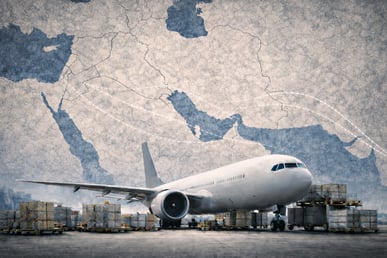

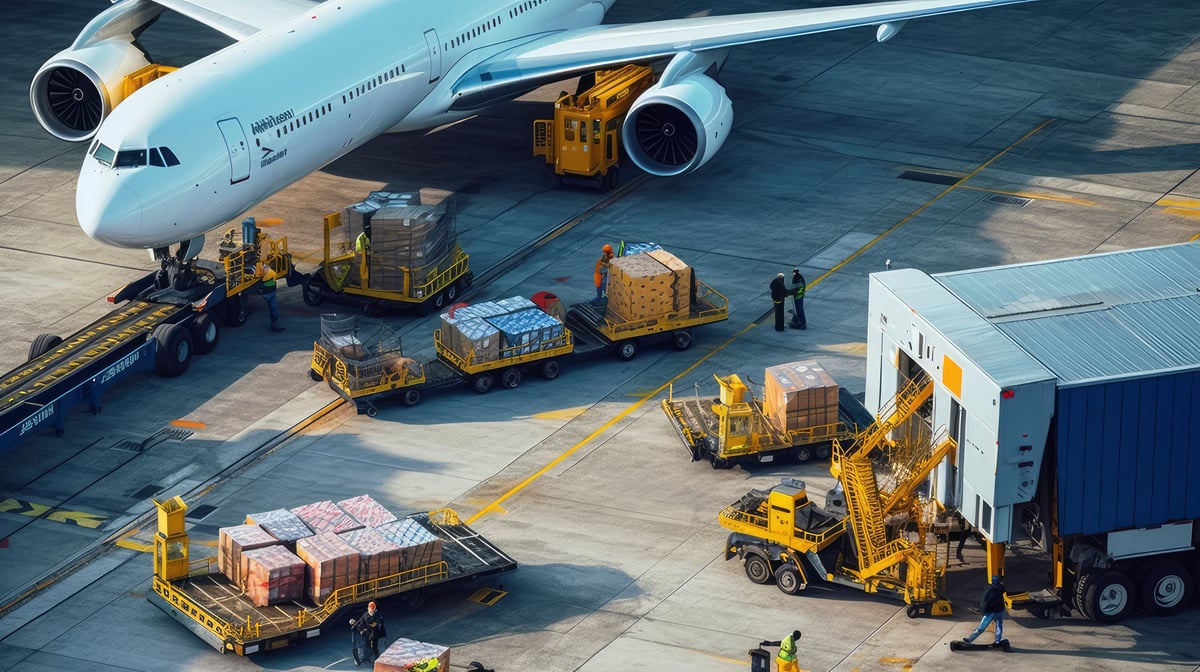
Two years ago, during the Red Sea crisis, air freight rates between India and Europe doubled within weeks as vessels rerouted around Africa. Many shippers could not wait the extra 1 to 2 weeks of ocean transit time and instead opted to shift cargo to airfreight, inflating prices. More recently, military conflict grounded or cancelled thousands of flights across Qatar, Saudi Arabia and the UAE in a single weekend, temporarily removing around 50 percent of capacity through the region.
The balance between ocean and air can shift fast.
When ocean networks come under strain, air becomes the pressure valve. Yet the companies that navigate these moments well are rarely improvising. They have already defined what moves by air, under which conditions, and what commercial trade-offs they are prepared to accept.
The pattern is familiar
The move from ocean to air is usually triggered by disruption, seasonality, or inventory risk rather than a single delayed vessel.
During the peak of port congestion in 2021, Lululemon publicly stated it would strategically use air freight to build inventories and bypass delays. The objective was to protect availability and keep growth plans intact despite unreliable ocean lead times.
In 2022, the company again revised its outlook to reflect increased air freight spending, acknowledging the margin pressure while prioritising product availability and launch continuity. Reporting at the time highlighted elevated air freight costs as part of the supply chain picture, yet the company still delivered results that exceeded expectations. The logic was consistent: maintain flow, capture demand, and avoid stock-outs during disruption.
Other consumer brands, including Roots, openly budgeted for greater air freight spend in response to ocean lead-time volatility. Across these examples, success was framed in commercial terms. Product was in-market when demand was there. Launch calendars remained intact. Service levels were protected, even as freight costs rose.
As vessels diverted around the Cape of Good Hope and transit times lengthened materially, some retailers temporarily increased air share to maintain delivery schedules. These were tactical shifts, designed to bridge instability rather than replace ocean altogether.
The real decision behind the mode shift
On the surface, switching from ocean to air appears to be a straightforward trade-off between speed and cost. In reality, the decision sits at the intersection of revenue protection, customer relationships, brand credibility and working capital exposure.
Shippers are evaluating whether absorbing higher transport costs now prevents deeper commercial consequences later. Missing a product launch can mean markdowns. Failing to deliver on time can strain retail partnerships. A production stoppage caused by a single missing component can carry costs that far exceed the freight premium required to avoid it.
In automotive, for example, a small, inexpensive part can halt an entire factory. When that risk is on the table, air freight becomes part of operational continuity planning rather than a discretionary expense.
The most important question is often not how much air freight costs, but what it costs to be late. Lost sales, missed promotions, downtime, penalties and potential churn all belong in the equation. Once those elements are quantified, the rate comparison alone rarely tells the full story.
Deciding what deserves air
One of the most common reactions during disruption is to move too much volume by air too quickly. Without structure, urgency can override judgement.
Experienced supply chain leaders approach the decision with segmentation and clarity. They begin by identifying products that are commercially critical, whether because of margin, strategic importance or customer commitments. High-value, lightweight goods or low volume with strong demand visibility tend to support air economics more easily than bulky, low-margin items. The iPhone remains a familiar illustration because its value density justifies premium transport.
Demand forecasting plays an equally important role. Products with predictable sell-through and immediate market urgency are stronger candidates than speculative inventory. Leaders often categorise SKUs into tiers based on urgency and impact, pre-defining which items qualify for air under specific trigger conditions such as lead-time extension or service deterioration.
By establishing these criteria in advance, organisations avoid blanket reactions and preserve air capacity for the shipments that genuinely protect revenue or operational continuity.
The hidden side of the air premium
Air freight involves more than a higher headline rate.
Capacity can tighten rapidly during geopolitical events, and once space becomes constrained, prices tend to move quickly. Cut-off times are stricter, consolidation strategies may need to be adjusted, and customs readiness becomes critical to preserve the speed advantage. Last-mile bottlenecks can further erode transit gains if not aligned.
At the same time, certain inland costs embedded in ocean routings may be reduced. In some corridors, air removes additional rail or trucking legs, and surcharges are structured differently. A true cost comparison requires examining the full door-to-door picture rather than comparing rate sheets in isolation.
Timing remains decisive. Capacity usually tightens before prices spike, and lead-time variability increases throughout. Entering the air market early, with pre-arranged agreements, provides more leverage than competing for space once disruption is fully visible.
From reaction to playbook
Short-term thinking is one of the most persistent pitfalls in mode shifting. Reacting to immediate disruption without considering broader market dynamics can lead to inflated spot purchases and fragmented decision-making. According to Xeneta data, in the long-term spot rates are 10% higher than long-term rates. However, in the short-term, they can be much higher than that. Lack of internal alignment between procurement, logistics and finance compounds the risk.
A resilient approach resembles structured procurement rather than crisis management. Framework agreements with forwarders are negotiated in advance. Lanes that are viable for cross-modal movement are identified early. Inventory is categorised by urgency and commercial impact. Scenario planning defines Plan A and B responses to varying levels of disruption.
Underpinning all of this is timely market intelligence. Cross-modal rate benchmarks, shipper buying rates, airline selling rates, capacity indicators, load factors and service metrics provide the visibility required plan ahead of time and take informed actions quickly.
Ocean will continue to carry the majority of global volumes because of its cost and scale advantages, but recent disruptions have shown how quickly that balance can shift when transit times extend or reliability deteriorates. Treating mode shift as a structured lever within the supply chain, with predefined triggers, commercial thresholds and shared ownership across procurement, logistics and finance, enables shippers to protect revenue and service levels without defaulting to reactive, high-cost decisions.
And when capacity tightens again, the difference between reacting and executing a prepared strategy will be visible not only in transit times, but in the resilience of the balance sheet.
Watch the on-demand masterclass: Air Freight, Decoded
If you want to see how full-market visibility can strengthen your air freight strategy, watch our on-demand masterclass, Air Freight, Decoded – How to Negotiate Smarter with Full-Market Transparency.
You’ll get an exclusive look at Xeneta’s new unified Market Trends view, bringing shipper buying rates, airline selling rates, and supply-demand signals together in one place. Learn how to compare lanes, identify misaligned proposals, and respond faster to market shifts with data your teams and partners can align around.