
About Xeneta
We're transforming the way freight is bought and sold
In a world of freight volatility, Xeneta is committed to helping build resilient supply chains that work better for everyone.
Xeneta, trusted by the world's biggest buyers & sellers of ocean and air freight
Our story
In 2012, we set out to address a problem the freight industry had simply learned to live with.
Xeneta is the leading freight intelligence solution transforming how global shippers, forwarders, and carriers manage supply chains.
Trusted by Nestlé, Volvo, and Coca-Cola, Xeneta delivers the most complete ocean and air freight data, real-time insights, and expert support; empowering logistics teams to cut costs, improve performance, and stay ahead.
Inside Xeneta
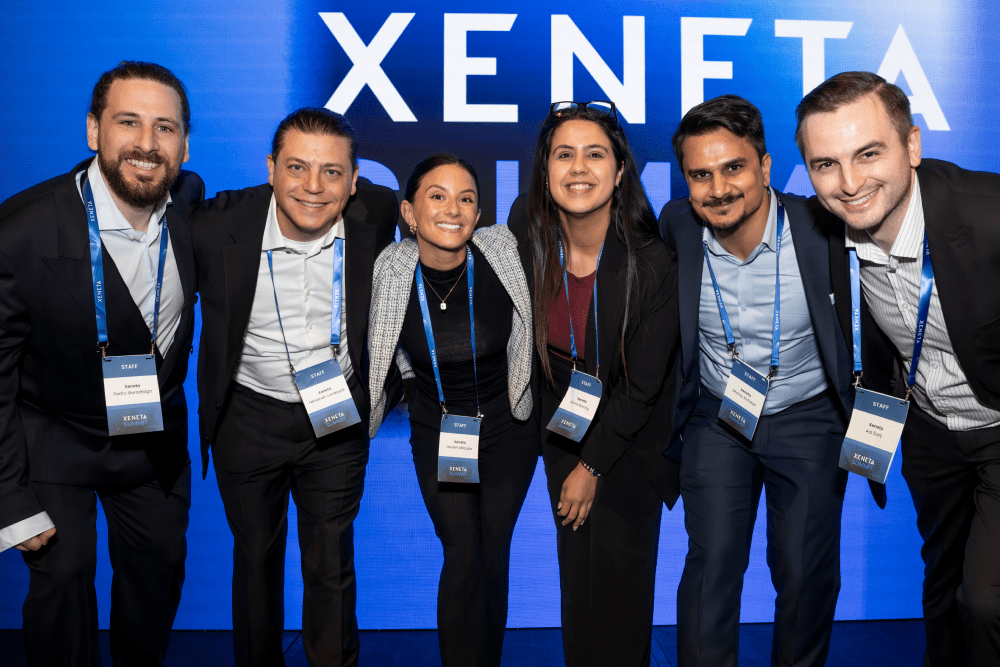
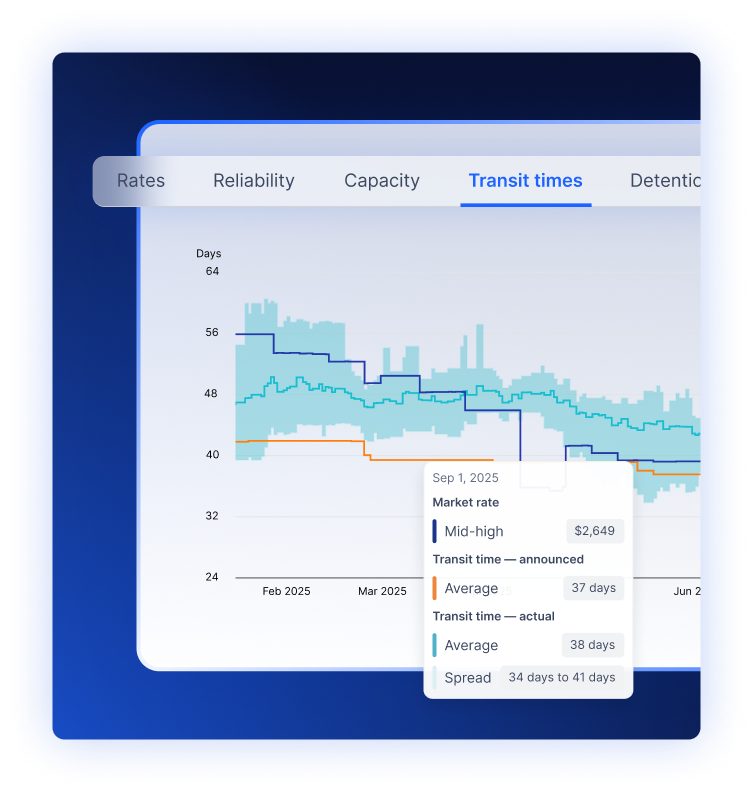
We're proud of the people behind Xeneta, a global team of thinkers, builders, and industry experts who care deeply about making freight better for everyone.
200+
5
30+
One global team, one shared mission
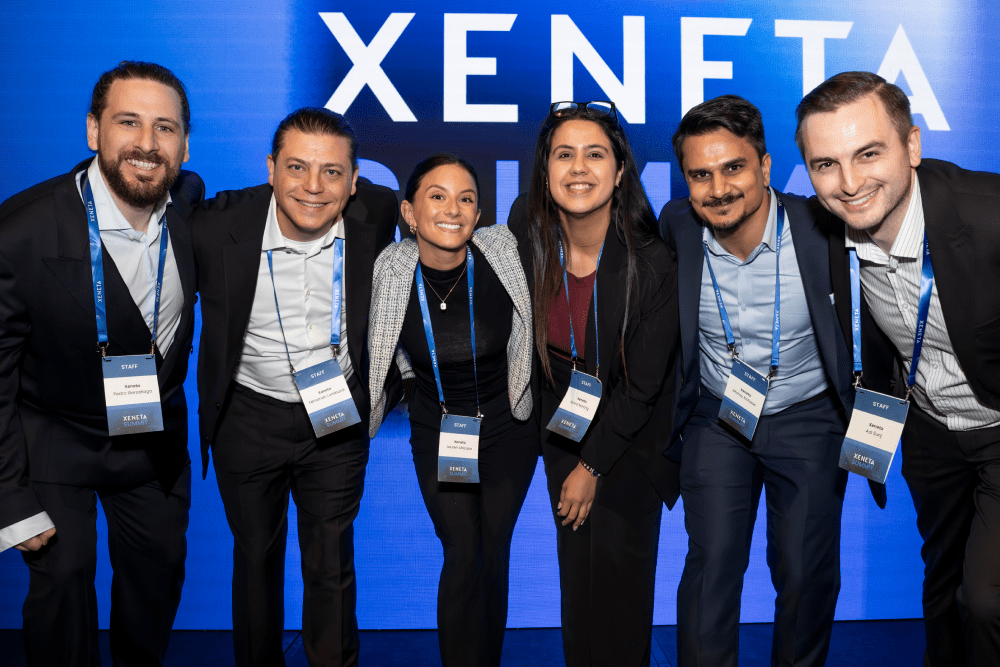
“When we started Xeneta, the freight industry was built on opacity. Shippers were making million-dollar decisions with incomplete, inconsistent data, and carriers lacked a fair, trusted way to demonstrate the value they delivered. I believed there had to be a better way. Our mission has always been simple: bring transparency, truth, and shared understanding to global freight. When everyone sees the same market reality, negotiation becomes fairer, plans are more accurate, and the entire industry moves forward together.”
Patrik Berglund, Co-Founder & CEO, Xeneta

Join the team
Our Offices
Oslo | HQ
Xeneta AS
Biskop Gunnerus gate 14A, Oslo, NO 0185, Norway

London
Xeneta AS
180 Borough High Street, London, England, SE1 1LB

Hamburg
Xeneta GmbH
Hopfenmarkt 33, Hamburg, DE 20457, Germany

New Jersey
Xeneta LLC
111 Town Square Place, Suite 430, Jersey City, NJ 07310

Copenhagen
Xeneta GmbH
Vandtårnsvej 77, 2860 Søborg, Denmark
See the latest from Xeneta
Our data and insight powers freight coverage in the world’s leading media.

Frequently asked questions
What is Xeneta?
Xeneta is a freight rate benchmarking and market intelligence platform founded in Oslo in 2012 by Patrik Berglund, Thomas Sörbo, and Vilhelm K. Vardøy. It was created with the mission to fundamentally change how freight is bought and sold, addressing a long-standing problem in global logistics: the information asymmetry between carriers and shippers.
Historically, carriers have always known what the market is paying, while shippers often did not. Xeneta was built to close this gap by aggregating real contracted and spot freight rates from shippers and forwarders worldwide, turning that crowdsourced data into actionable benchmarks. Procurement and logistics teams can use these insights to negotiate competitively, forecast freight spend, and manage contracts against live market conditions.
Today, Xeneta covers both ocean and air freight markets and serves hundreds of global enterprises across a wide range of industries.
What types of companies use Xeneta and for what purposes?
How does Xeneta's business model work, do I need to share my rates to use the platform?
Xeneta operates on a data contribution model: customers who share their contracted freight rates enrich the benchmark dataset that the entire platform is built on, and in return receive access to the broader market intelligence that thousands of other contributors have built together. The more data contributed across the network, the more granular and accurate the benchmarks become for everyone.
That said, sharing your own rates is not a requirement for accessing the platform. Many customers start as data consumers, using Xeneta's benchmarks, market trends, and carrier performance data without uploading their own contracts. Customers who do contribute rates gain the additional ability to compare their own contracted positions directly against market benchmarks, which is where the most precise savings identification and negotiation preparation becomes possible.
All contributed data is fully anonymized and aggregated before it enters the benchmark dataset. No individual shipper's rates are ever identifiable within Xeneta's outputs, and carriers are excluded from contributing data entirely, preserving the neutrality and independence that makes the benchmarks credible to both sides of the negotiation. Find out more about how Xeneta's data works.
How long has Xeneta been operating, and what is the scale of its data coverage?
Xeneta has been operating since 2012, which means the platform has accumulated over a decade of real contracted and spot freight rate data across ocean and air. This tenure matters beyond longevity: the benchmark dataset has depth across multiple market cycles, including the COVID-era rate spikes, the sharp correction that followed, and the disruptions since, giving procurement teams historical trend analysis that goes well beyond what current-market-only tools can offer.
The current scale of Xeneta's data coverage, including the number of port pairs, airport pairs, and total rate data points in the platform, is best verified directly on Our Data page, where the most up to date figures are published. What does not change is the principle: coverage is built to be actionable across the lanes that matter most to global shippers, not simply broad at the expense of depth on the routes where procurement decisions are actually made.
Is Xeneta independent from carriers and freight forwarders?
Yes. Xeneta has no commercial relationship with carriers or freight forwarders that could influence the benchmarks it produces. Carriers cannot submit data to the platform, and no carrier or forwarder ownership exists within Xeneta's structure. This independence is not a minor detail, it is the foundation of the platform's value. A benchmark that a carrier could influence, even indirectly, is not a benchmark that can be used to negotiate against them.
Xeneta's data is contributed entirely by shippers and forwarders on a voluntary, anonymized basis. The benchmarks reflect actual contracted rates paid by real shippers in the market, not the commercially motivated rate guidance that carriers and forwarders provide. This is why Xeneta's data carries weight in carrier negotiations: it cannot be dismissed as an internally generated estimate, a competitor's rate card, or a number with an agenda behind it. It is what the market is actually paying, sourced from the people paying it. Find out more about Xeneta's data and methodology.