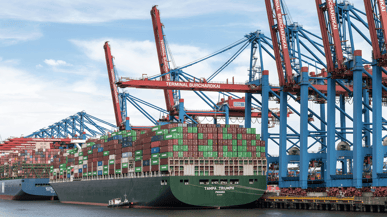



Fewer than 30% of ocean sailings arrive on time.
Yet, it's not uncommon for procurement and operations teams to continue planning off the pro-forma schedule — the one the carrier published, not the one they're actually running.
That gap between what's promised and what's delivered has always existed.
But years of compounding disruption have made it too costly to keep treating as an operational footnote. It belongs in the procurement conversation, and it's been missing from it for too long.
The Rate Is Only Part of the Story
Here's a scenario that plays out more often than anyone in logistics operations would like to admit.
Procurement runs a tender. The team benchmarks rates, negotiates hard, and secures a contract that's ~10% below last year. It goes into the board deck as a win.
Finance is happy.
The CPO is happy.
Then the shipments start moving.
The carrier that came in cheapest runs a schedule that, in practice, adds two days to the average transit time. But then spot rates surge – as we've seen recently in the Middle East – and your sailing is blanked with 48 hours' notice.
The ops team scrambles.
Safety stock gets rebuilt to compensate.
And your retail shelf sits empty four days longer than planned.
None of those costs show up in the rate. But they are very much showing up in the business.
Supply chains that focus solely on visible cost reduction — lower freight rates, cheaper vendors — often increase the cost of delay. A low-cost carrier with inconsistent transit times introduces disruption that wipes out the savings it was meant to create.
The mistake is optimising price instead of flow.
What the Reliability Data Actually Shows
Fewer than 30% of sailings arriving on time is the headline. The detail behind it requires more careful reading.
Xeneta's March 2026 Schedule Reliability Scorecard shows global on-time performance rebounding to 36%, up from a low of 27% in February. On the surface, that looks like progress. But let's be clear: this is stabilisation, not recovery. The improvement is largely a product of carriers blanking more sailings rather than actually running their networks better. On Asia to North America and Asia to Europe combined, blank sailings accounted for 20% of planned sailings in March, up from 13% a year earlier. Carriers are managing the appearance of reliability by cancelling the sailings most likely to be late. That is not the same as reliable service, and it is not what your planning teams should be building forecasts around.
The carrier spread tells the sharper story. Hapag-Lloyd and Maersk, operating through the Gemini Cooperation, led the market in March at 52% and 50% on time respectively, with average delays of 2.6 days. Premier Alliance closed the same month at just 20% on time, with average delays of 6 days. That is not a marginal operational difference. On the same lane, with contracts signed in the same tender, those two outcomes produce entirely different supply chain realities. And that difference does not appear anywhere in a rate benchmark.
The Middle East trade, under sustained pressure from Persian Gulf disruption, sat at just 24% on time in March despite modest improvement from February. Far East to Europe remains structurally constrained by Cape of Good Hope routing, with chronic delays across several alliance service strings. These are not temporary dislocations. They are the operating environment that procurement decisions are being made in right now.
The Hidden Cost Is Bigger Than You Think
When a shipment arrives late, the visible cost (an air freight premium, an expedite fee...) gets logged and moved on from. Whereas, unreliable transit times have a hidden tax.
When shippers respond by carrying an extra week of safety stock, they don't absorb a one-time cost — they absorb it permanently. At 15–30% of inventory value annually, that decision recurs every quarter, compounding quietly in the working capital line.
Then there's the question finance teams rarely ask procurement, but probably should: what does an extra two days of average transit time actually cost in goods at sea? For a shipper moving $500 million of product through ocean freight annually, two additional days of transit time means roughly $2.7 million more capital locked at sea at any given moment, unavailable for investment, operations, or growth.
When transit times are not just slower but also unpredictable, the cost compounds further. Variability forces larger safety buffers. Larger buffers increase working capital requirements. Working capital requirements constrain what else the business can do.
The companies navigating this well are the ones treating transit reliability not as an operational preference, but as a financial variable that belongs in the same analysis as freight cost.
Why Procurement and Ops Need to Have the Same Conversation
Historically, schedule reliability lived in logistics operations. Ops tracked it, managed around it, and absorbed the consequences. Procurement owned the rate. The two sat at the same table less often than they should have.
That division was manageable when disruption was the exception. It makes far less sense now — particularly in ocean freight, where unreliability has become structural, and its costs flow directly into working capital, inventory strategy, and financial planning.
What the shift looks like in practice is a procurement team walking into a tender with two questions, not one. Not just: which carrier gives me the best rate on this lane? But: which carrier gives me the best rate-adjusted outcome, accounting for what their reliability record actually means for my inventory, my production schedules, and my customer commitments?
Those are different questions that lead to different decisions. Take a carrier that is 8% more expensive but consistently delivers on time, versus one that is 10% cheaper but with a poor on-time record. The rate benchmark tells you to choose the latter. The reliability data may tell you that's the wrong call.
Of course, the math depends on the lane, the cargo, and the cost of variability to that particular business. But the question itself — what does unreliability actually cost us? — is one that procurement and ops need to be answering together.
Doing that well means having schedule reliability data in the same conversation as rate data. Xeneta Ocean Schedules was built for exactly that.
The Missing Layer Is Now in the Xeneta Platform
Procurement and operations teams now have a single view of actual vessel performance versus published schedules, directly in Xeneta, alongside the rate benchmarking they already rely on. Announced versus actual transit times across any direct port pair. Cancellation rates, blank sailings, and schedule reliability by carrier and service string. ETA and ETD deviations visible before they become operational problems.
For the first time, the two data sets that procurement and ops have been working with separately sit in the same place. That changes what a tender produces. Instead of a rate decision, it produces a total value decision, one that accounts for what unreliability actually costs the business. It also changes who is involved before the contract is signed, not after.
Rate intelligence tells you what you're paying. Schedule and reliability intelligence tells you what you're getting.
You need both to know whether the deal you just signed was actually a good one.
See Xeneta Ocean Schedules for yourself