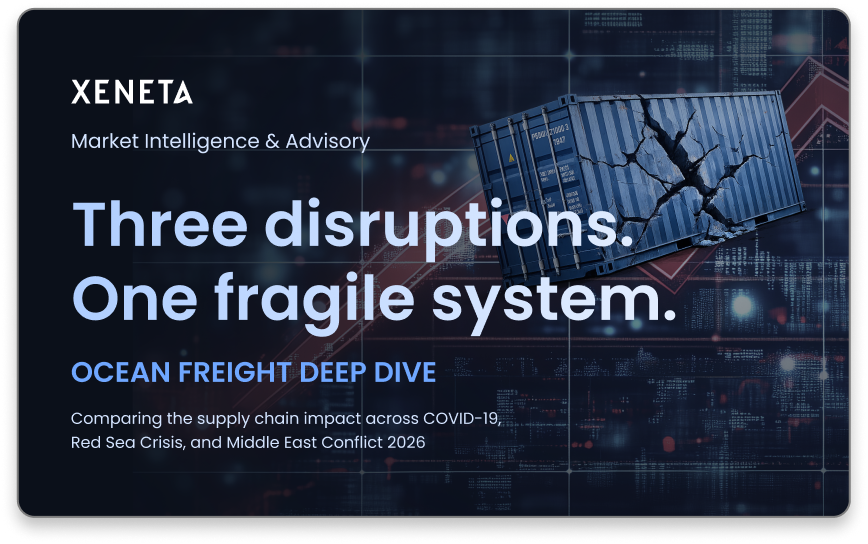
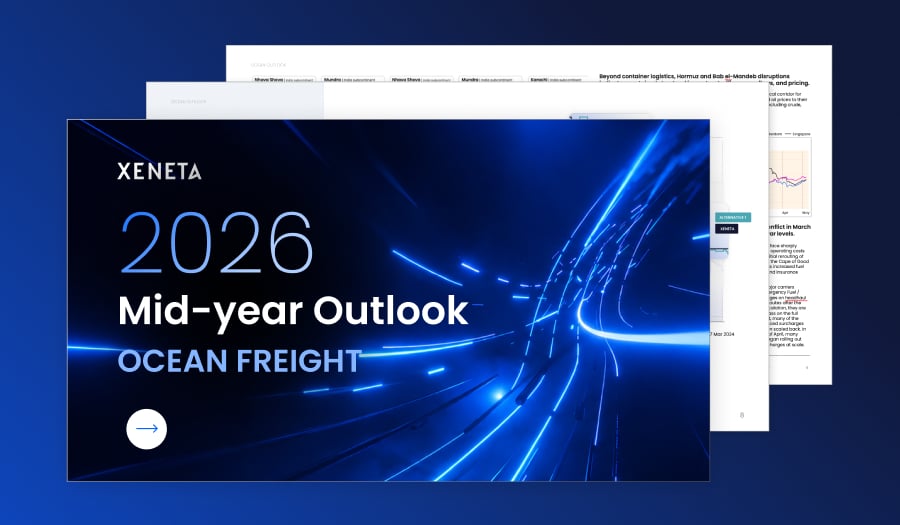
See how Nestlé cut manual work, compressed tender cycles, and elevated procurement decisions with real‑time data
A unified platform to build your procurement strategy, benchmark rates, compare carriers, run faster tenders, and adapt to market shifts.
Xeneta, trusted by the world's biggest buyers & sellers of freight
It's slow, fragmented, and reactive. Without real market visibility, shippers and forwarders face higher costs, weaker contracts, and ongoing disruption.
No single source of rate and performance data
Tenders move slower than the market
Volatility keeps disrupting your plans
Xeneta is the leading freight intelligence platform built on rate and performance data from the world’s largest network of shippers and freight forwarders.
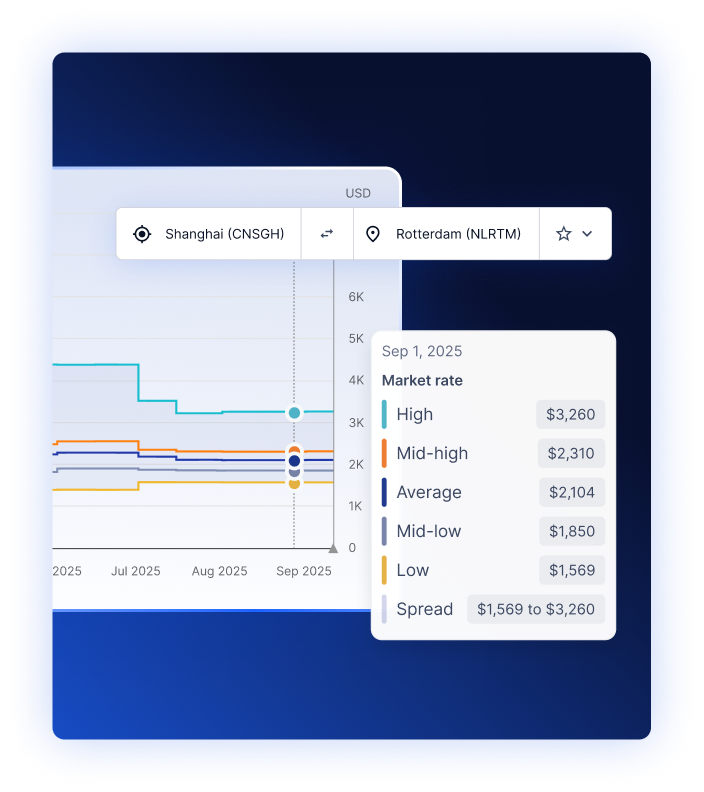
Benchmark contract and spot rates by lane using real shipper and forwarder data
Identify outliers and overpriced trades with objective comparisons
Use our Integrated Rate Management System to centralize and share rates across teams
AI agents highlight trades that fall outside market norms
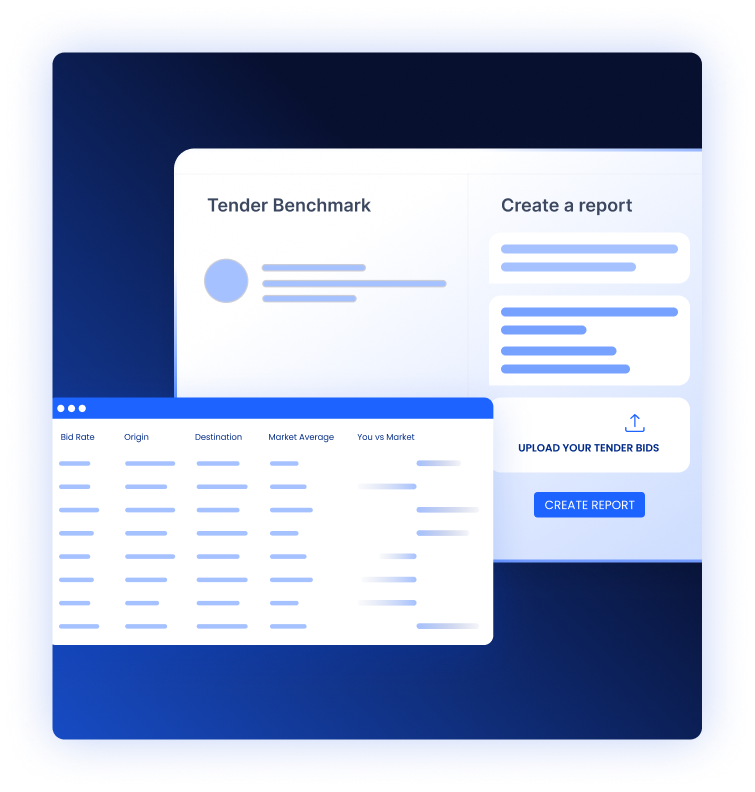
Upload and benchmark thousands of lanes instantly
Validate bids or pricing strategies
Avoid inflated awards or underpriced commitments
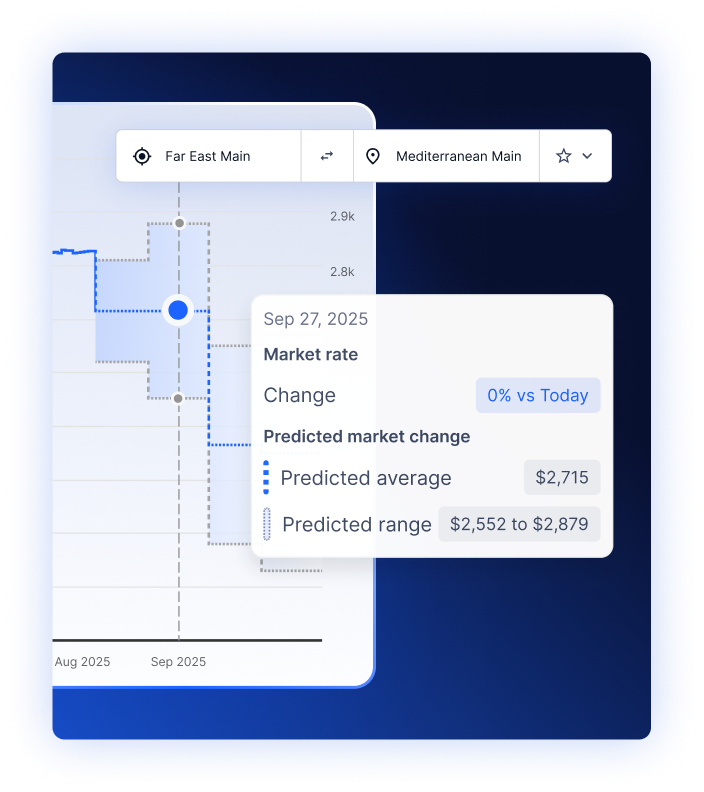
Forecast contracted rates up to 3 months ahead and spot rates 10 days out
Access market outlooks up to 6 months ahead on key trades
Build regional and global budgets with cost scenarios across modes
A Xeneta subscription gives you far more than just data, it's everything you need to monitor, manage and optimize your ocean freight.
— David Lenaers, Global Director of Logistics Sourcing, Stanley Black & Decker
Supporting every link in the ocean freight value chain.
What does Xeneta's ocean freight benchmarking platform show?
How is Xeneta's ocean freight data different from published indices?
Most published freight indices aggregate rates across broad trade corridors and major lane groupings, which provides useful directional signals but often at a level of granularity that doesn't map to the specific port pairs, equipment types, and contract structures that procurement decisions are actually made on. A corridor average that blends rates across all buyer types and deal sizes is rarely the right reference point for a specific lane negotiation.
Xeneta's benchmarks are built from contracted data that companies have actually paid for shipping containers between ports, not quoted prices or estimates. The dataset is drawn from contracted and FAK transactions contributed by hundreds of shippers and forwarders globally, producing lane-level benchmarks with the statistical depth to be meaningful on the specific corridors that matter to your procurement. The breadth of contribution, combined with daily updates and quality controls across the full dataset, is what makes Xeneta's data a credible reference in a carrier conversation rather than a broad market signal that can be dismissed as not applicable to your situation. Learn more about Xeneta's data and methodology.
Does Xeneta cover enough data for my specific trade lanes?
How is Xeneta ocean freight data sourced?
Xeneta collects rates from shippers and freight forwarders engaged in trade all over the world, with the platform drawing upon more than 700 million contracted freight rates. The data includes short-term and long-term contracts, some contributors update rates multiple times per month, others on monthly, quarterly, annual, or even two-year fixed agreements. By sampling from this broad base of companies, Xeneta captures statistical tendencies across the market rather than relying on any single source.
Millions of rates are gathered per month, but before any benchmark is published, a minimum of 5 rates per route, per day, per equipment type is required. On mature trade routes, this reaches several hundred valid rates per day. All rates represent the true total port-to-port cost, including surcharges such as BAF, CAF, Canal surcharges, PSS, PCS, and ISPS, while non-ocean costs like inland haulage and documentation fees are excluded. Data is segmented across six container types: 20' dry, 20' reefer, 20' tank, 40' dry, 40' high-cube, and 40' reefer high-cube.
Alongside rate data, Xeneta Ocean Schedules brings a second layer of intelligence to the platform, combining direct carrier-provided schedule data with real-time AIS vessel tracking. This means users get a live, accurate picture of where vessels actually are and how services are performing, including port call data, capacity information, and blank sailing visibility.
Once collected, all data is fully anonymized and aggregated, no company-specific rates or supplier names are ever disclosed. Xeneta's three key benchmarks: Market Average, Market High (97.5th percentile), and Market Low (2.5th percentile) give users a complete view of where the market sits. Crucially, carriers are not permitted to submit data to Xeneta, ensuring the benchmarks cannot be used to facilitate collusion or give any carrier a competitive advantage. Xeneta remains a fully neutral party, with no carriers, freight forwarders, or NVOCCs holding an ownership stake in the company. To learn more visit Our Data page.
How does Xeneta help with my negotiations?
Effective negotiations depend on knowing where the market actually sits, not where your counterpart says it does. Xeneta gives procurement teams three key benchmarks for every trade lane: the Market Average, Market High, and Market Low. Together, these show not just what rates look like in the middle of the market, but what the best and worst performers are paying across your industry and shipping volumes, so you know exactly what a competitive rate looks like before any conversation starts.
The spread between spot and long-term rates adds another layer of leverage. When spot rates are significantly below contracted rates, you have a clear, data-backed case for renegotiation. When the spread is tight or long-term rates are favorable, you can make an equally confident decision to hold. Either way, you're negotiating on facts rather than your supplier's version of the market.
What is index-linked contracting and does Xeneta support it?
Index-linked contracting is an alternative to fixed-rate agreements, where freight rates automatically adjust against live market data over the life of a contract, removing the need to renegotiate every time the market moves.
Xeneta's 700M+ rate dataset provides the independent, neutral benchmark that makes this model work in practice. To learn more about how Xeneta supports index-linked contracting, visit our Indexing page.
What ocean bundles does Xeneta offer?
Xeneta's ocean freight platform is available across three bundles, each designed for a different stage of procurement maturity and operational scale.
Discover is built for teams starting with data-driven visibility, providing rate benchmarking at port-to-port and corridor level, spend analysis, and the foundation for moving away from carrier-dependent market information. Explore is designed for mid-size enterprises scaling their use of market intelligence, adding carrier performance data, predictive market outlooks, transit time analysis, and expanded carrier spread insights for deeper supplier evaluation. Achieve is built for global procurement operations managing hundreds of lanes, providing full market coverage, unlimited AI agents, enterprise-wide rate management, the Indexing Contract Manager, and dedicated customer success partnership to support strategy and execution at scale. Full details on what's included in each bundle are available on the bundles page.
What is the Tender Benchmark Tool and which bundles include it?
The Tender Benchmark Tool allows procurement teams to upload bid sheets and benchmark carrier quotes across hundreds or thousands of lanes simultaneously, compressing what would otherwise take days of manual analysis into minutes. It's available in both Explore and Achieve bundles, with Explore supporting up to 22,500 rows and Achieve up to 45,000 rows per upload.
For teams running large multi-lane tenders, this is where the time saving is most immediately felt. Rather than building lane-by-lane comparisons manually, the tool surfaces which bids are above market, which carriers are consistently competitive, and where negotiation effort should be focused. Learn more about sourcing and tendering with Xeneta.
What are the Xeneta Advisory add-ons and who are they for?
Xeneta Advisory reports provide analyst-led intelligence tailored to your specific business rather than the broader market, and are available both as add-ons to any ocean bundle and as a standalone product for teams that want advisory support independently of a platform subscription.
Two report types are available. The Tender Experience report is designed for procurement teams running active sourcing processes, combining market and peer benchmarking, supplier positioning, and round-by-round tender analysis with analyst-driven insights that go beyond what dashboards can surface. The Leadership Experience report is built for strategic and executive-level communication, providing quarterly market reviews, external validation of procurement strategy, and focused narratives for leadership conversations.
As a bundle add-on, Silver provides one report type up to four times per year, and Gold covers both report types up to four of each per year. Example reports are available to view on the bundles page, and full details on Advisory as a standalone product are available on the Xeneta Advisory page.
What level of customer support is available?
All bundles include onboarding support, with the depth of that support scaling with the bundle. Discover includes in-platform onboarding guidance. Explore includes two customer success manager sessions plus a quarterly business review. Achieve includes three CSM sessions, a quarterly business review, a 30-day onboarding workshop, and a dedicated customer success manager throughout the contract.
For organizations in the Achieve tier, the dedicated CSM relationship means procurement teams have a named partner who understands their network, their priorities, and their procurement calendar, and who can help apply Xeneta's data to the specific decisions they're facing throughout the year rather than just at onboarding. Sub-accounts and single sign-on are also available as an add-on for enterprise teams managing multiple business units or regions.